c.curionodeThe Nobel Archive

1969 · Chemistry

Molecular shape changes chemical behaviour

A molecule’s connections do not tell the whole story. Barton and Hassel showed why flexible three-dimensional arrangements matter for understanding organic reactions.

ConformationMolecular shapeOrganic reactions
1969Chemistry

Visual guide

The prize, pictured

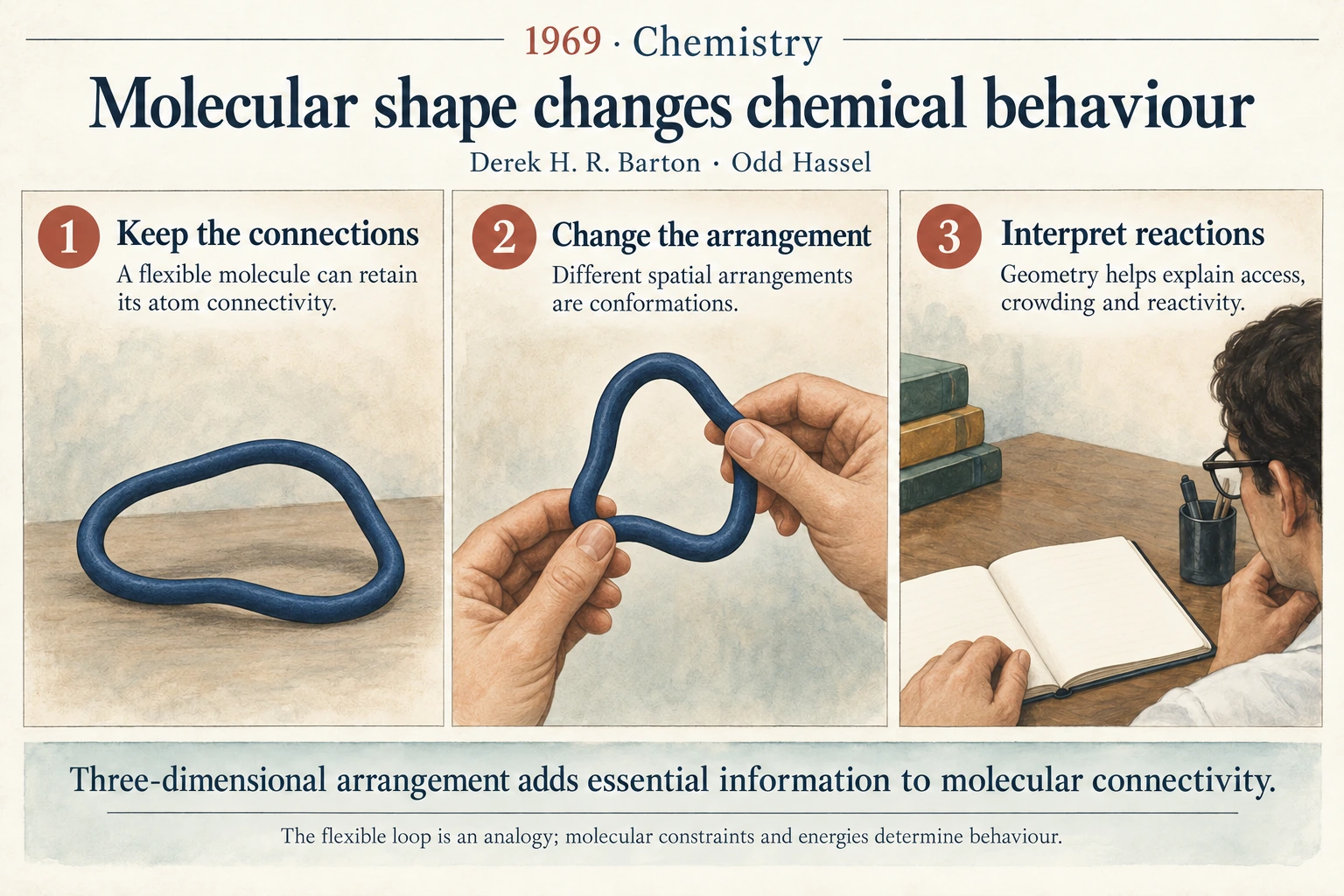
Infographic explaining Molecular shape changes chemical behaviour
Original AI-generated infographic. A conceptual overview; the explanations and sources below provide context.
Read the poster text

Three-dimensional arrangement adds essential information to molecular connectivity.

  1. Keep the connections

    A flexible molecule can retain its atom connectivity.

  2. Change the arrangement

    Different spatial arrangements are conformations.

  3. Interpret reactions

    Geometry helps explain access, crowding and reactivity.

The flexible loop is an analogy; molecular constraints and energies determine behaviour.

01 · The discovery

The idea, in everyday language

Hassel investigated cyclohexane and related six-membered rings using physical measurements. Different spatial arrangements can occur while atom connectivity is retained; these arrangements are conformations.

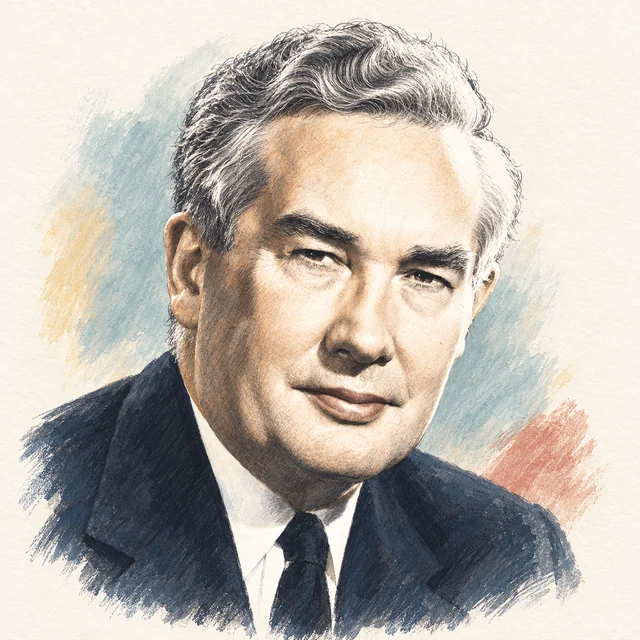
Barton used this structural foundation to interpret steroids and other complex organic molecules. Preferred conformations, crowding and access to reacting groups helped explain properties and guide chemical reasoning. The two scientists made complementary contributions to conformational analysis.

Why it matters

Conformational analysis gave chemists a practical way to relate molecular geometry to reactivity. It became useful in structural interpretation, reaction mechanisms and planning synthesis, including biologically important organic compounds.
02 · The people

Who brought the idea to life?

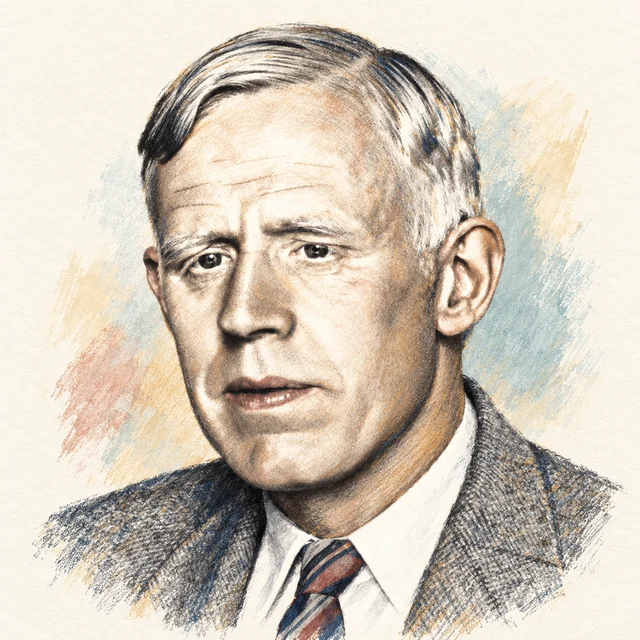
Illustrated portrait of Odd Hassel

Odd Hassel

Prize share · 1/2

Hassel established structural foundations for understanding conformations of six-membered rings. He received half the Chemistry Prize.

Read the biography ↗

03 · Years in the making

The path here

  1. 1924

    Hassel completes his Berlin doctorate.

  2. 1930

    His research turns toward six-membered-ring structures.

  3. 1943

    His biography records general conformational conclusions by this year.

  4. 1950

    Barton publishes his steroid-nucleus paper.

  5. 1969

    Barton and Hassel share the Chemistry Prize.

04 · Read further

From the original sources

Original explanations by Curionode, based on the official records below. Biographical details and affiliations refer to the award year.

  1. Official award summary nobelprize.org
  2. Award ceremony speech nobelprize.org
  3. IUPAC conformation definition goldbook.iupac.org
  4. Official biography: Derek H. R. Barton nobelprize.org
  5. Official biography: Odd Hassel nobelprize.org

More in Chemistry

Browse this subject ↗