01 · The discovery
The idea, in everyday language
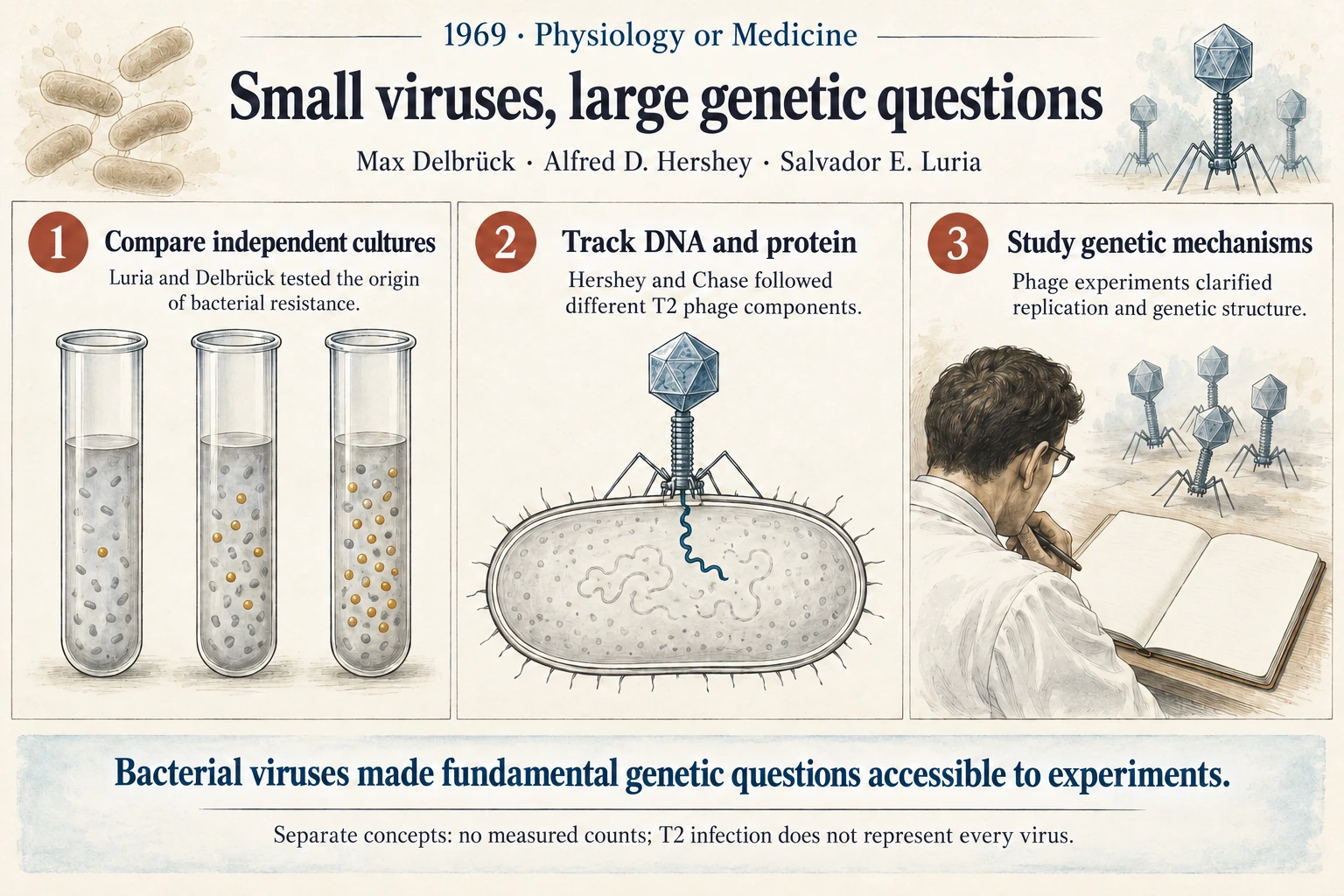
Their phage research combined genetics, statistical reasoning and biochemical experiments. In 1943, Luria and Delbrück found that resistance varied widely across independently grown bacterial cultures. The pattern supported heritable mutations arising independently of the selecting virus in the studied system.
Studies of phage mutations and recombination made genetic mapping possible. Hershey and Martha Chase’s 1952 T2 experiments tracked DNA and sulfur-containing protein separately: most DNA entered bacteria while most labelled coat material remained outside. The results supported DNA’s genetic role.
Why it matters
Simple, experimentally accessible systems helped expose mechanisms that became central to molecular genetics. The informal phage group shared information and materials while pursuing distinct research programmes, contributing to a much wider scientific effort.