01 · The discovery
The idea, in everyday language
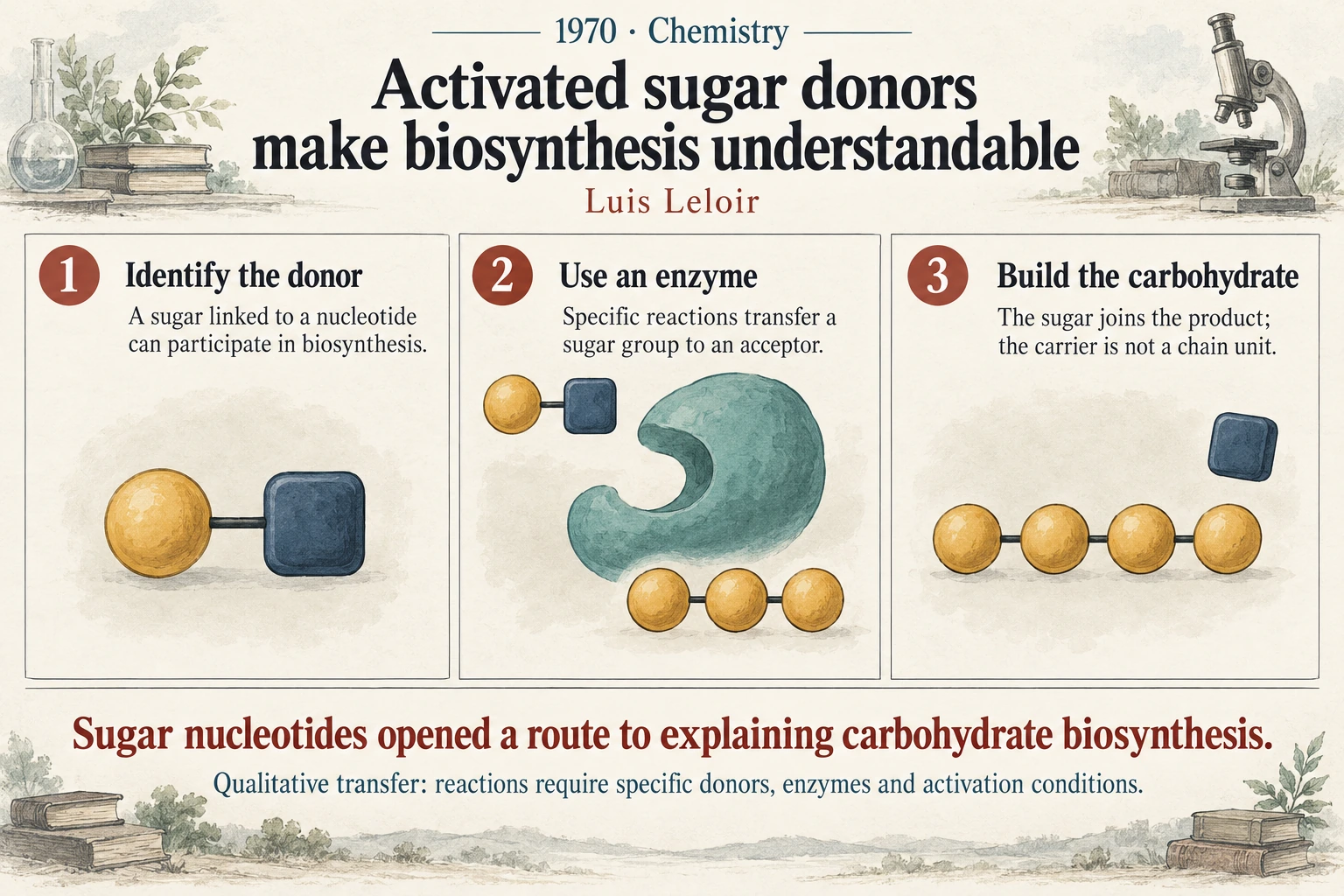
Investigations of galactose metabolism revealed that a sugar’s conversion depended on an additional compound. Leloir and colleagues identified nucleotide-linked sugars, including UDP-glucose. Linking the sugar to a nucleotide created a chemically useful donor form that enzymes could recognise and use.
Further work showed how sugar groups could be transferred from these donors to accepting molecules. Studies connected sugar nucleotides with the formation of trehalose, sucrose and polysaccharides such as glycogen. The nucleotide portion is not added as a repeat unit of the carbohydrate chain. Synthesis could follow routes distinct from simply reversing breakdown.
Why it matters
The work opened a broad route into carbohydrate biosynthesis and stimulated investigations of many different nucleotide sugars. It connected chemical identification with metabolic function, helping explain how cells form complex carbohydrate-containing materials.