c.curionodeThe Nobel Archive

1971 · Chemistry

Reading molecular structure from spectra

Some molecules and radicals are too short-lived for easy isolation. Herzberg made their spectra a route to electronic structure and molecular geometry.

SpectroscopyMolecular geometryRadicals
1971Chemistry

Visual guide

The prize, pictured

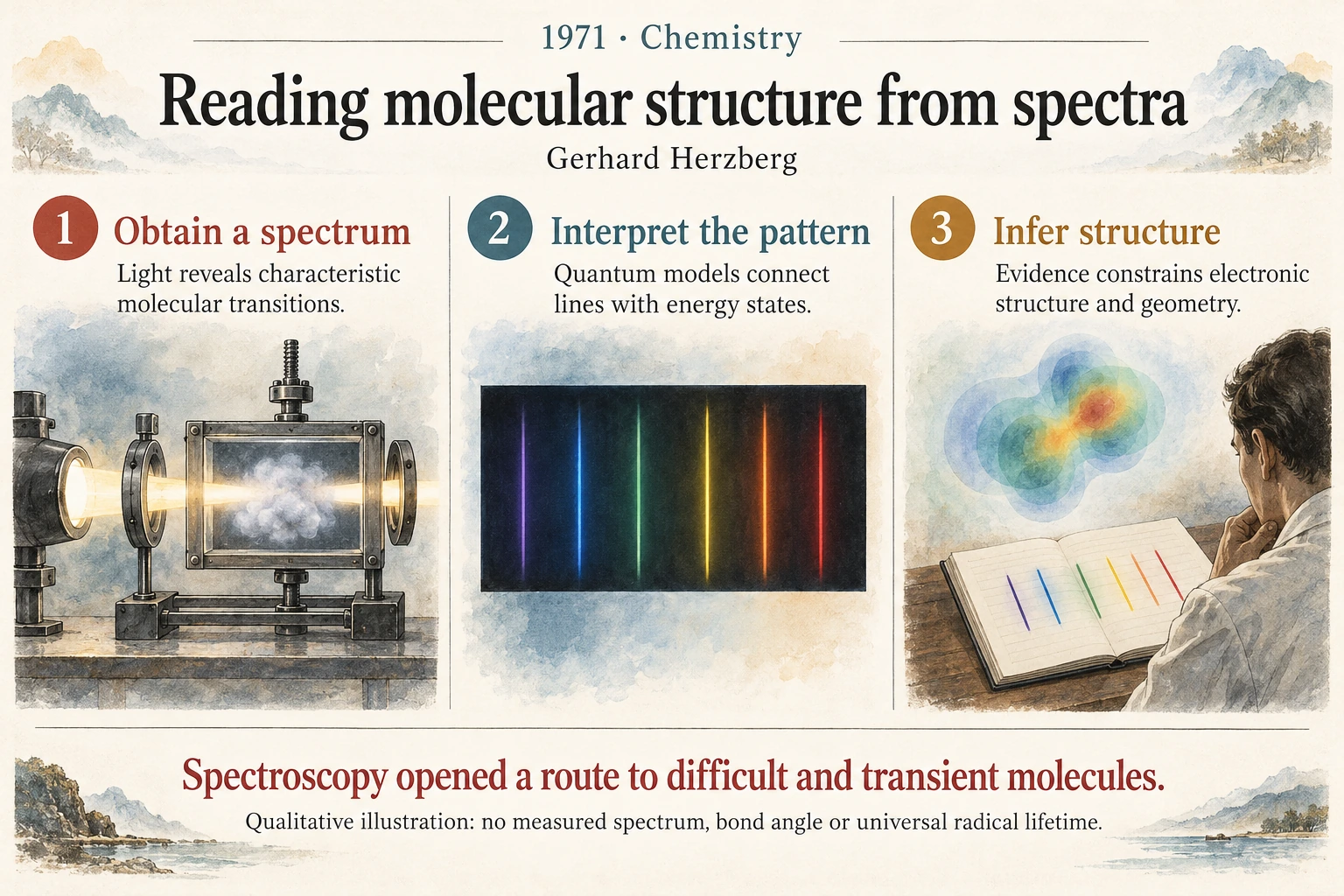
Infographic explaining Reading molecular structure from spectra
Original AI-generated infographic. A conceptual overview; the explanations and sources below provide context.
Read the poster text

Spectroscopy opened a route to difficult and transient molecules.

  1. Obtain a spectrum

    Light reveals characteristic molecular transitions.

  2. Interpret the pattern

    Quantum models connect lines with energy states.

  3. Infer structure

    Evidence constrains electronic structure and geometry.

Qualitative illustration: no measured spectrum, bond angle or universal radical lifetime.

01 · The discovery

The idea, in everyday language

Molecules absorb or emit light at characteristic wavelengths related to transitions between allowed energy states. Rotation, vibration and electronic motion leave patterns that need careful quantum interpretation. Spectroscopy is evidence about a molecule, rather than a direct enlarged photograph of its atoms.

Herzberg and his associates developed experimental and analytical methods to identify structures, including difficult radicals. A radical has an unpaired electron; it is not simply any fragment produced during a reaction. Their investigations connected electronic states with geometry and also helped identify molecules in astronomical environments.

Why it matters

The work gave chemistry more reliable access to transient species that participate in reactions. It also connected laboratory measurements with the interpretation of light from planetary atmospheres, comets and interstellar space.
02 · The people

Who brought the idea to life?

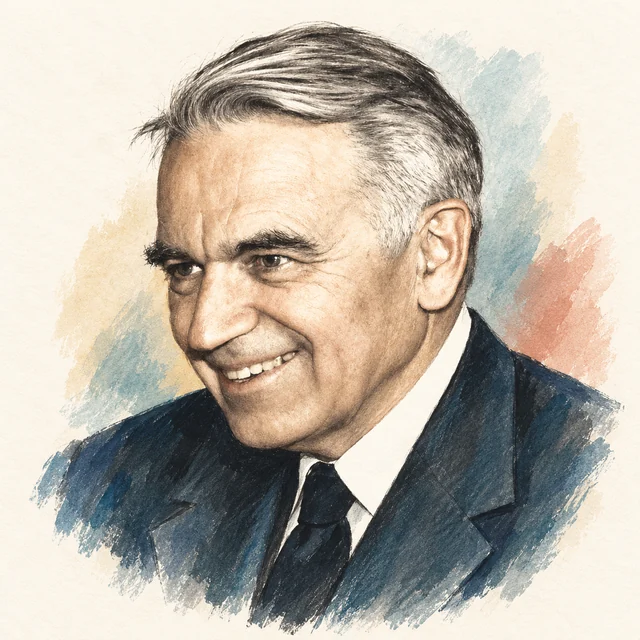
Illustrated portrait of Gerhard Herzberg

Gerhard Herzberg

Prize share · 1

Herzberg developed spectroscopic knowledge of molecular electronic structure and geometry, especially free radicals. He received the entire Chemistry Prize.

Read the biography ↗

03 · Years in the making

The path here

  1. 1928

    Herzberg completes his Darmstadt doctorate.

  2. 1935

    As a refugee, he moves to Saskatchewan.

  3. 1948

    He joins Canada’s National Research Council.

  4. 1969

    He becomes a distinguished research scientist.

  5. 1971

    He receives the Chemistry Prize.

04 · Read further

From the original sources

Original explanations by Curionode, based on the official records below. Biographical details and affiliations refer to the award year.

  1. Official award summary nobelprize.org
  2. Award ceremony speech nobelprize.org
  3. IUPAC radical definition goldbook.iupac.org
  4. NIST methylene compilation webbook.nist.gov
  5. Official biography: Gerhard Herzberg nobelprize.org

More in Chemistry

Browse this subject ↗