01 · The discovery
The idea, in everyday language
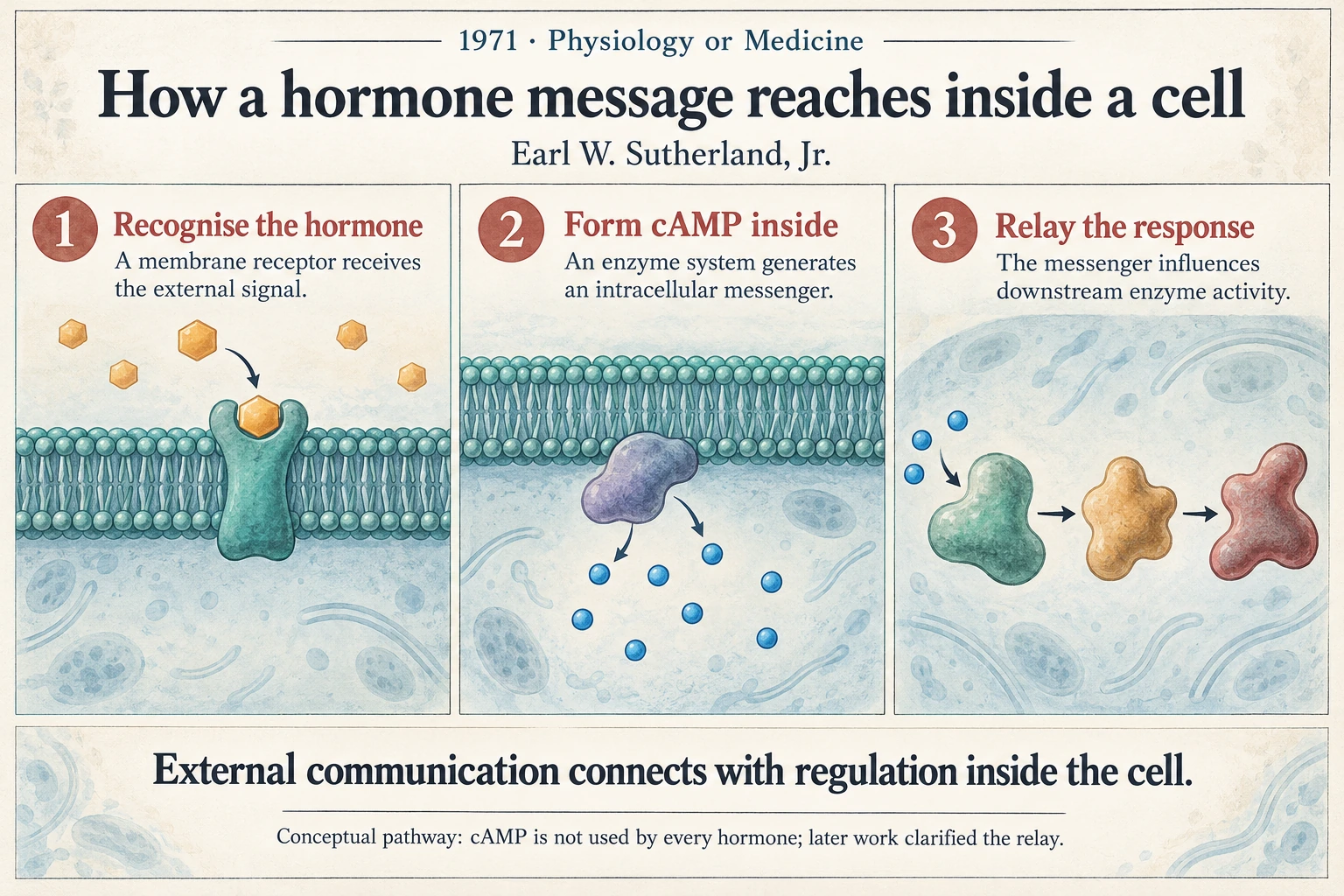
Investigating adrenaline’s effect on glycogen metabolism, Sutherland distinguished the extracellular hormone signal from a soluble intracellular mediator. The membrane-associated adenylate cyclase system forms cyclic AMP, or cAMP. The hormone can initiate this response through a membrane receptor without entering the cell.
Cyclic AMP relays the message to intracellular machinery. In the later clarified glycogen pathway, it acts through a protein kinase and further enzyme activation, rather than directly cutting glycogen itself. Sutherland proposed a broader second-messenger role around 1960; subsequent work established that many hormone responses use this principle.
Why it matters
The discovery connected communication between cells with regulation within a cell. It helped make hormone action a biochemical sequence that could be investigated, and cAMP’s roles in microorganisms extended its importance beyond animal hormones.