01 · The contribution
The idea, in everyday language
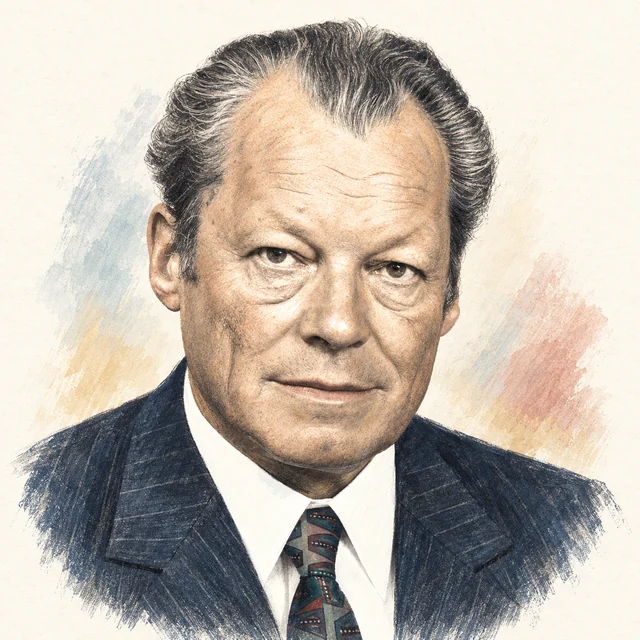
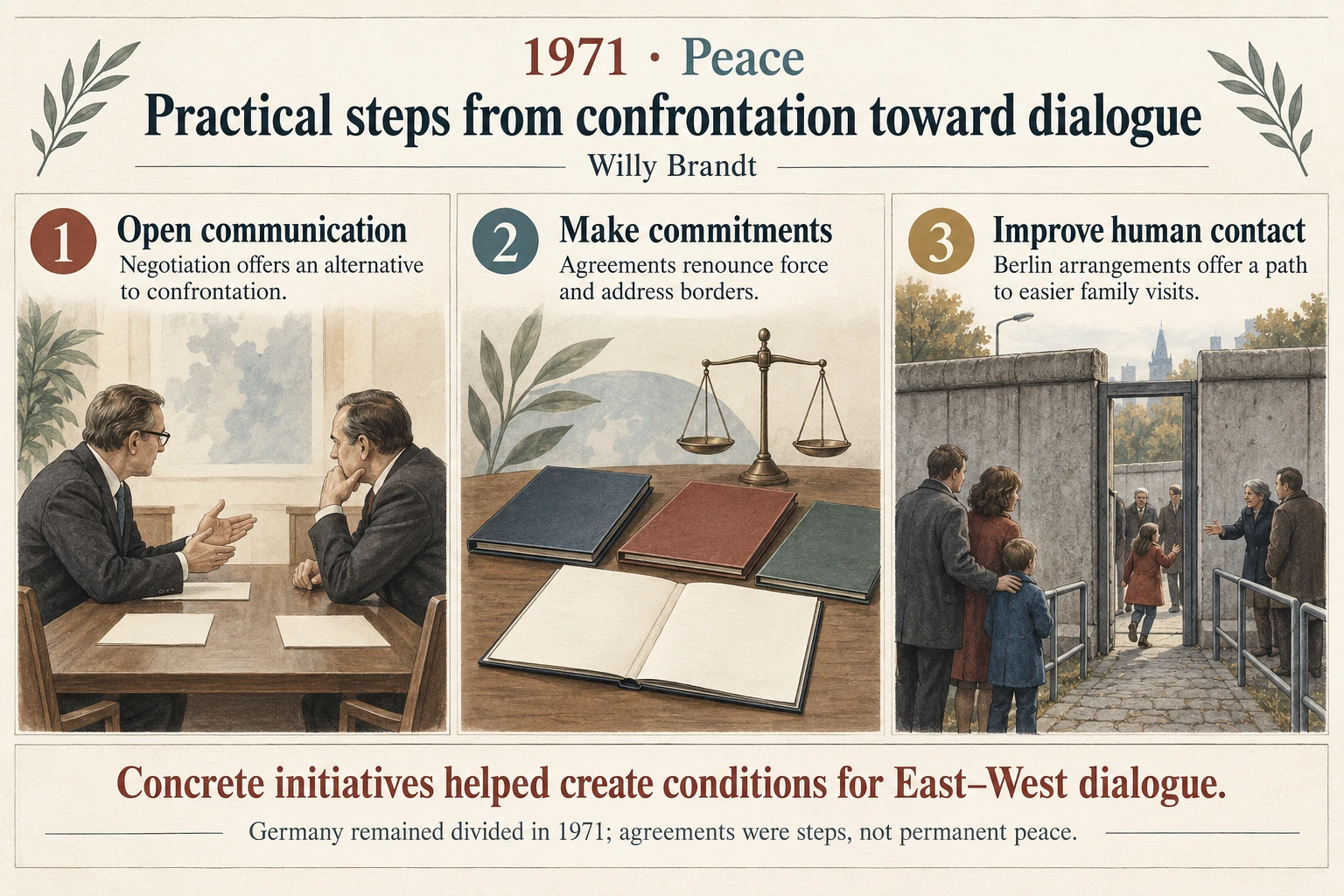
As West German foreign minister and then chancellor, Brandt sought détente while maintaining Western cooperation. His government signed the nuclear Non-Proliferation Treaty in 1969. The Moscow agreement of August 1970 renounced force; the Warsaw agreement of December 1970 recognised Poland’s western border and renounced territorial claims.
The 1971 Four Power Agreement on Berlin provided a framework for reducing tension and improving movement and family contacts. Brandt’s kneeling at the Warsaw ghetto memorial expressed the personal importance of reconciliation. The committee recognised these concrete diplomatic initiatives and their possibilities for further peace.
Why it matters
The recognised work addressed dangerous confrontations and the human costs of divided Europe. Renouncing force and acknowledging borders helped create conditions for negotiation; measures concerning Berlin also mattered to families separated by political barriers.