01 · The discovery
The idea, in everyday language
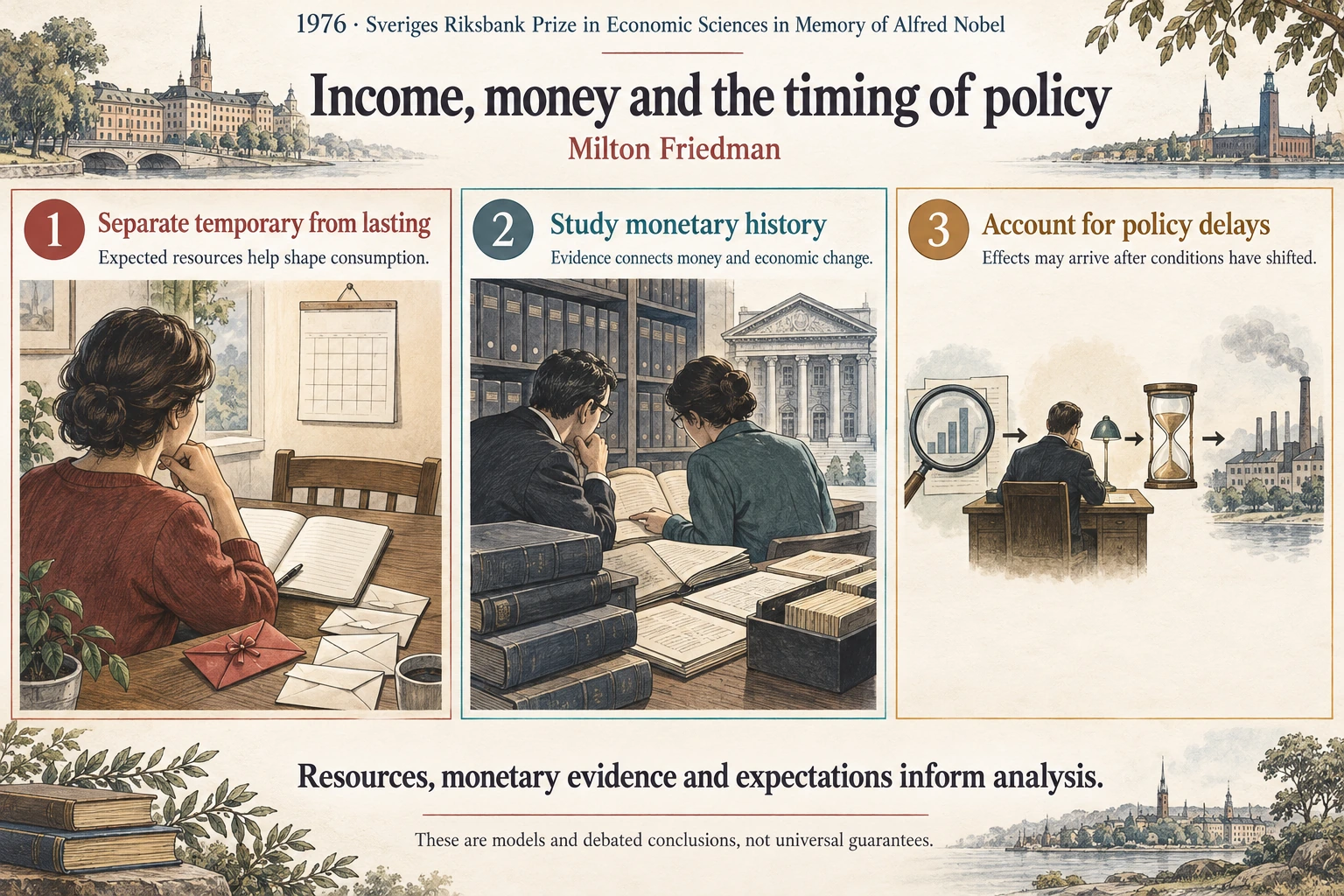
The permanent-income hypothesis distinguishes a household’s longer-term expected resources from temporary fluctuations in receipts. A one-off increase need not produce the same spending response as a sustained change. This helped explain why consumption can behave differently from current income. The hypothesis is an analytical model, not a statement that every household can borrow freely or save a temporary windfall: uncertainty, credit limits and circumstances matter.
Monetary research examined how money, income and prices were related over time. Friedman and Anna Schwartz’s 1963 history investigated institutional choices as well as statistical patterns, including the Federal Reserve’s role during the Great Depression. In policy analysis Friedman stressed delays between noticing a problem, deciding on a response and seeing its effects. If those delays vary, a measure intended to smooth fluctuations may arrive at an unhelpful time. His work also emphasised inflation expectations when assessing apparent unemployment–inflation trade-offs. The memorial prize recognised these contributions and the complexity of stabilisation, while the policy conclusions remained subjects of debate.
Why it matters
The work changed debates about consumption, monetary history and macroeconomic policy. It encouraged attention to expectations and to the limits of rapid corrective action. The award gave Friedman the full memorial prize, but his historical research depended on collaborators and did not make monetary conditions the sole cause of every economic outcome.