01 · The contribution
The idea, in everyday language
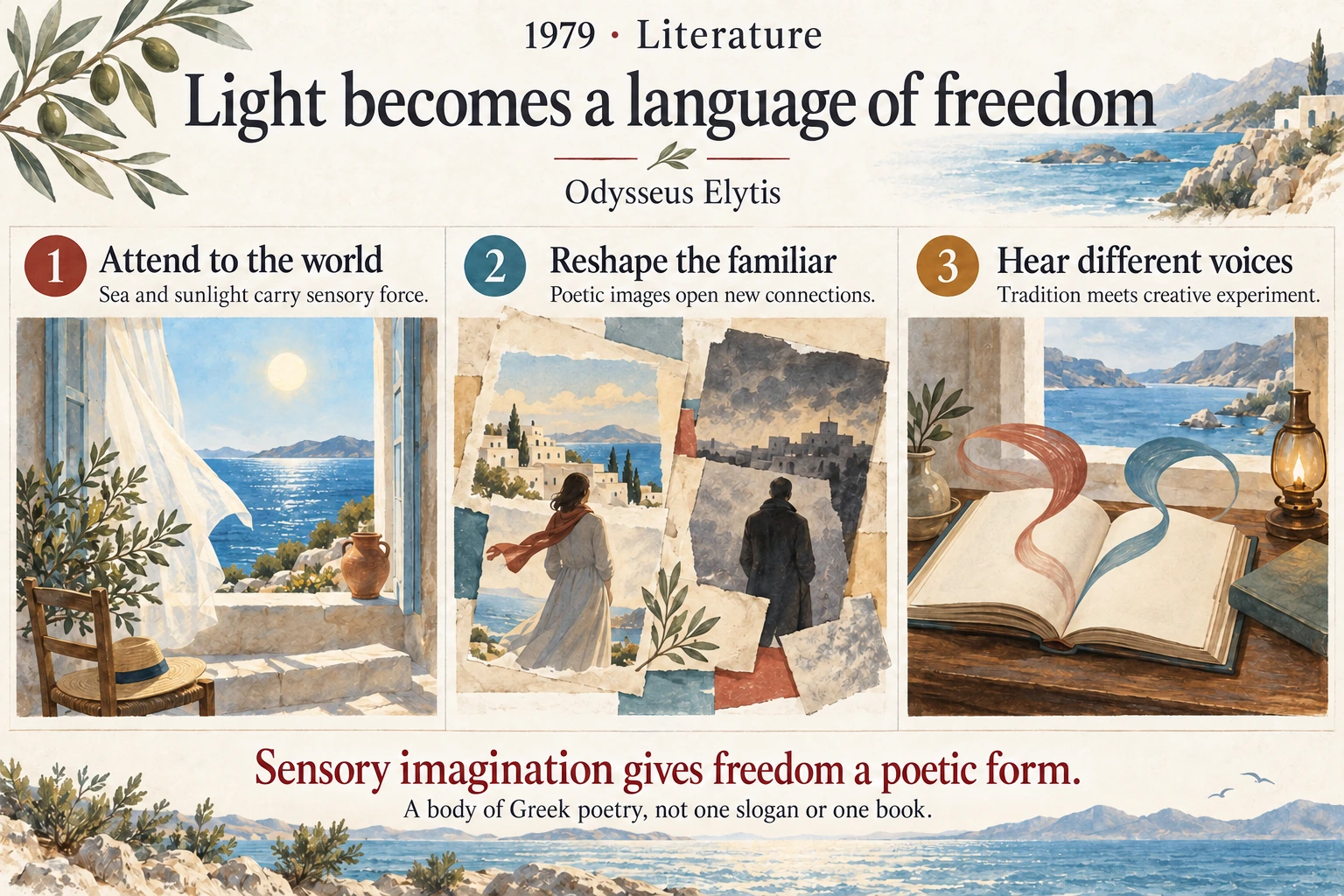
A landscape in Elytis is more than a setting. Sensory images can reshape the relation between a person and the world: brightness, colour and bodily experience carry intellectual and ethical questions. Surrealist experiment opened unusual connections, while Greek language and cultural memory gave those connections a particular texture.
The Axion Esti, published in 1959, combines different voices and forms in a carefully organised work involving creation, suffering and renewal. Its resonance with religious forms is part of a modern poetic structure, rather than a claim that the book is scripture. Maria Nefeli, published in 1978, uses a different dialogue of voices. The prize recognised the range of the poetry, not one repeated landscape motif.
Why it matters
Elytis helped extend modern Greek poetry and brought its language and concerns to international readers. Musical settings, translations and his own collage work created further encounters with the poems. He received the full Literature Prize. Sensory pleasure, historical violence and creative freedom can coexist in this writing without reducing it to a political slogan.