01 · The discovery
The idea, in everyday language
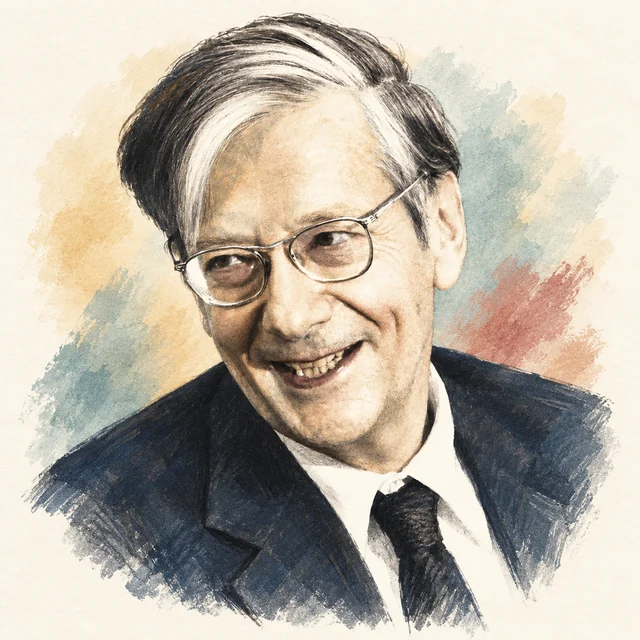
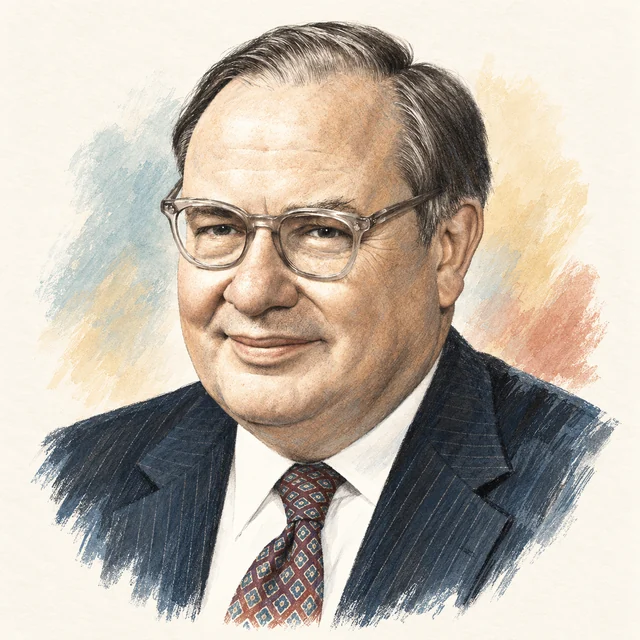
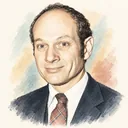
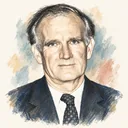
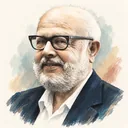
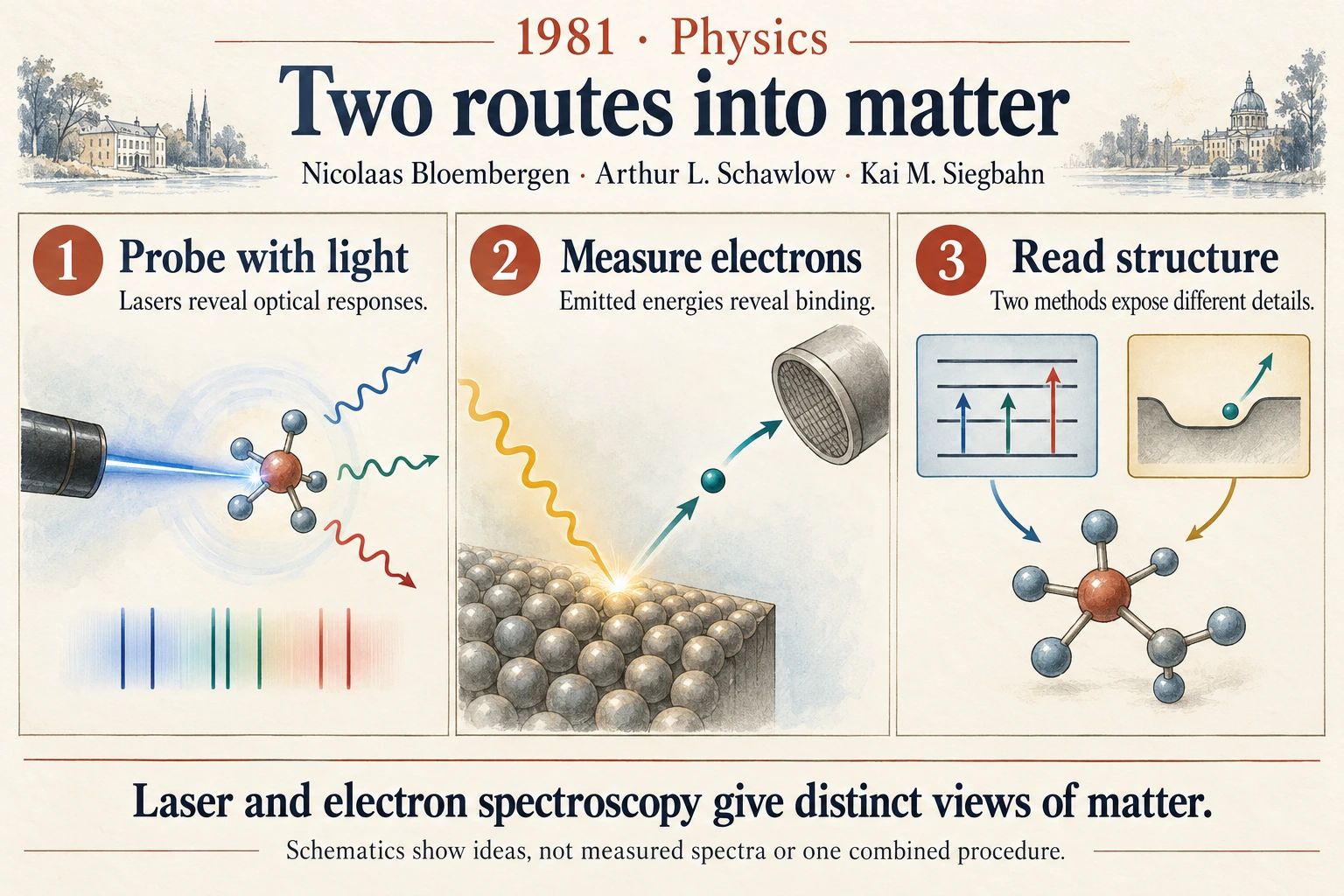
Atoms and molecules exchange energy in characteristic ways, but a crowded or blurred spectrum can hide useful detail. Bloembergen developed nonlinear optical methods: strong light fields interact through matter and can produce new signals at combinations of their frequencies. Schawlow developed precision laser spectroscopy, including techniques with Hänsch that reduce broadening caused by atomic motion. Narrow, tunable laser light made transitions easier to distinguish.
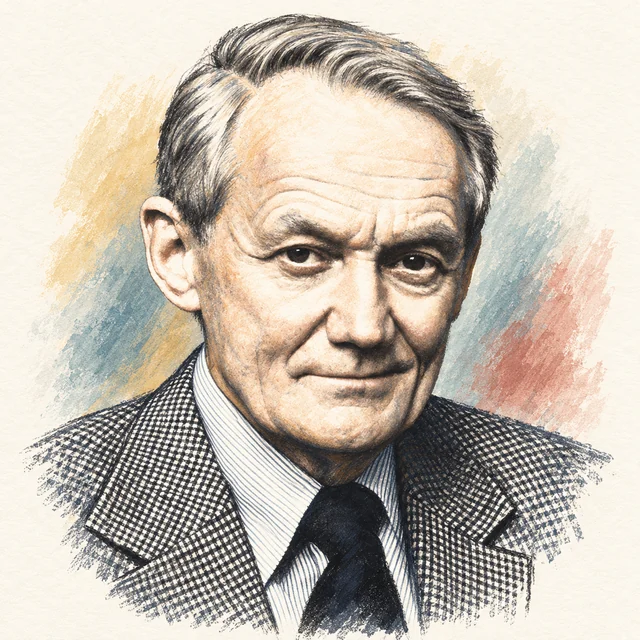
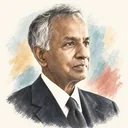
Siegbahn took another route. When photons eject electrons from a sample, measuring the emitted electrons’ energies can reveal how tightly they were bound. With careful calibration and accounting for the measurement conditions, small binding-energy shifts give information about chemical environments. His high-resolution instruments and ESCA methods made electron spectra powerful tools for chemical analysis.
Why it matters
The methods brought atomic and molecular structure, chemical bonding and surfaces within more precise experimental reach. Bloembergen and Schawlow shared the laser-spectroscopy half equally; Siegbahn received the other half. Their work built on earlier spectroscopy and laser research, with collaborators including Hänsch, Nordling and Sokolowski. Townes, Basov and Prokhorov’s 1964 prize concerned the earlier maser–laser principles.