01 · The discovery
The idea, in everyday language
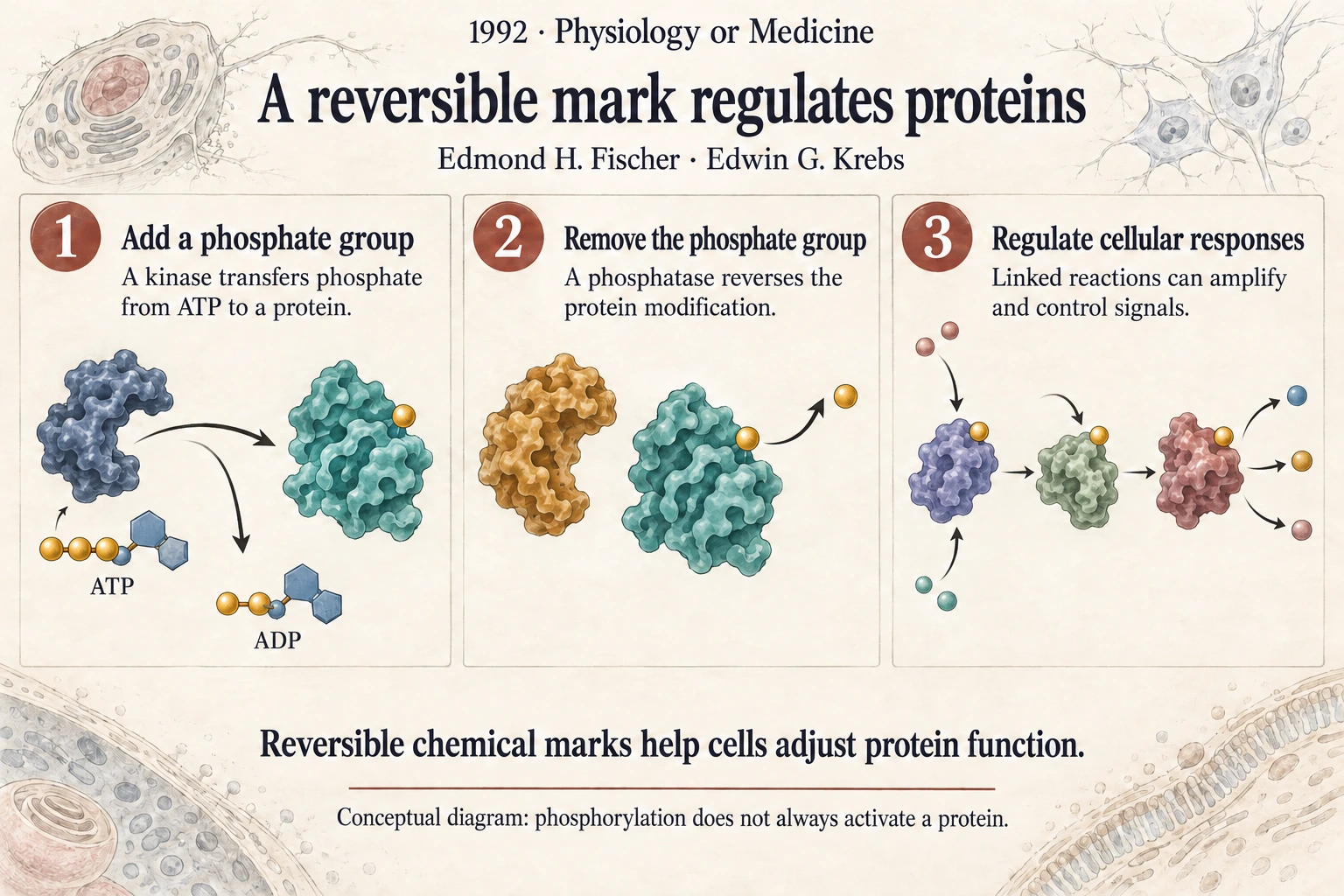
Cells need to change what their proteins do quickly, without rebuilding every molecule. Fischer and Krebs studied glycogen phosphorylase in muscle, an enzyme involved in using stored carbohydrate. In the mid-1950s, they showed that a kinase could transfer a phosphate group from ATP onto the protein, changing its activity.
A phosphatase could remove that group and reverse the modification. Together, the reactions provided a biochemical mechanism for regulation. Later work revealed many kinases and phosphatases, regulated pathways and signal amplification. Depending on the protein and modification site, phosphorylation can increase activity, decrease it or change interactions and location.
Why it matters
Reversible phosphorylation helped explain how signals connect to metabolism, growth and other cellular responses. Understanding disrupted regulation also became important in disease research and the development of targeted treatments. The original finding established a general kind of control, not an immediate cure for every condition involving a kinase.