01 · The discovery
The idea, in everyday language
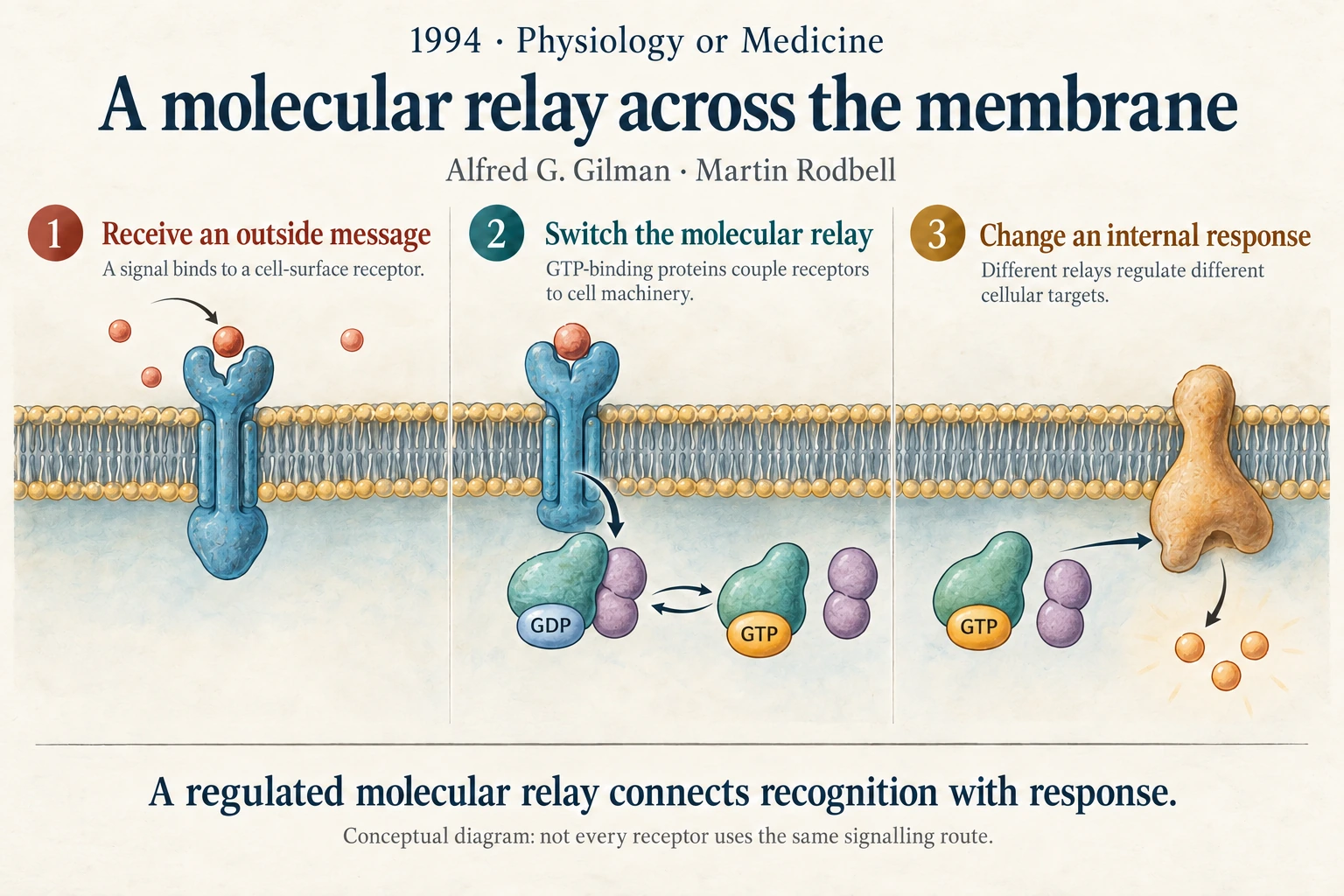
A hormone may bind to a receptor on the outside of a cell, but how does that event influence processes inside? Rodbell distinguished recognition, transduction and amplification as separate functions, and demonstrated a role for GTP in the coupling step. This suggested that a receptor needed a molecular relay rather than simply acting directly on the response machinery.
Gilman identified that relay through biochemical work with mutant cells. Cells with a receptor and an amplifier could still fail to respond when the coupling component was missing; adding the relevant protein restored the response. G-proteins bind guanine nucleotides. In a representative pathway, receptor activation promotes exchange of GDP for GTP, activating the switch; GTP hydrolysis later returns it toward the inactive state. Different G-proteins connect to different targets and can stimulate or inhibit signalling.
Why it matters
The discovery helped explain how hormones, sensory signals and other messages regulate cellular activity. It clarified why altered signalling can contribute to disease, including the effects of certain bacterial toxins. Understanding the relay created a foundation for further research and pharmacology; it did not itself provide a universal treatment.