c.curionodeThe Nobel Archive

1994 · Physiology or Medicine

A molecular relay across the membrane

G-proteins connect some cell-surface receptors to internal machinery, allowing outside messages to change what a cell does.

G-proteinssignal transductioncell-surface receptorsmolecular switches
1994Physiology or Medicine

Visual guide

The prize, pictured

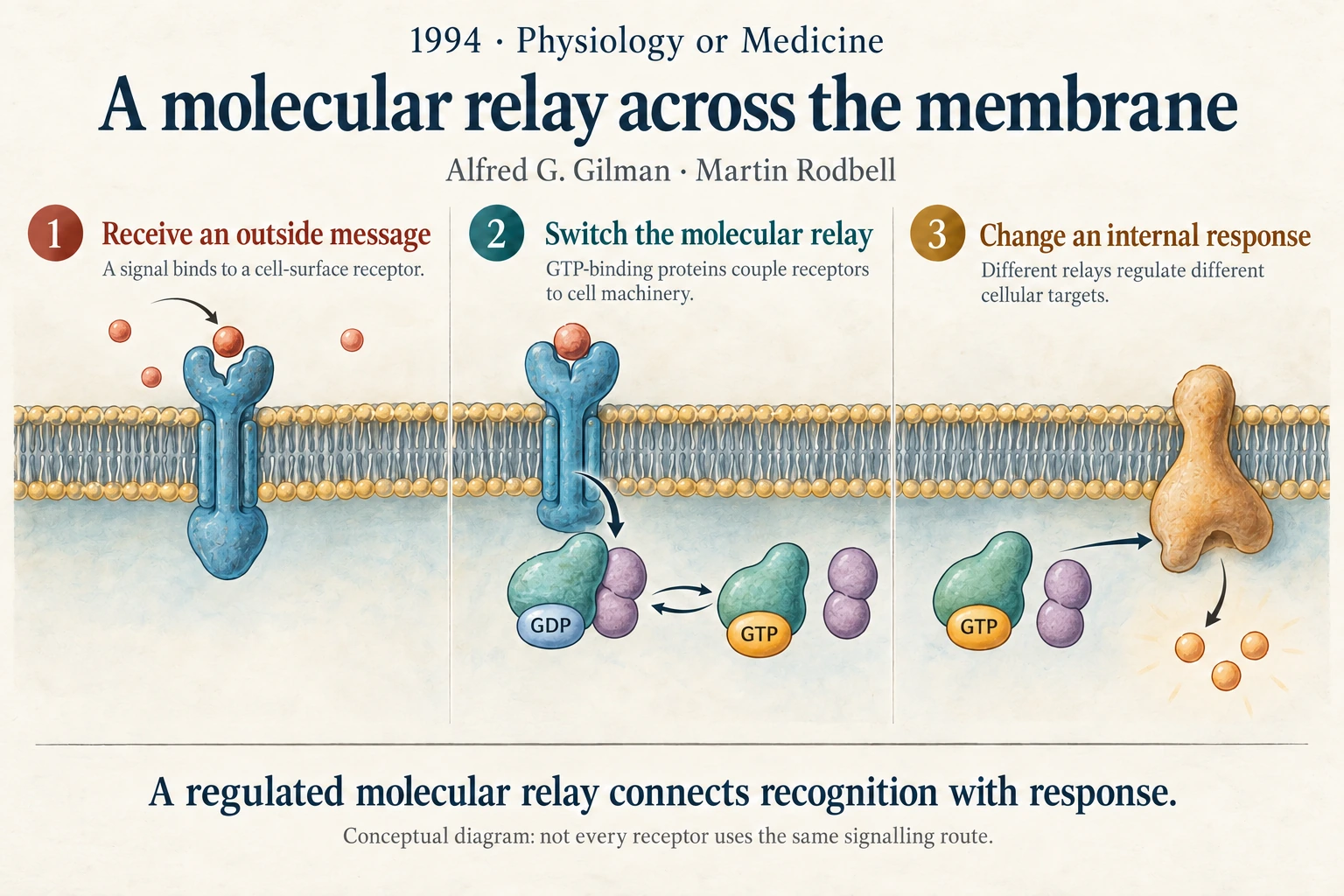
Infographic explaining A molecular relay across the membrane
Original AI-generated infographic. A conceptual overview; the explanations and sources below provide context.
Read the poster text

A regulated molecular relay connects recognition with response.

  1. Receive an outside message

    A signal binds to a cell-surface receptor.

  2. Switch the molecular relay

    GTP-binding proteins couple receptors to cell machinery.

  3. Change an internal response

    Different relays regulate different cellular targets.

Conceptual diagram: not every receptor uses the same signalling route.

01 · The discovery

The idea, in everyday language

A hormone may bind to a receptor on the outside of a cell, but how does that event influence processes inside? Rodbell distinguished recognition, transduction and amplification as separate functions, and demonstrated a role for GTP in the coupling step. This suggested that a receptor needed a molecular relay rather than simply acting directly on the response machinery.

Gilman identified that relay through biochemical work with mutant cells. Cells with a receptor and an amplifier could still fail to respond when the coupling component was missing; adding the relevant protein restored the response. G-proteins bind guanine nucleotides. In a representative pathway, receptor activation promotes exchange of GDP for GTP, activating the switch; GTP hydrolysis later returns it toward the inactive state. Different G-proteins connect to different targets and can stimulate or inhibit signalling.

Why it matters

The discovery helped explain how hormones, sensory signals and other messages regulate cellular activity. It clarified why altered signalling can contribute to disease, including the effects of certain bacterial toxins. Understanding the relay created a foundation for further research and pharmacology; it did not itself provide a universal treatment.
02 · The people

Who brought the idea to life?

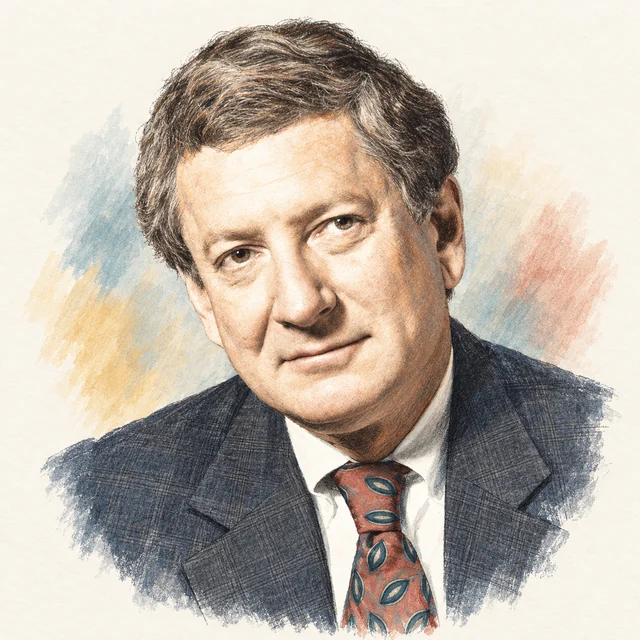
Illustrated portrait of Alfred G. Gilman

Alfred G. Gilman

Prize share · 1/2

Gilman identified and purified the protein component that couples a receptor to an intracellular signalling system. Cells lacking that function could have working receptors and an amplifier yet fail to respond; adding the protein restored the response. The 1980 purification established a GTP-binding G-protein as the missing transducer. His biochemical evidence complemented Rodbell’s earlier functional analysis of the relay.

Read the biography ↗
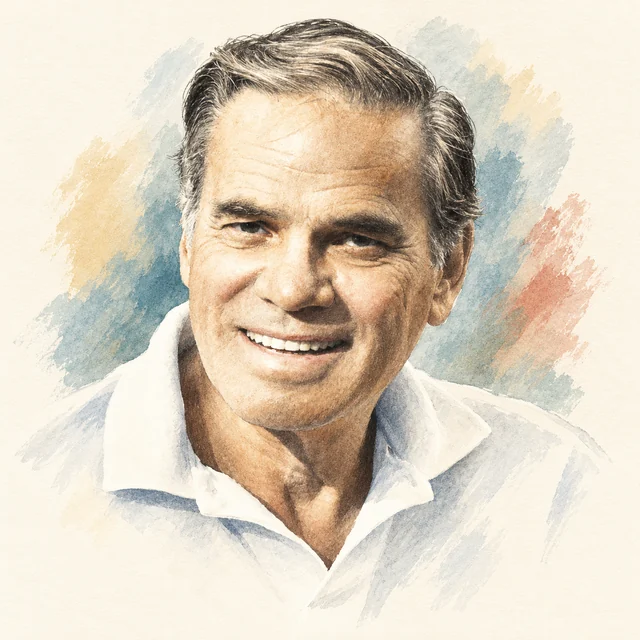
Illustrated portrait of Martin Rodbell

Martin Rodbell

Prize share · 1/2

Rodbell distinguished three functions in hormone signalling: a receptor that recognises the signal, a transducer that relays it, and an amplifier that generates an intracellular response. Around 1970 he showed the importance of GTP in the transducer step. This framework suggested a separate coupling component rather than a receptor acting directly on every target. Gilman later identified the relevant G-protein biochemically; they shared the prize equally.

Read the biography ↗

03 · Years in the making

The path here

  1. 1971

    Rodbell’s work distinguishes receptor, GTP-dependent transducer and amplifier functions.

  2. 1980

    Gilman and colleagues purify the protein responsible for restoring a missing coupling function.

  3. 1994

    Gilman and Rodbell share the Medicine Prize equally for G-proteins and signal transduction.

04 · Read further

From the original sources

Original explanations by Curionode, based on the official records below. Biographical details and affiliations refer to the award year.

  1. Official announcement nobelprize.org

More in Physiology or Medicine

Browse this subject ↗