01 · The discovery
The idea, in everyday language
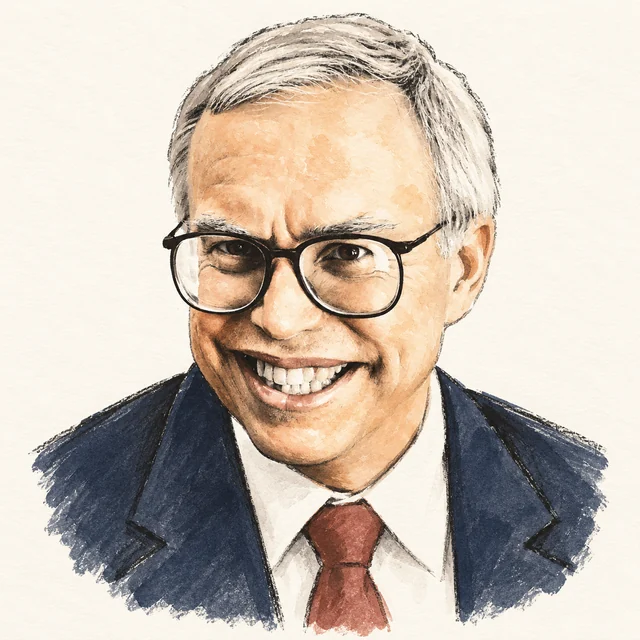
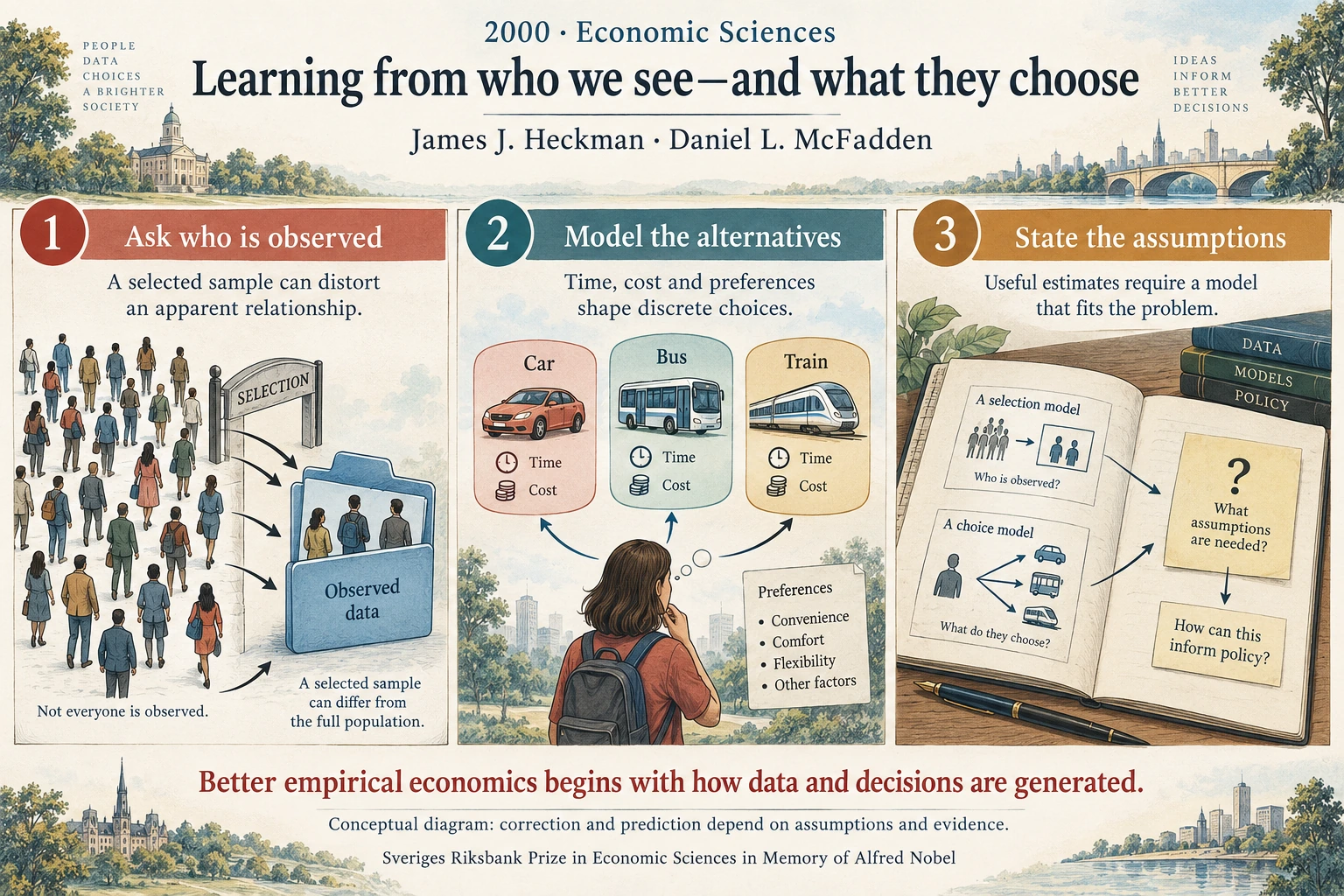
Data do not always show a representative slice of the world. Wages are usually observed for people who work, while the potential wages of non-workers are missing. Heckman developed methods that model selection and, under suitable assumptions, correct estimates of relationships in the observed sample. The question is not only what the data say, but how people came to appear in them.
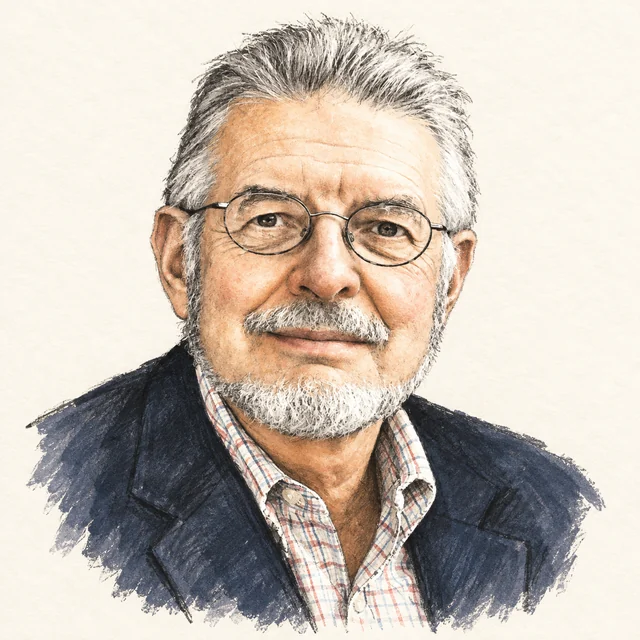
McFadden studied discrete choices, such as travelling by car, bus or train. He connected economic models of preferences with statistical models of observed decisions. Characteristics such as travel time and cost help estimate choice probabilities, while unobserved factors account for variation the researcher cannot explain directly. These methods make individual and household data more useful for empirical research.
Why it matters
The contributions strengthened microeconometrics: statistical study of individuals, households and firms grounded in economic questions. Applications include labour markets, programme evaluation, transport demand and housing. They helped researchers connect theory with data while recognising that missing observations and limited alternatives can change the analysis.