01 · The discovery
The idea, in everyday language
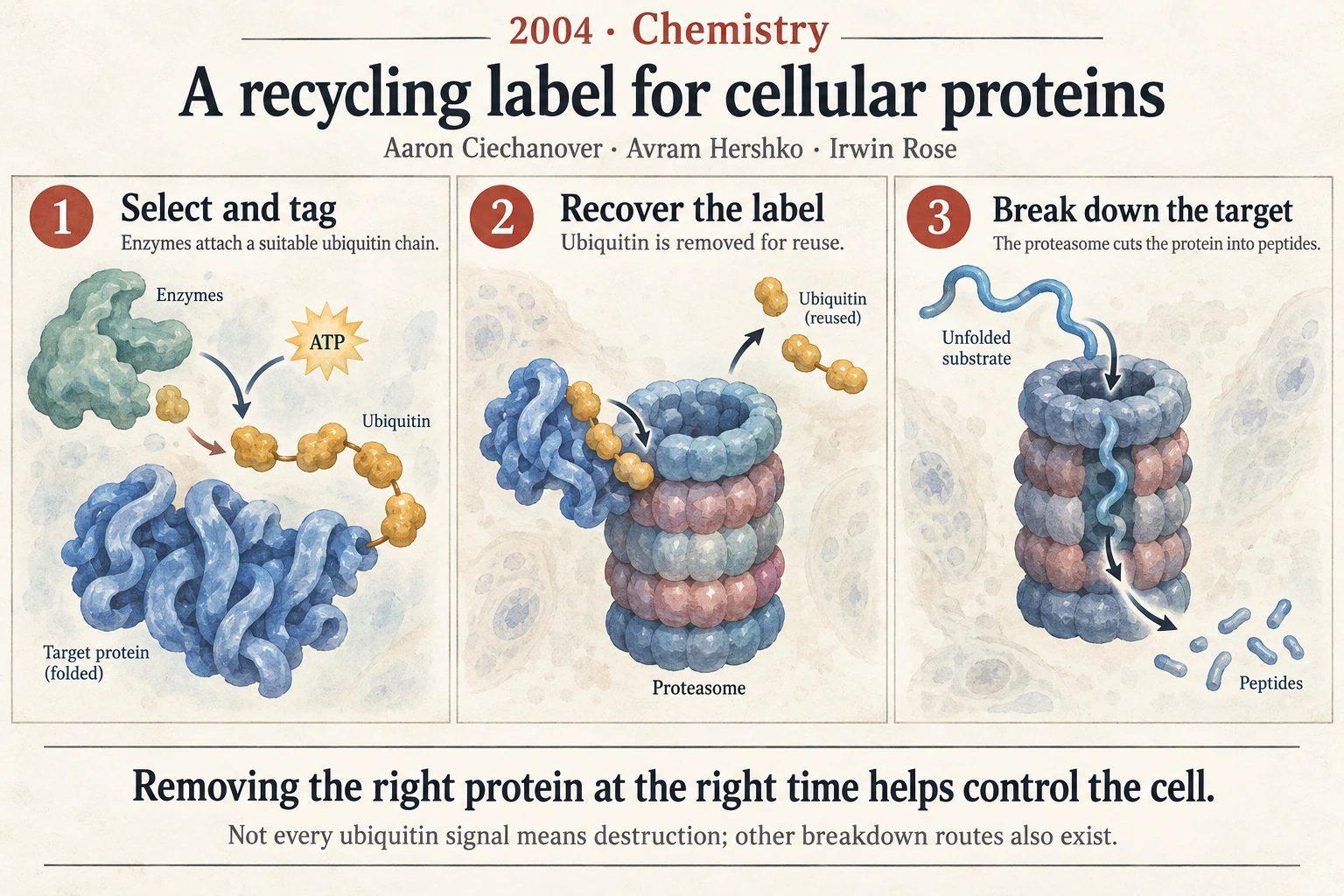
Cells must remove proteins as well as make them. Some are damaged or misfolded; others are perfectly functional but need to disappear at a particular time. Ciechanover, Hershko and Rose used cell extracts to investigate why this selective breakdown requires energy. They found that a small protein, ubiquitin, becomes attached to target proteins through a sequence of enzyme reactions.
In a common degradation pathway, a suitable chain of ubiquitin molecules helps a target reach the proteasome, a molecular complex with a protected cutting chamber. The ubiquitin label is removed for reuse, while the target is unfolded and fed inside. The proteasome cuts it into shorter peptides. E1, E2 and E3 enzyme activities help build the label, with E3 enzymes playing important roles in selecting targets.
Why it matters
Regulated destruction helps cells move through the cell cycle, control signalling and maintain protein quality. It also contributes to immune recognition and other essential processes. Understanding the pathway created new ways to investigate disease and to develop medicines that alter protein turnover. The core advance was the explanation of selective control, rather than the discovery that proteins can decay.