c.curionodeThe Nobel Archive

2011 · Physiology or Medicine

How immune defences receive the alarm

The discoveries explained key steps linking early recognition of microbes with specialised immune responses.

innate immunitydendritic cellsimmune activation
2011Physiology or Medicine

Visual guide

The prize, pictured

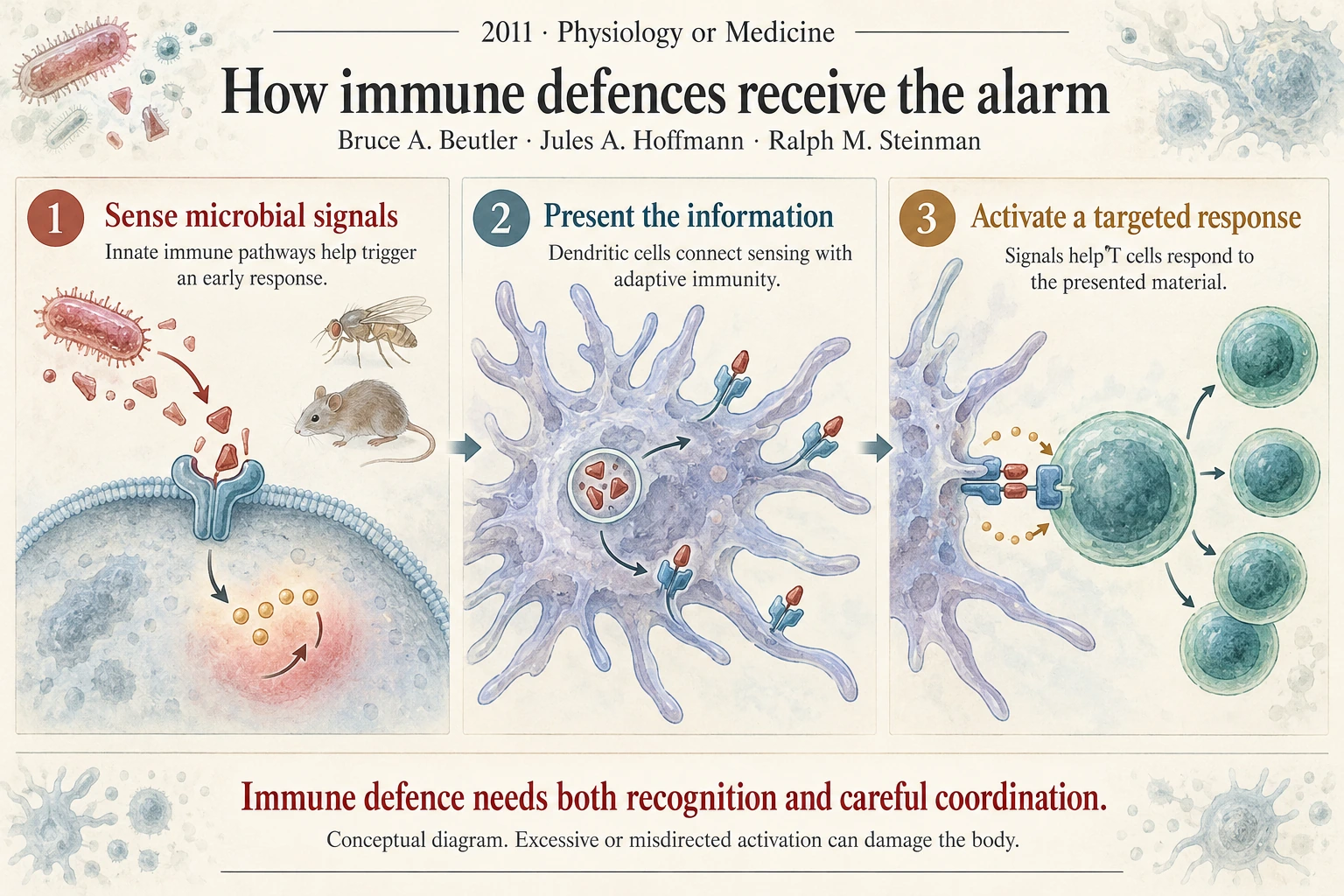
Infographic explaining How immune defences receive the alarm
Original AI-generated infographic. A conceptual overview; the explanations and sources below provide context.
Read the poster text

Immune defence needs both recognition and careful coordination.

  1. Sense microbial signals

    Innate immune pathways help trigger an early response.

  2. Present the information

    Dendritic cells connect sensing with adaptive immunity.

  3. Activate a targeted response

    Signals help T cells respond to the presented material.

Conceptual diagram. Excessive or misdirected activation can damage the body.

01 · The discovery

The idea, in everyday language

An immune response must begin by detecting that something needs attention. Hoffmann’s team showed that the Toll pathway, already known from fruit-fly development, was needed for an effective defence against fungal infection. Beutler’s team found that mice with an altered Tlr4 gene responded abnormally to bacterial lipopolysaccharide. Together, these lines of work revealed related molecular machinery that helps activate innate immunity, the body’s early response to microbial signals.

Steinman discovered dendritic cells and investigated their ability to activate T cells. These branching immune cells collect and present material to the adaptive immune system, which can make highly specific responses and retain memory. Their state and the signals they receive help determine whether and how T cells respond. This provided an important connection between early detection and a later, specialised response.

Why it matters

The findings gave researchers ways to investigate why infections trigger inflammation, how vaccines activate responses and how immunity can be directed against tumours. They also helped explain why activating immunity is not always beneficial. Understanding the signals and the cells that interpret them is essential to studying both effective defence and inflammatory disease.
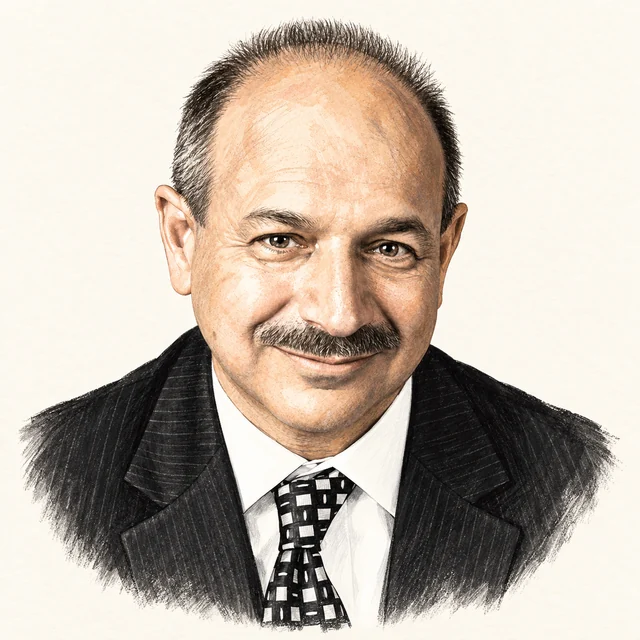
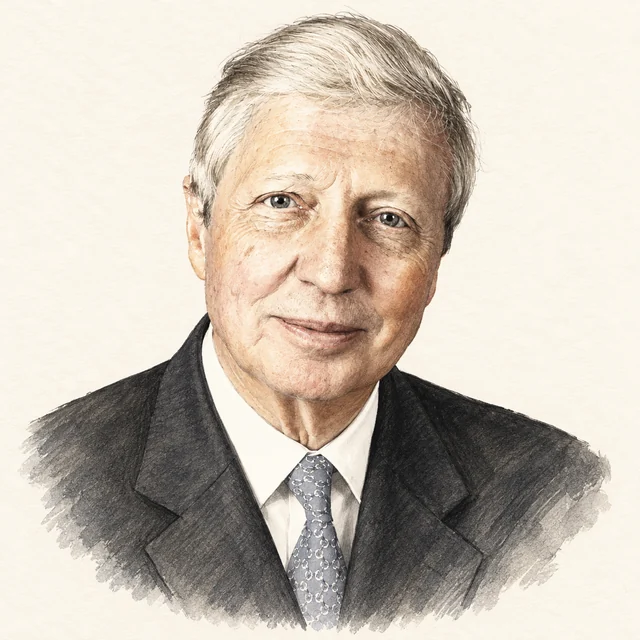
02 · The people

Who brought the idea to life?

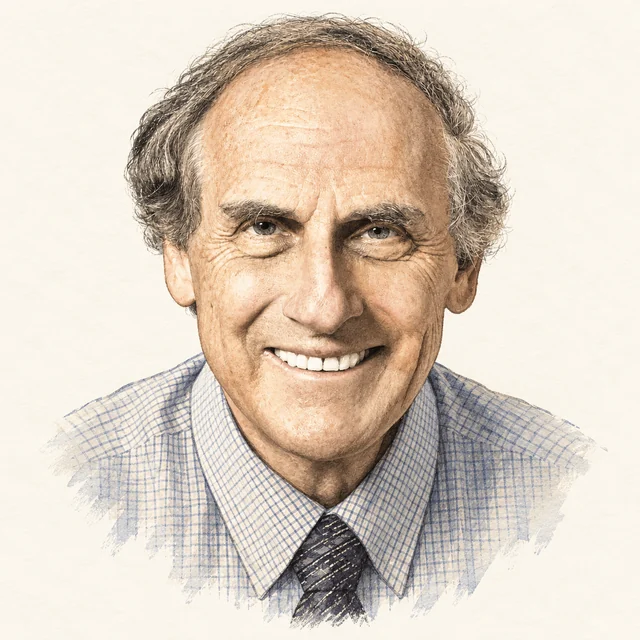
Illustrated portrait of Bruce A. Beutler

Bruce A. Beutler

Prize share · 1/4

In 1998 Beutler and colleagues identified mutations in the Tlr4 gene in mice that were unusually unresponsive to bacterial lipopolysaccharide. The result connected a mammalian Toll-like receptor with detection of a microbial signal and activation of innate immunity. It helped explain how an early immune alarm is triggered and why an excessive response can be dangerous.

Read the biography ↗
Illustrated portrait of Jules A. Hoffmann

Jules A. Hoffmann

Prize share · 1/4

In 1996 Hoffmann’s team, including Bruno Lemaitre, showed that the Toll signalling pathway was essential for a strong antifungal response in fruit flies. A gene already known for its role in embryonic development also helped activate immune defence. The work revealed an experimentally tractable system for understanding innate immunity and encouraged comparisons with mammalian receptors.

Read the biography ↗
Illustrated portrait of Ralph M. Steinman

Ralph M. Steinman

Prize share · 1/2

In 1973 Steinman and Zanvil Cohn described dendritic cells, named for their branching appearance. Steinman went on to show their remarkable ability to stimulate T cells and investigated how their state determines an immune response. This established dendritic cells as an important connection between early sensing of danger and the specialised responses of adaptive immunity.

Read the biography ↗

03 · Years in the making

The path here

  1. 1973

    Steinman and Cohn describe dendritic cells.

  2. 1996

    Hoffmann’s team demonstrates the Toll pathway’s role in fruit-fly antifungal defence.

  3. 1998

    Beutler’s team links defective LPS responses in mice to mutations in Tlr4.

04 · Read further

From the original sources

Original explanations by Curionode, based on the official records below. Biographical details and affiliations refer to the award year.

  1. Official award announcement nobelprize.org
  2. Scientific background nobelprize.org

More in Physiology or Medicine

Browse this subject ↗