c.curionodeThe Nobel Archive

2015 · Physiology or Medicine

From nature’s chemistry to antiparasitic medicines

Microbial cultures and a medicinal-plant clue opened two different routes to drug discovery.

drug discoveryparasitic infectionsartemisinin
2015Physiology or Medicine

Visual guide

The prize, pictured

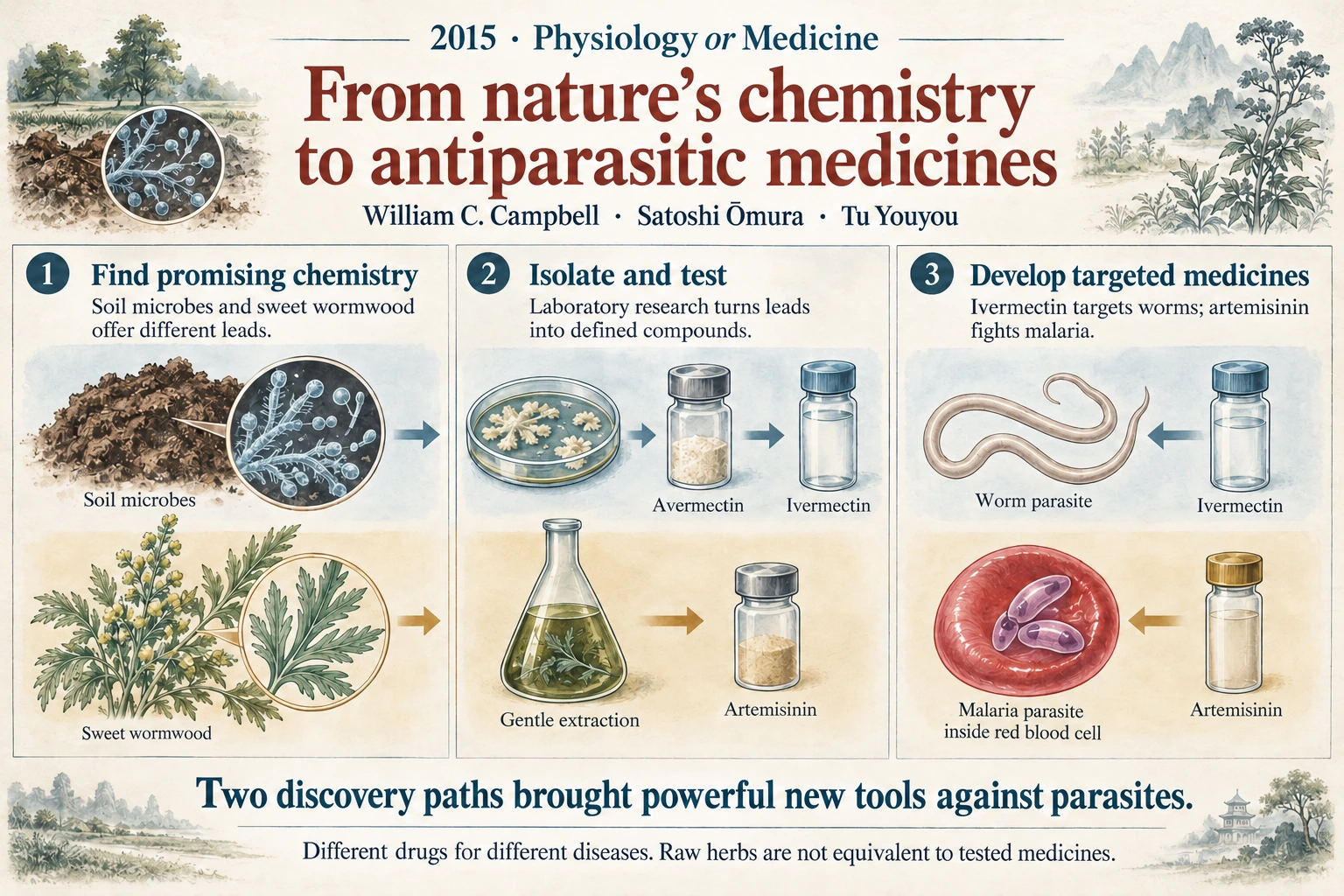
Infographic explaining From nature’s chemistry to antiparasitic medicines
Original AI-generated infographic. A conceptual overview; the explanations and sources below provide context.
Read the poster text

Two discovery paths brought powerful new tools against parasites.

  1. Find promising chemistry

    Soil microbes and sweet wormwood offer different leads.

  2. Isolate and test

    Laboratory research turns leads into defined compounds.

  3. Develop targeted medicines

    Ivermectin targets worms; artemisinin fights malaria.

Different drugs for different diseases. Raw herbs are not equivalent to tested medicines.

01 · The discovery

The idea, in everyday language

The prize recognised discoveries against two kinds of parasitic infection. Ōmura isolated soil bacteria and developed ways to grow promising strains. Campbell investigated their biological activity against parasites. This collaboration led to avermectin, a substance made by a Streptomyces bacterium, and to the development of its derivative ivermectin. These medicines became major tools against diseases including river blindness and lymphatic filariasis, which involve parasitic worms.

Tu worked on a different problem: malaria, caused by single-celled Plasmodium parasites. In a large search for antimalarial substances, she returned to historical descriptions of sweet wormwood and reconsidered how its active material was extracted. Gentler extraction helped produce a promising result, followed by purification and testing of artemisinin. The discovery opened another drug class, later used in artemisinin-based combination treatments. The two branches share a strategy—testing natural chemistry—but have different organisms, compounds and targets.

Why it matters

The discoveries transformed the possibilities for controlling parasitic disease, especially for communities carrying heavy disease burdens. Their practical impact also depended on clinical research, manufacturing, distribution and public-health programmes. Campbell and Ōmura each received a quarter of the prize; Tu received half.
02 · The people

Who brought the idea to life?

Illustrated portrait of William C. Campbell

William C. Campbell

Prize share · 1/4

He investigated cultures supplied by Satoshi Ōmura and helped reveal a powerful antiparasitic activity. Research teams isolated avermectin and developed its derivative ivermectin, which became important against several parasitic infections. The contribution depended on screening, purification, chemical development and testing, rather than a soil sample acting as a medicine by itself.

Read the biography ↗
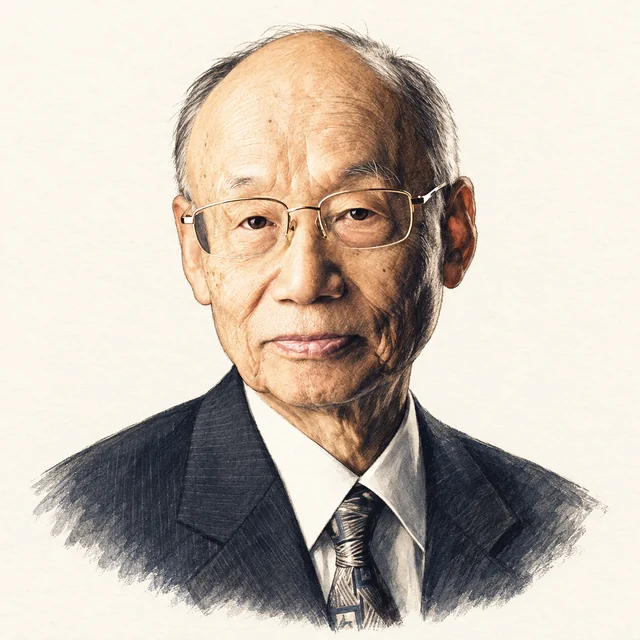
Illustrated portrait of Satoshi Ōmura

Satoshi Ōmura

Prize share · 1/4

He isolated and cultured strains of Streptomyces, including the source of avermectin. His collaboration with Campbell connected microbial discovery to antiparasitic testing and drug development. The eventual medicines were purified and developed compounds, not untreated bacteria or unprocessed soil extracts.

Read the biography ↗
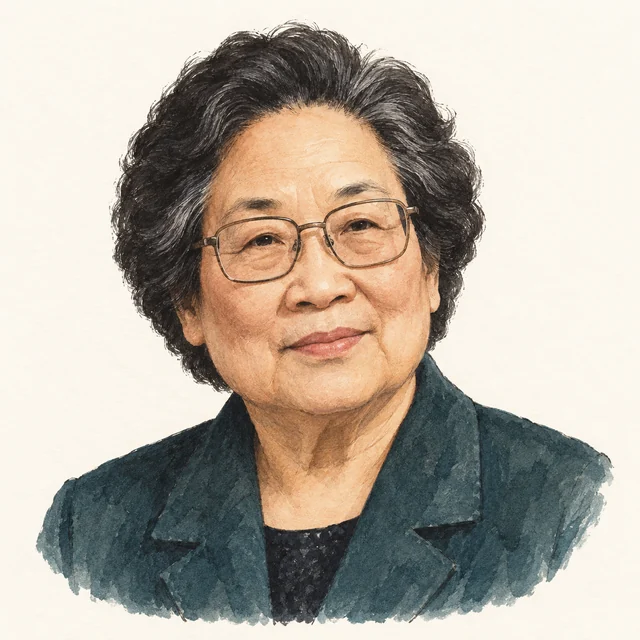
Illustrated portrait of Tu Youyou

Tu Youyou

Prize share · 1/2

She helped establish the antimalarial activity of the substance later named artemisinin. Her work opened a new drug class that became central to malaria treatment. Artemisinin-based medicines are defined, tested compounds; they should not be equated with drinking herbal preparations of uncertain composition.

Read the biography ↗

03 · Years in the making

The path here

  1. 1972

    Artemisinin is isolated during the Chinese antimalarial research programme.

  2. 1981

    Clinical testing of ivermectin against river blindness begins.

  3. 2015

    The prize honours both routes to new antiparasitic therapies.

04 · Read further

From the original sources

Original explanations by Curionode, based on the official records below. Biographical details and affiliations refer to the award year.

  1. Nobel Prize announcement nobelprize.org
  2. Scientific background nobelprize.org
  3. Tu Youyou autobiography nobelprize.org

More in Physiology or Medicine

Browse this subject ↗