01 · The discovery
The idea, in everyday language
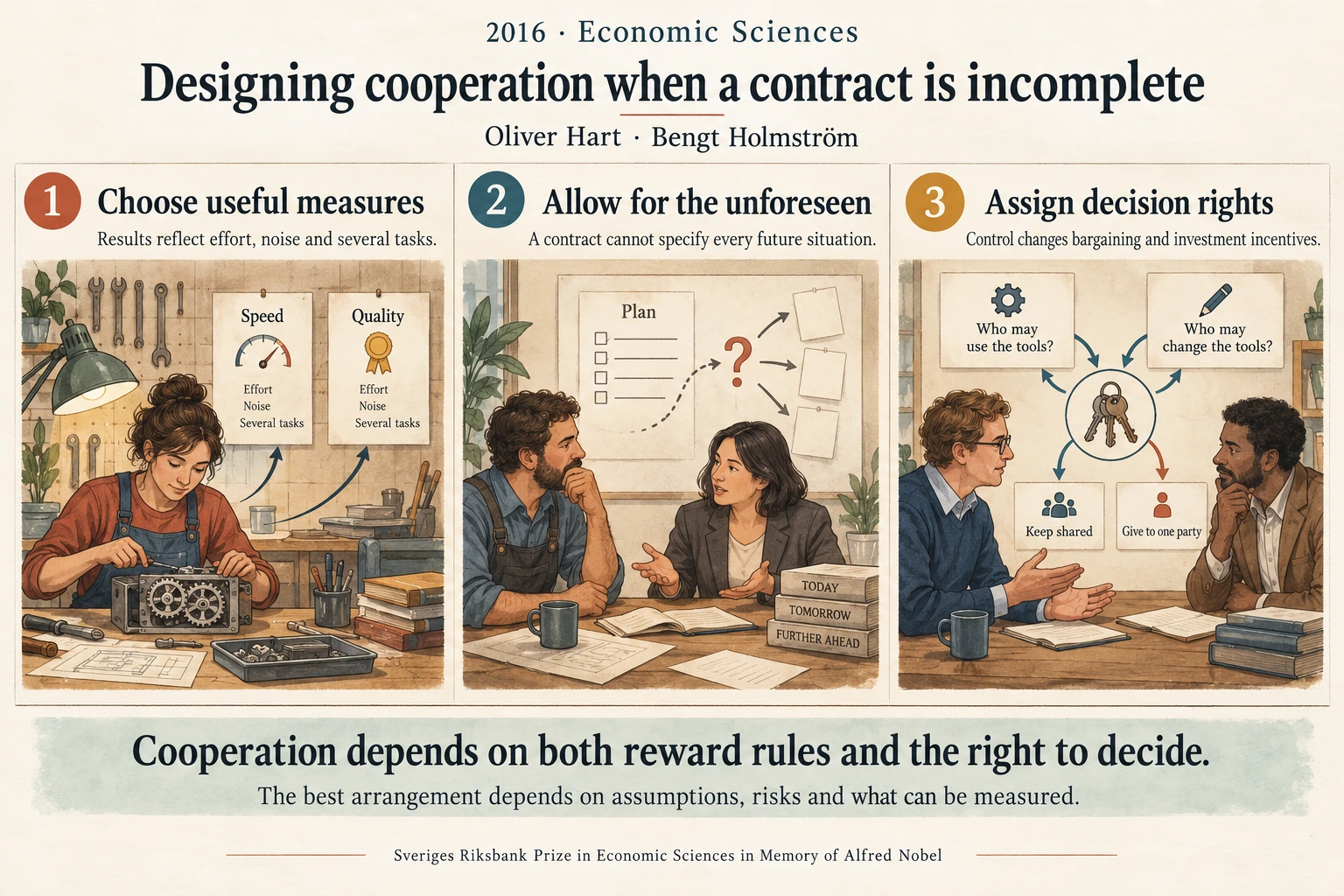
Suppose a workshop pays a repairer only for the number of jobs completed. Speed may rise, but careful diagnosis and lasting quality may suffer. Holmström studied such problems when one party cannot observe another’s actions directly. Performance measures contain information, but also luck. Good contract design must consider which measures reveal effort, how much risk a worker bears, and whether rewarding one task draws attention away from others.
Hart examined another gap: no contract can spell out every future situation in an enforceable way. When something unforeseen happens, who gets to decide? Ownership and control rights affect bargaining power. They therefore change each party’s willingness to make investments before the uncertainty is resolved. With collaborators, Hart showed why the boundaries of a firm and the allocation of assets are part of the cooperation problem, not just administrative details.
Why it matters
The theories offer tools for analysing employment, insurance, business ownership, finance and public services. They show why stronger performance pay is not always better and why transferring ownership changes incentives. Their value lies in making assumptions and trade-offs explicit, so different arrangements can be compared.