c.curionodeThe Nobel Archive

2018 · Economic Sciences

Growth in a world of ideas and limits

Nordhaus linked economic activity with climate change; Romer explained how incentives shape the creation of new knowledge.

The Sveriges Riksbank Prize in Economic Sciences in Memory of Alfred Nobel.

Climate economicsEndogenous growthSpillover effects
2018Economic Sciences

Visual guide

The prize, pictured

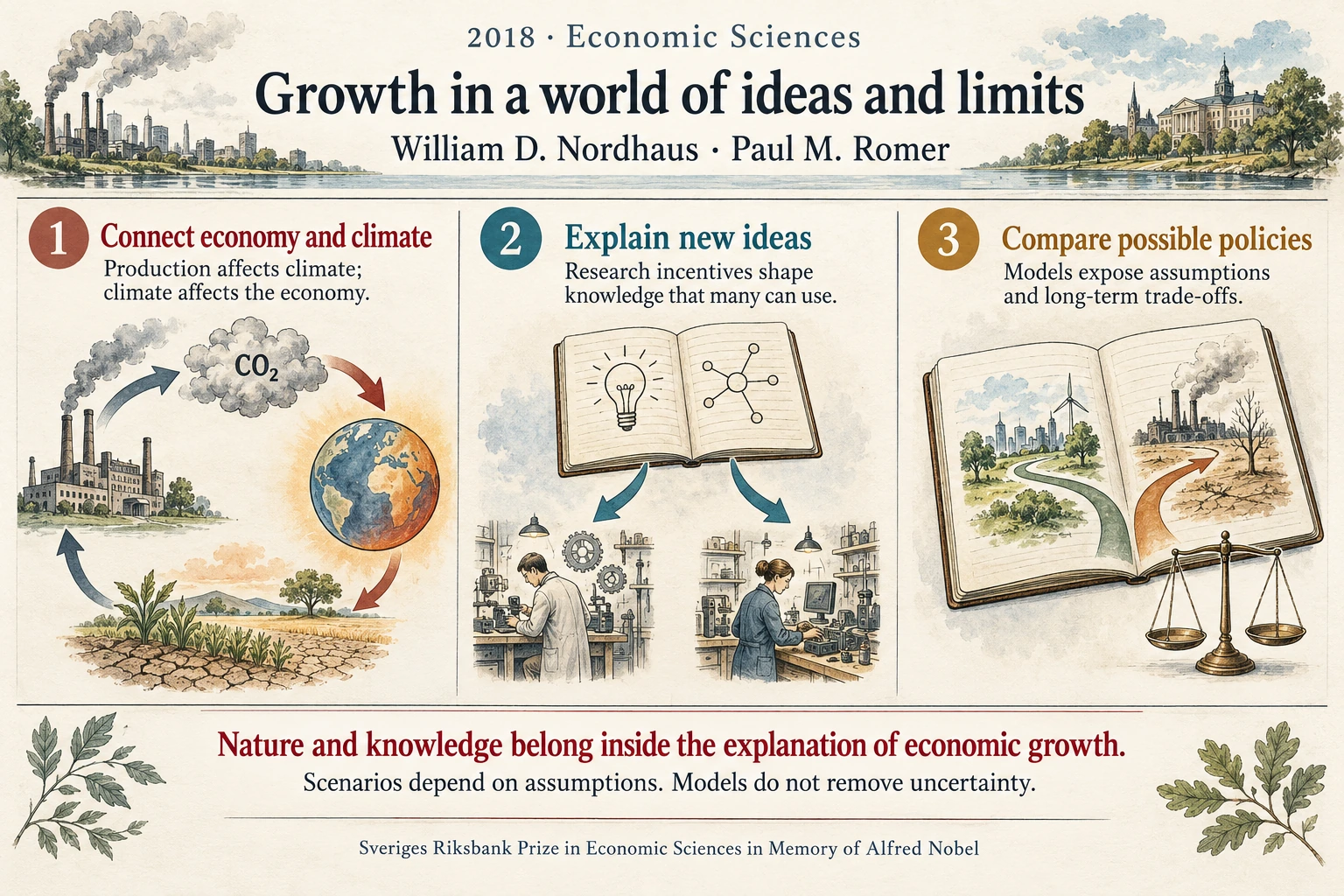
Infographic explaining Growth in a world of ideas and limits
Original AI-generated infographic. A conceptual overview; the explanations and sources below provide context.
Read the poster text

Nature and knowledge belong inside the explanation of economic growth.

  1. Connect economy and climate

    Production affects climate; climate affects the economy.

  2. Explain new ideas

    Research incentives shape knowledge that many can use.

  3. Compare possible policies

    Models expose assumptions and long-term trade-offs.

Scenarios depend on assumptions. Models do not remove uncertainty.

01 · The discovery

The idea, in everyday language

An economy changes the environment in which it operates. Production can generate emissions; emissions alter the climate; climate change can damage livelihoods and production. William Nordhaus brought these connections into integrated assessment models. Instead of analysing the economy and climate separately, the models let them affect one another over time. Researchers can compare scenarios, including different policies, while making the underlying assumptions about costs, damages and physical processes explicit.

Paul Romer examined another connection that earlier growth models often left outside the explanation: where new technology comes from. People and firms invest in research because they have incentives to create useful ideas. An idea is non-rival: several people can use the same design at once, unlike one machine that cannot be in two factories simultaneously. Yet access to an idea may be restricted through patents or other means. Romer showed how these properties affect innovation, competition and long-run growth.

Why it matters

These approaches made climate and knowledge part of the economic explanation rather than background conditions. They give researchers tools for examining carbon pricing, research incentives and the balance between rewarding inventors and allowing ideas to spread. The prize recognised two distinct contributions to understanding long-run economic change.
02 · The people

Who brought the idea to life?

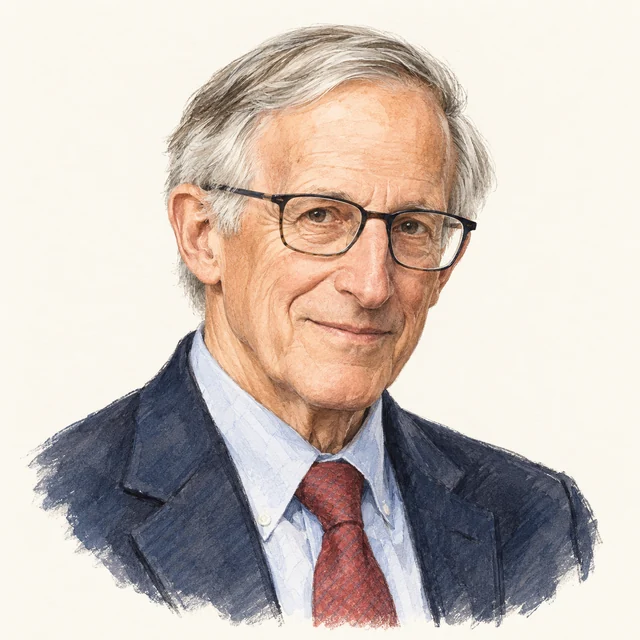
Illustrated portrait of William D. Nordhaus

William D. Nordhaus

Prize share · 1/2

He pioneered integrated assessment models linking economic production, emissions, climate change and economic damages. These models can compare policy scenarios such as different carbon prices. Their conclusions depend on assumptions about damages, climate responses and the weight given to future generations.

Read the biography ↗
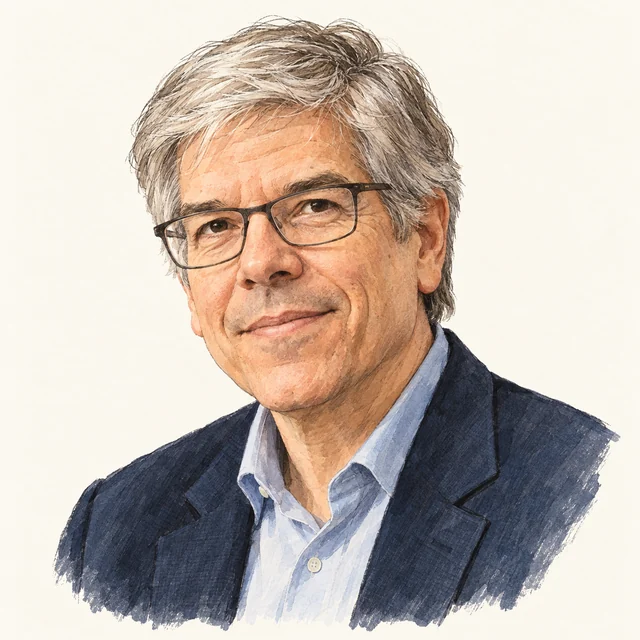
Illustrated portrait of Paul M. Romer

Paul M. Romer

Prize share · 1/2

His theory of endogenous growth placed purposeful innovation inside economic models. An idea can be used by many people at once, unlike a single machine, while access may still be restricted. This distinction helps explain both the promise of knowledge and the policy challenges of funding its creation.

Read the biography ↗

03 · Years in the making

The path here

  1. 1970s

    Nordhaus begins connecting economic activity with the climate.

  2. 1990

    Romer publishes a central model of growth driven by purposeful innovation.

  3. 1990s

    Nordhaus develops integrated models for comparing economy–climate scenarios.

04 · Read further

From the original sources

Original explanations by Curionode, based on the official records below. Biographical details and affiliations refer to the award year.

  1. Official award announcement nobelprize.org
  2. Nobel Committee’s accessible background nobelprize.org

More in Economic Sciences

Browse this subject ↗