01 · The discovery
The idea, in everyday language
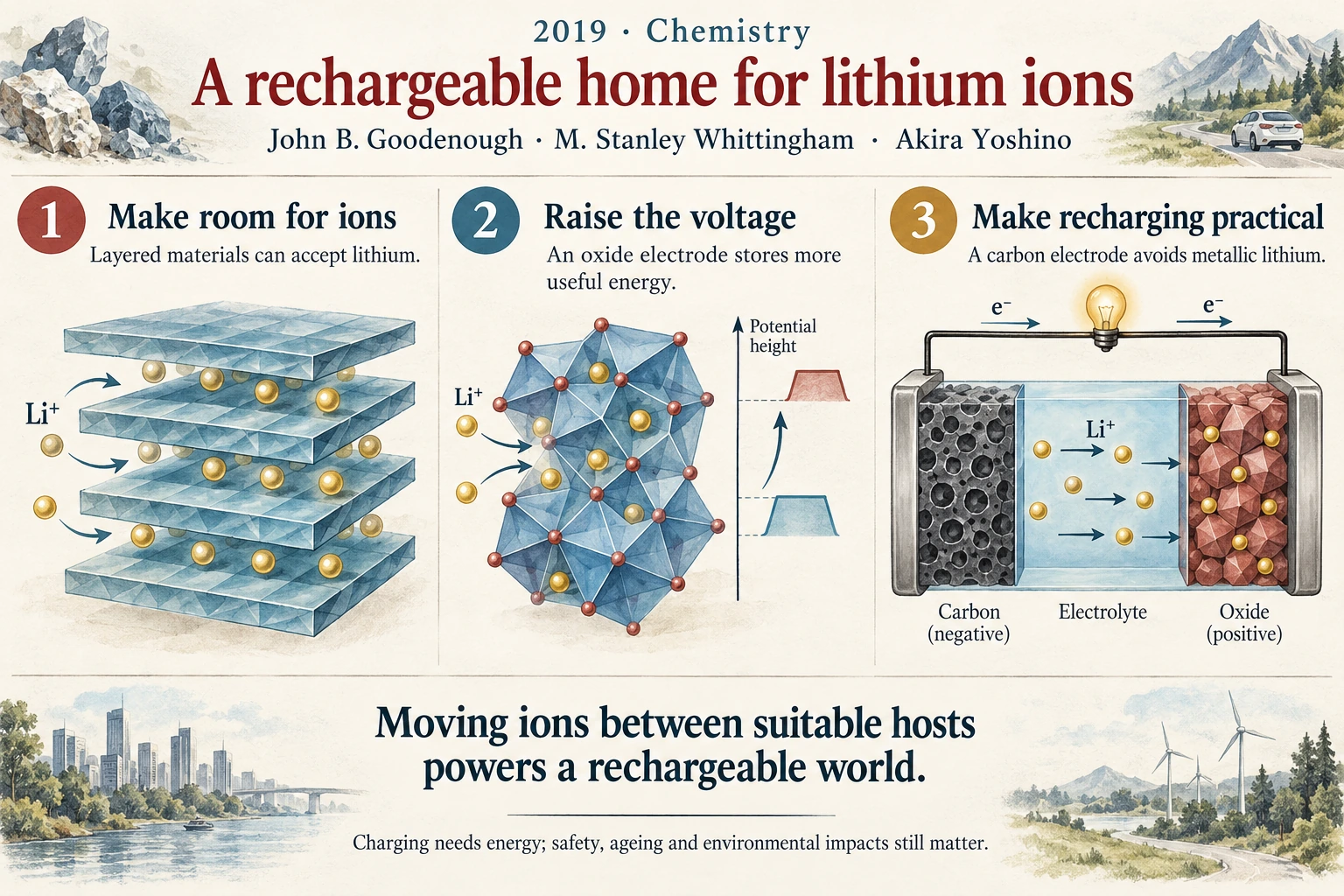
A battery stores energy through the different chemical conditions at its two electrodes. During discharge, lithium ions move through the electrolyte inside a lithium-ion battery, while electrons travel through the outside circuit and power a device. Charging supplies energy to reverse the transfer. The key is finding electrode materials that can repeatedly accept and release lithium ions.
Whittingham developed a layered titanium-disulphide electrode, but his early battery used reactive metallic lithium. Goodenough’s lithium-containing cobalt oxide supplied a higher-voltage positive electrode. Yoshino combined an oxide positive electrode with a carbon-based negative electrode, creating a practical design that avoided metallic lithium. Their contributions were different steps in a cumulative development.
Why it matters
Rechargeable lithium-ion batteries helped make portable electronics and electric vehicles practical and provided another way to store electricity from variable sources. The impact depended on materials research, engineering, manufacturing and safety systems developed by many people beyond the three laureates.