01 · The discovery
The idea, in everyday language
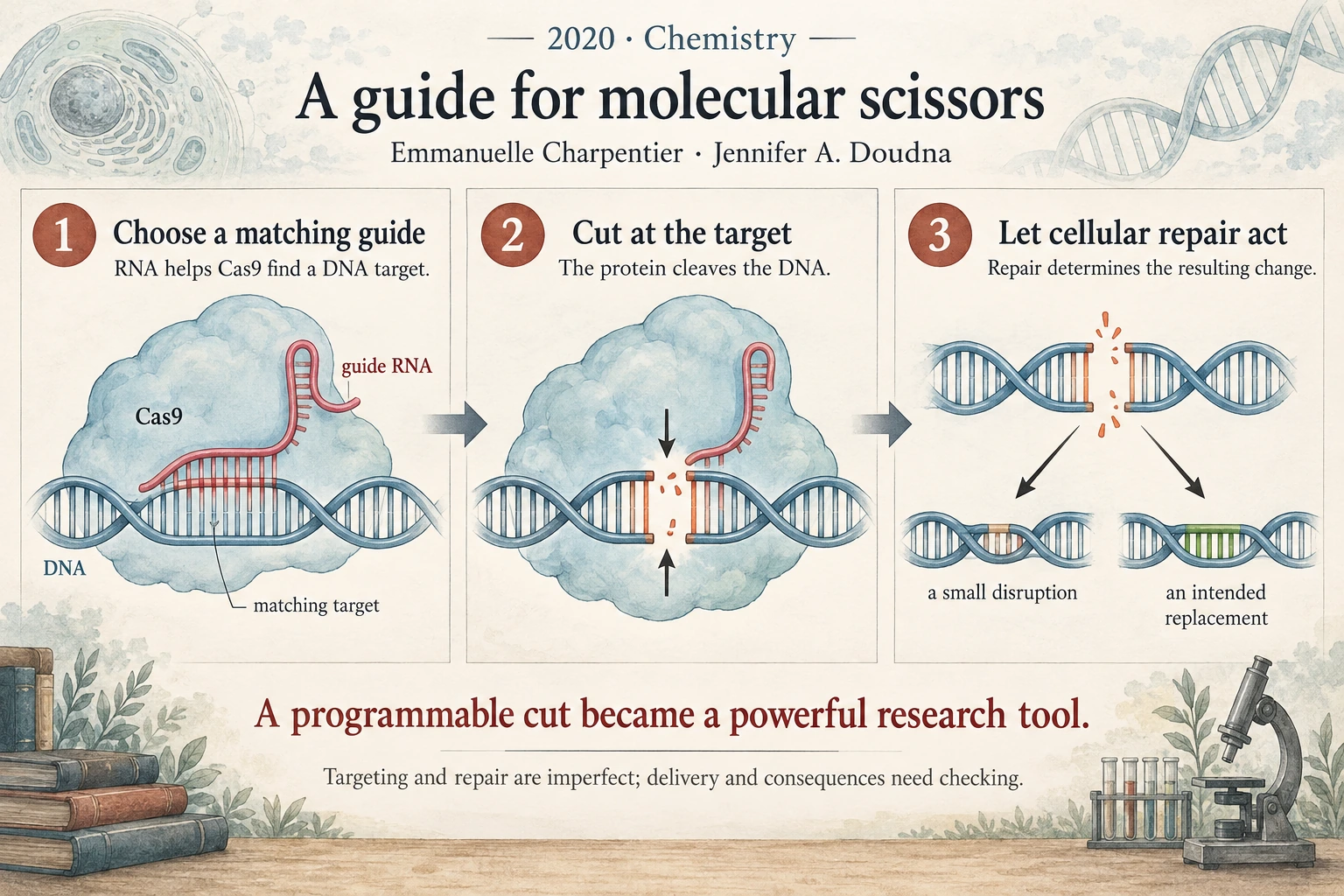
Bacteria face viruses too. Charpentier’s work revealed an RNA component of a bacterial defence system. Working with Doudna and colleagues, she helped show how RNA could guide the Cas9 protein to a matching DNA target. They simplified the RNA components into a tool whose target could be changed by changing the guide.
In a cell, cutting DNA is only part of editing. The cell’s repair machinery then reconnects the broken DNA; the outcome may disrupt a gene or, under suitable conditions, incorporate an intended change. This combination made experiments on gene function much easier, but delivery, target choice and repair outcomes still need careful control.
Why it matters
CRISPR–Cas9 changed basic research by helping scientists test what genes do. It also opened routes for crop development and medical research. The prize recognised a foundational method; many further discoveries and practical steps were needed to turn it into particular applications.