c.curionodeThe Nobel Archive

1905 · Literature

Make historical worlds carry a people’s memory

Sienkiewicz’s epic fiction turned researched settings into vivid narrative worlds. Adventure, humour and personal loyalties gave historical conflicts emotional force for readers living in a partitioned Poland.

Epic fictionHistorical imaginationPolish literature
1905Literature

Visual guide

The prize, pictured

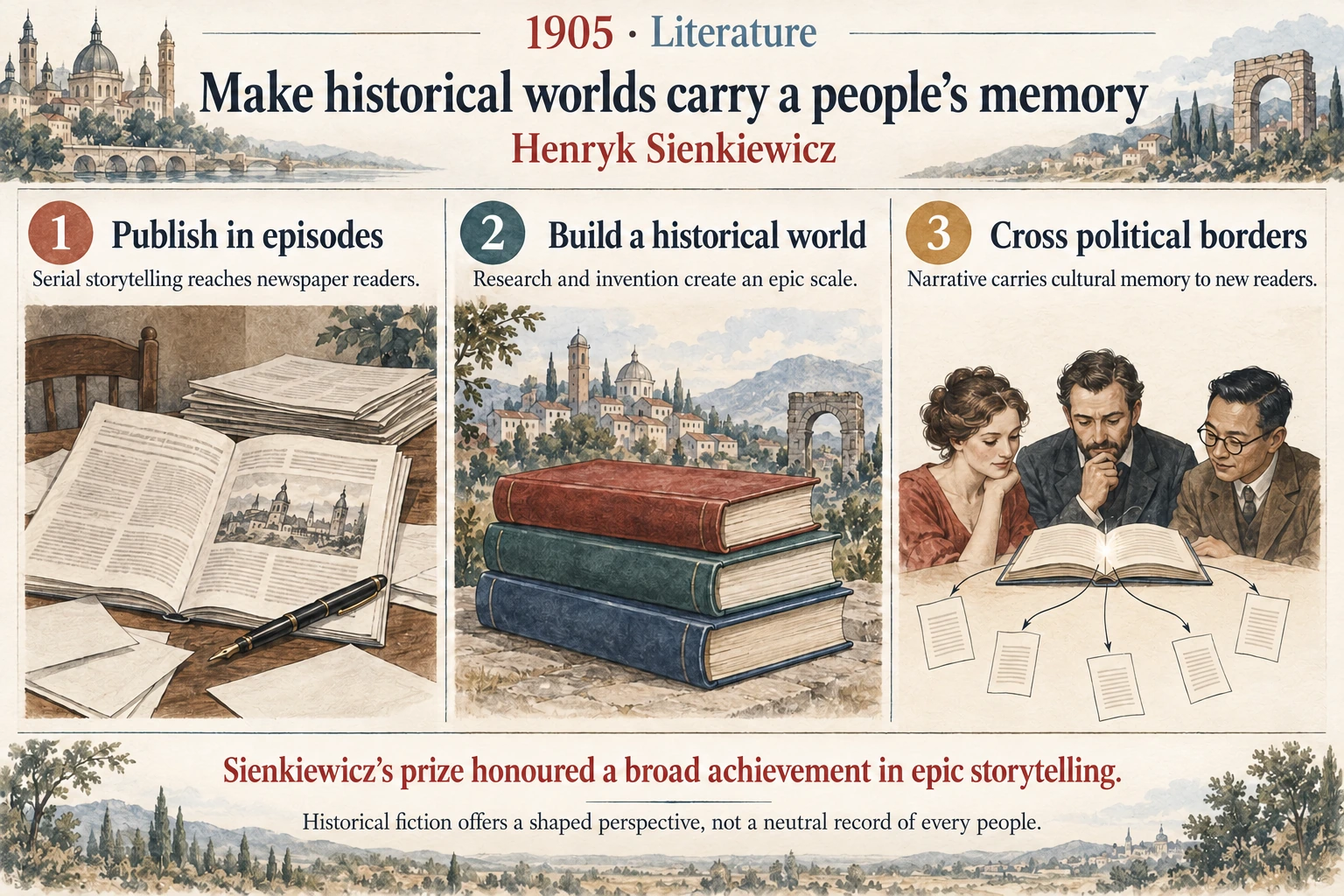
Infographic explaining Make historical worlds carry a people’s memory
Original AI-generated infographic. A conceptual overview; the explanations and sources below provide context.
Read the poster text

Sienkiewicz’s prize honoured a broad achievement in epic storytelling.

  1. Publish in episodes

    Serial storytelling reaches newspaper readers.

  2. Build a historical world

    Research and invention create an epic scale.

  3. Cross political borders

    Narrative carries cultural memory to new readers.

Historical fiction offers a shaped perspective, not a neutral record of every people.

01 · The contribution

The idea, in everyday language

The trilogy beginning with With Fire and Sword combines historical events with invented lives. Characters experience danger, love, divided loyalties and changes of fortune, giving a long account of public events a sequence of personal stakes.

Quo vadis carried this narrative art to ancient Rome and an international readership. Short stories and novels on contemporary subjects added to the range. The full 1905 Literature Prize recognised his achievement as an epic writer across a body of work, rather than one famous novel alone.

Why it matters

The novels helped sustain Polish cultural memory across political borders and brought Polish-language narrative art to readers abroad. Their serial form also connected newspapers, popular reading and large literary works.
02 · The people

Who brought the idea to life?

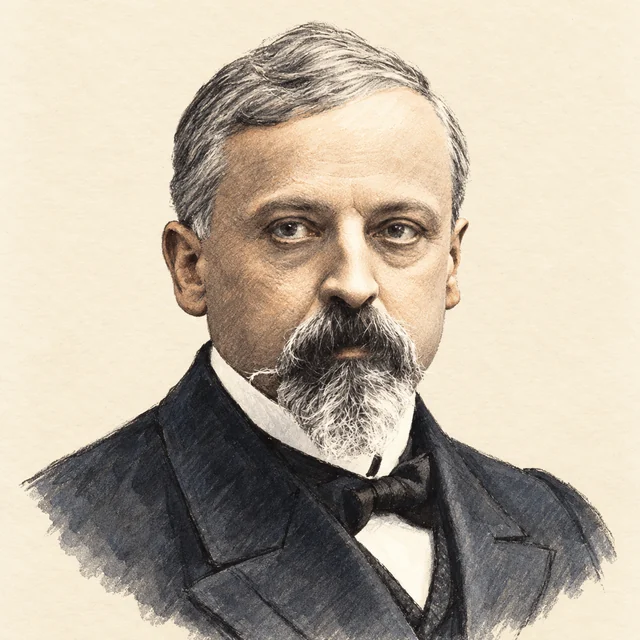
Illustrated portrait of Henryk Sienkiewicz

Henryk Sienkiewicz

Prize share · 1

Sienkiewicz received the full Literature Prize for his achievement as an epic writer. The recognition embraced a wider body of historical fiction and narrative art, rather than one famous novel alone.

Read the biography ↗

03 · Years in the making

The path here

  1. 1846

    Sienkiewicz is born in the Russian partition of Poland.

  2. 1876–1878

    He travels and reports from North America.

  3. 1884

    With Fire and Sword begins his historical trilogy in book form.

  4. 1895–1896

    Quo vadis is serialised; its book edition appears in 1896.

  5. 1900

    The Knights of the Cross appears; a national gift purchases Oblęgorek.

  6. 1905

    The Literature Prize honours his epic authorship.

  7. 1916

    He dies in Vevey after working on wartime relief.

04 · Read further

From the original sources

Original explanations by Curionode, based on the official records below. Biographical details and affiliations refer to the award year.

  1. Official award summary nobelprize.org
  2. Award ceremony speech nobelprize.org
  3. Kielce National Museum: Sienkiewicz’s life and writing mnki.pl
  4. Kielce National Museum: the gift of Oblęgorek mnki.pl

More in Literature

Browse this subject ↗