c.curionodeThe Nobel Archive

1907 · Literature

Give observation the force of an imagined story

Kipling turned sharply observed people, voices and situations into fiction and verse with a wide imaginative reach. The prize recognised a broad narrative talent across forms and audiences.

Short fictionNarrative voicePoetry
1907Literature

Visual guide

The prize, pictured

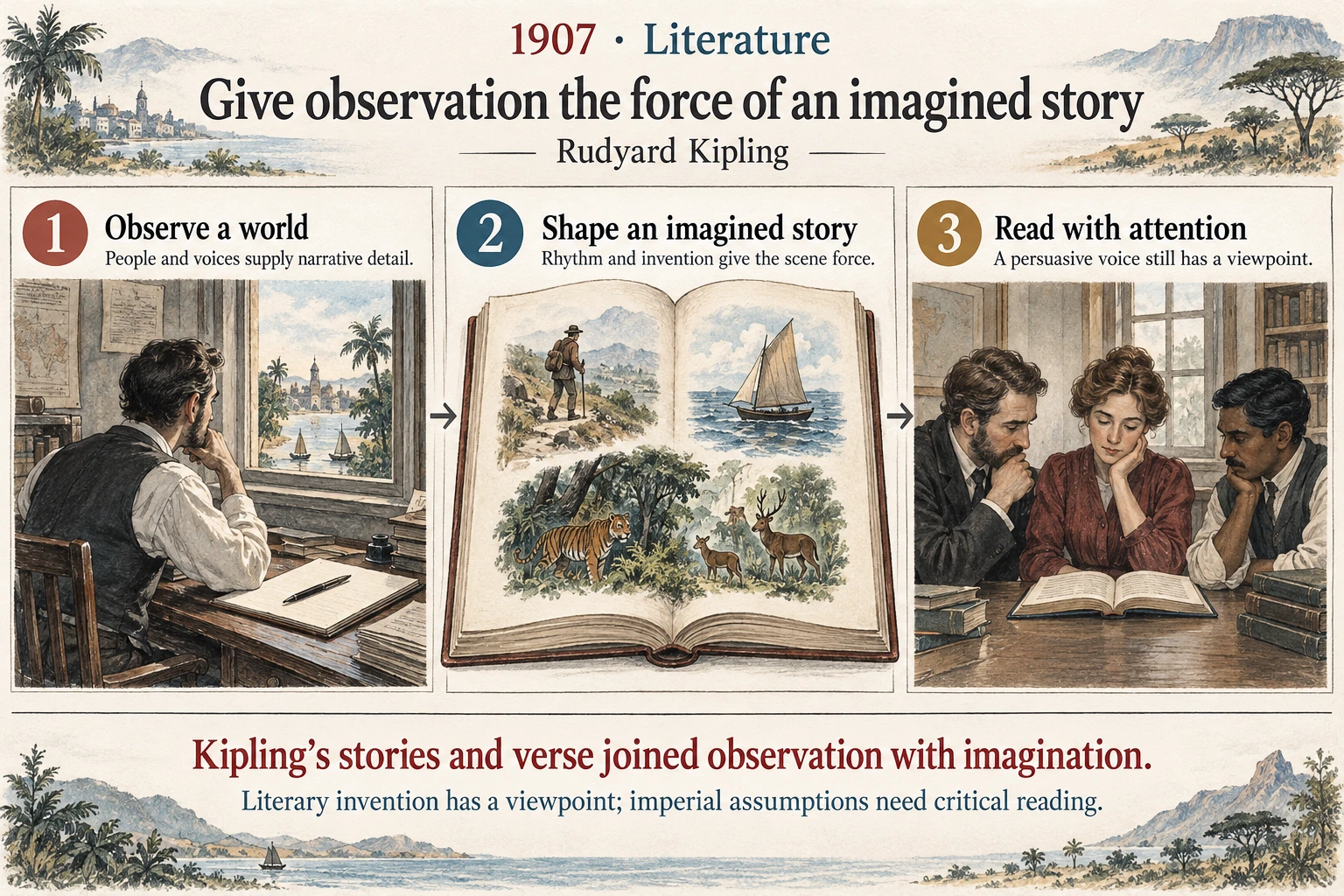
Infographic explaining Give observation the force of an imagined story
Original AI-generated infographic. A conceptual overview; the explanations and sources below provide context.
Read the poster text

Kipling’s stories and verse joined observation with imagination.

  1. Observe a world

    People and voices supply narrative detail.

  2. Shape an imagined story

    Rhythm and invention give the scene force.

  3. Read with attention

    A persuasive voice still has a viewpoint.

Literary invention has a viewpoint; imperial assumptions need critical reading.

01 · The contribution

The idea, in everyday language

Journalism and life in colonial India supplied much of the material for early short stories. Kipling compressed a setting, a distinctive voice and a conflict into narratives that could suggest a larger world beyond the page. Verse added rhythm and memorable speech; stories for children used transformations, animals and playful explanations to open different imaginative possibilities.

The Jungle Book, Kim, soldiers’ stories, poems and many other works belong to this authorship. The 1907 award was not attached to one book. Observation and sympathy coexist with the political assumptions of empire: a narrator’s persuasive voice is not a guarantee of equal treatment of every people or an objective record of colonial society.

Why it matters

Kipling’s range helped carry English-language short fiction and verse to a large international readership. His work remains useful for studying narrative economy, voice and rhythm, alongside the relationship between imaginative literature and imperial power.
02 · The people

Who brought the idea to life?

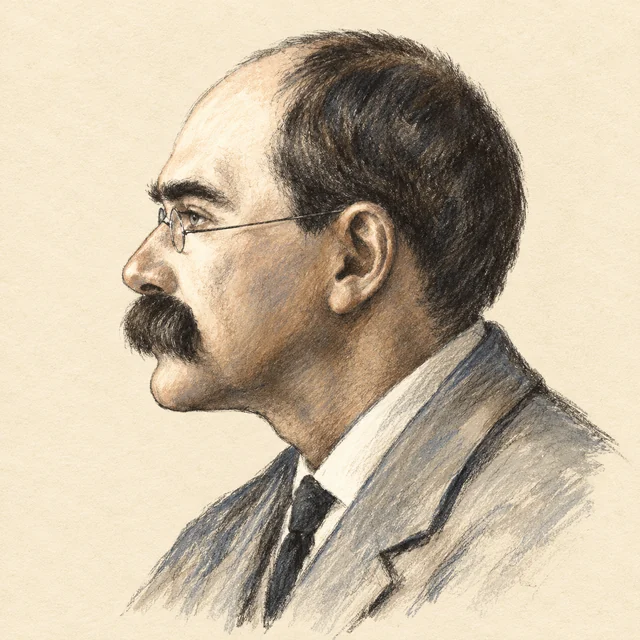
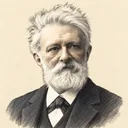
Illustrated portrait of Rudyard Kipling

Rudyard Kipling

Prize share · 1

Kipling received the full Literature Prize for observation, imaginative originality and narrative power across a broad authorship of stories and verse.

Read the biography ↗

03 · Years in the making

The path here

  1. 1882

    Kipling returns to India and begins newspaper work.

  2. 1886

    Departmental Ditties appears.

  3. 1888

    Plain Tales from the Hills and Soldiers Three are published.

  4. 1894

    The Jungle Book appears; a second collection follows in 1895.

  5. 1901

    Kim is published.

  6. 1902

    Just So Stories appears; the Kiplings buy Bateman’s.

  7. 1907

    The full Literature Prize recognises his broad narrative authorship.

04 · Read further

From the original sources

Original explanations by Curionode, based on the official records below. Biographical details and affiliations refer to the award year.

  1. Official award summary nobelprize.org
  2. Award ceremony speech nobelprize.org
  3. National Trust: Kipling’s home, writing and imperial legacy nationaltrust.org.uk

More in Literature

Browse this subject ↗