01 · The contribution
The idea, in everyday language
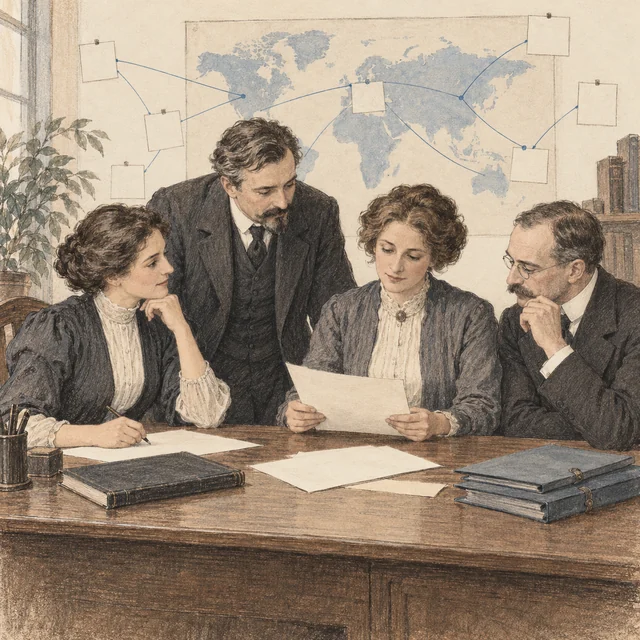
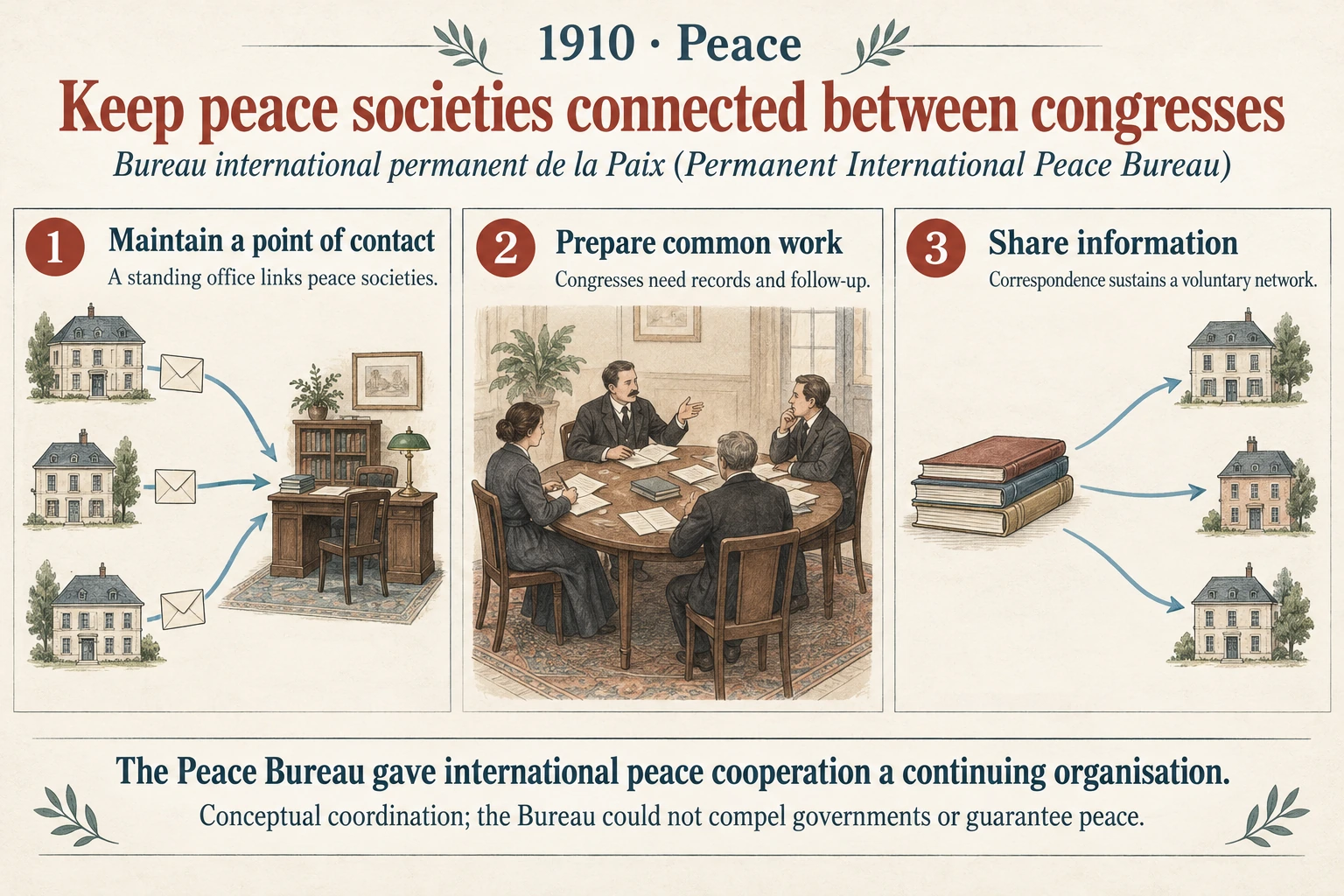
National peace societies differed in membership, priorities and local circumstances. A congress could bring them together, but correspondence, records and preparation were needed between meetings. The Bureau, founded in Bern in 1891, supplied a continuing point of contact. It maintained information and a library, published a periodical and yearbook, prepared congresses and followed up their decisions.
Its programme encouraged arbitration, disarmament and peaceful settlement through international cooperation. Officers such as Élie Ducommun and Albert Gobat carried much of the work, alongside the wider network of societies. Their individual Peace Prizes were separate awards. In 1910 the full prize went to the Bureau as an organisation, with Henri La Fontaine then serving as president. The award did not turn it into an authority able to compel governments.
Why it matters
The Bureau gave an international peace movement continuity, shared information and a place for sustained cooperation. The award recognised the organisational work behind public congresses and proposals for peaceful dispute settlement.