c.curionodeThe Nobel Archive

1929 · Physiology or Medicine

Small food factors with large consequences

Eijkman’s work on polyneuritis and Hopkins’s growth studies showed why known bulk nutrients were not the whole story. Small components of food could be necessary for health and growth.

VitaminsDeficiency diseaseRice branAccessory food factors
1929Physiology or Medicine

Visual guide

The prize, pictured

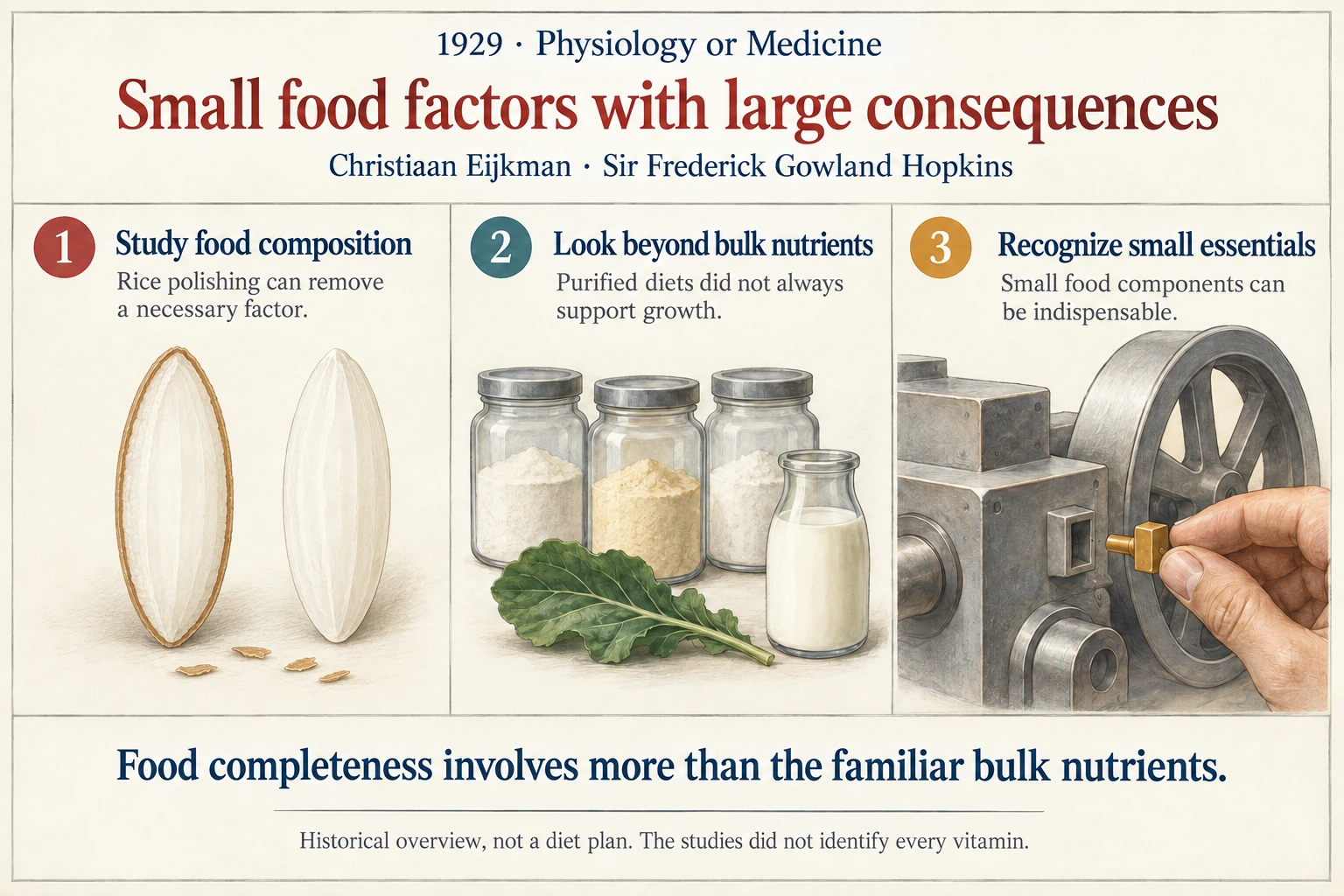
Infographic explaining Small food factors with large consequences
Original AI-generated infographic. A conceptual overview; the explanations and sources below provide context.
Read the poster text

Food completeness involves more than the familiar bulk nutrients.

  1. Study food composition

    Rice polishing can remove a necessary factor.

  2. Look beyond bulk nutrients

    Purified diets did not always support growth.

  3. Recognize small essentials

    Small food components can be indispensable.

Historical overview, not a diet plan. The studies did not identify every vitamin.

01 · The discovery

The idea, in everyday language

In Java, Eijkman’s observations connected a chicken disease with diets based on polished rice and found protection associated with rice bran. This challenged a purely infectious explanation. He first considered a toxin-and-antidote model; Gerrit Grijns later clarified the idea of a missing food factor. The relevant substance came to be identified as vitamin B1.

Hopkins took another route. Young animals could stop growing on carefully purified diets containing the familiar bulk nutrients and salts, yet resume growth when small additions of natural food material were made. His full results appeared in 1912. The studies indicated accessory food factors, rather than a simple shortage of calories alone. The prize recognized complementary investigations, not one jointly conducted experiment.

Why it matters

The findings helped establish the science of vitamins and deficiency diseases. They changed the questions researchers asked about food composition and physiological need. Identifying individual vitamins, their chemistry and their different functions involved many further investigators.
02 · The people

Who brought the idea to life?

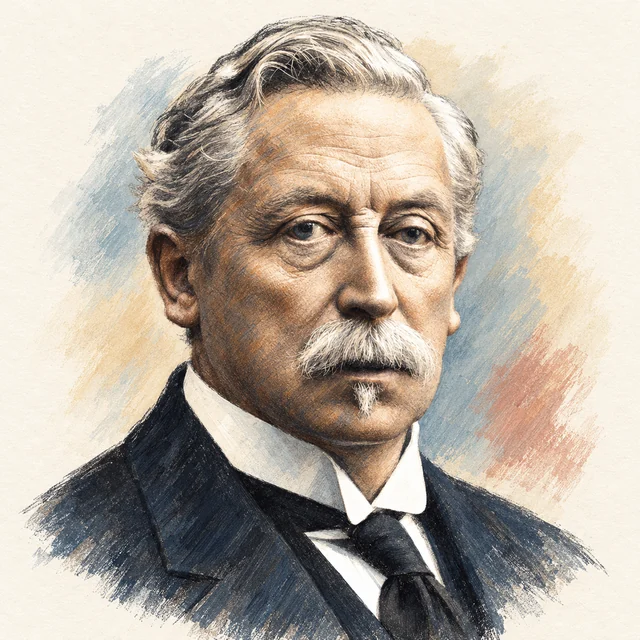
Illustrated portrait of Christiaan Eijkman

Christiaan Eijkman

Prize share · 1/2

Eijkman received half the Medicine Prize for discovery of the antineuritic vitamin. Work linking food composition with polyneuritis helped establish an experimental route toward understanding nutritional deficiency.

Read the biography ↗
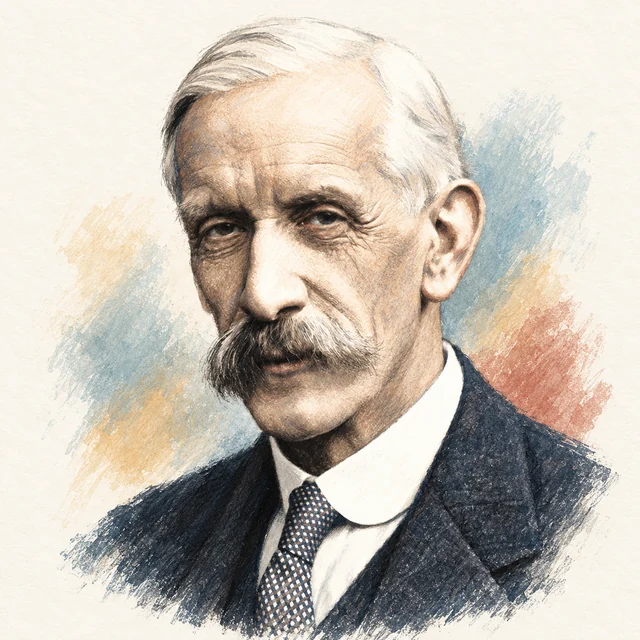
Illustrated portrait of Sir Frederick Gowland Hopkins

Sir Frederick Gowland Hopkins

Prize share · 1/2

Hopkins received half the Medicine Prize for discovering growth-stimulating vitamins. Controlled nutritional comparisons demonstrated the need for small food components beyond purified bulk nutrients.

Read the biography ↗

03 · Years in the making

The path here

  1. 1890s

    Eijkman’s Java investigations connect polyneuritis with food composition.

  2. 1912

    Hopkins publishes his full studies of accessory factors and growth.

  3. 1929

    Eijkman and Hopkins each receive half the Medicine Prize.

04 · Read further

From the original sources

Original explanations by Curionode, based on the official records below. Biographical details and affiliations refer to the award year.

  1. Official award summary nobelprize.org
  2. Award ceremony speech nobelprize.org

More in Physiology or Medicine

Browse this subject ↗