c.curionodeThe Nobel Archive

1932 · Physiology or Medicine

How nerve signals become coordinated action

Sherrington studied how excitation and inhibition organize reflexes. Adrian recorded individual nerve fibres, revealing how similar electrical impulses can carry information through their timing and frequency.

NeuronsReflex integrationReciprocal inhibitionNerve impulses
1932Physiology or Medicine

Visual guide

The prize, pictured

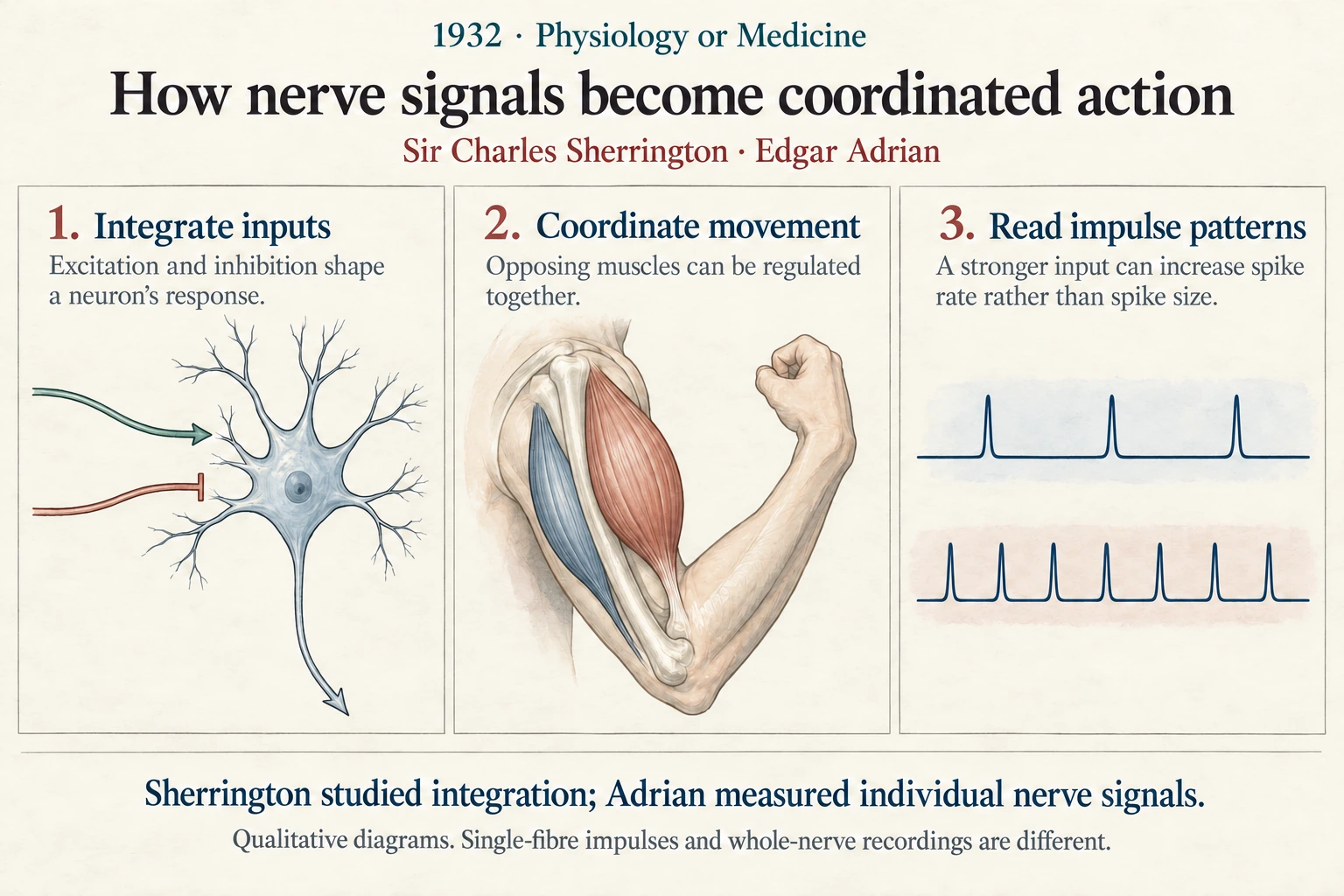
Infographic explaining How nerve signals become coordinated action
Original AI-generated infographic. A conceptual overview; the explanations and sources below provide context.
Read the poster text

Sherrington studied integration; Adrian measured individual nerve signals.

  1. Integrate inputs

    Excitation and inhibition shape a neuron’s response.

  2. Coordinate movement

    Opposing muscles can be regulated together.

  3. Read impulse patterns

    A stronger input can increase spike rate rather than spike size.

Qualitative diagrams. Single-fibre impulses and whole-nerve recordings are different.

01 · The discovery

The idea, in everyday language

A nervous system has to do more than pass a message along a wire: it must combine inputs and produce an appropriate response. Sherrington investigated reflexes, muscle tone and the interaction of opposing muscles. When one muscle group contracts, reduced activation of its antagonist can help the movement proceed. His work on reciprocal inhibition and the summation of inputs showed that reflex pathways form an integrated system rather than a set of independent mechanical triggers.

Adrian approached the problem from the signals themselves. Building on work with Keith Lucas, he used sensitive electrical recording and amplification to distinguish activity from individual nerve fibres. In a given fibre under comparable conditions, impulses were broadly similar in amplitude. Stronger stimulation could increase their frequency and recruit additional fibres rather than simply making every impulse larger. Continued stimulation could also produce adaptation, changing the firing pattern over time. The two laureates shared the 1932 prize equally for complementary discoveries concerning neuronal function.

Why it matters

The work connected whole reflex responses with the measurable activity of nerve fibres. It provided a stronger experimental basis for neurophysiology and opened questions about how sensory information is represented and how motor responses are coordinated. Later cellular and molecular discoveries explained additional mechanisms; the 1932 studies were a foundation rather than a complete account of the brain.
02 · The people

Who brought the idea to life?

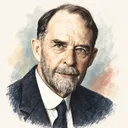
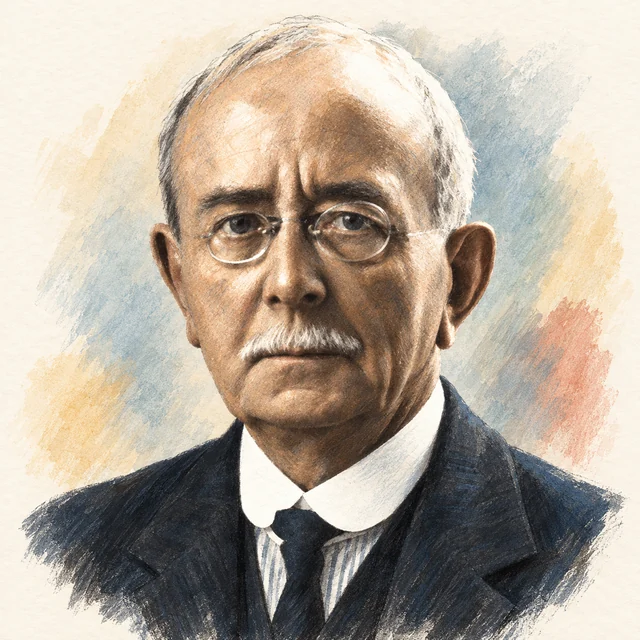
Illustrated portrait of Sir Charles Sherrington

Sir Charles Sherrington

Prize share · 1/2

Sherrington received half the Medicine Prize for discoveries concerning neuronal function. His studies of reflexes, reciprocal inhibition and the integration of inputs explained how nervous circuits coordinate muscular activity.

Read the biography ↗
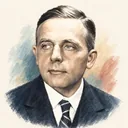
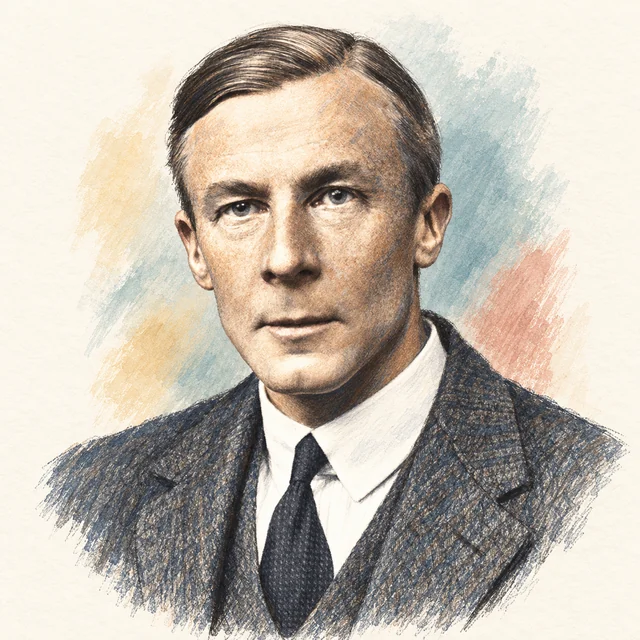
Illustrated portrait of Edgar Adrian

Edgar Adrian

Prize share · 1/2

Adrian received half the Medicine Prize for discoveries concerning neuronal function. Recording single nerve fibres revealed how the timing and frequency of broadly similar electrical impulses carry sensory information.

Read the biography ↗

03 · Years in the making

The path here

  1. 1906

    Sherrington publishes The Integrative Action of the Nervous System.

  2. 1913

    Adrian becomes a Trinity fellow through work on all-or-none nerve activity.

  3. 1925

    Adrian begins electrical investigations of sensory organs.

  4. 1932

    Sherrington and Adrian share the Medicine Prize equally.

04 · Read further

From the original sources

Original explanations by Curionode, based on the official records below. Biographical details and affiliations refer to the award year.

  1. Official award summary nobelprize.org
  2. Award ceremony speech nobelprize.org
  3. Official biography: Charles Sherrington nobelprize.org
  4. Official biography: Edgar Adrian nobelprize.org

More in Physiology or Medicine

Browse this subject ↗