01 · The discovery
The idea, in everyday language
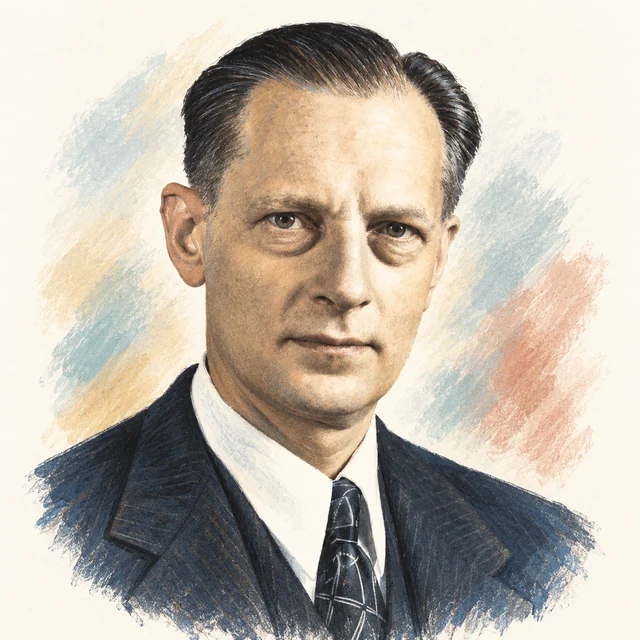
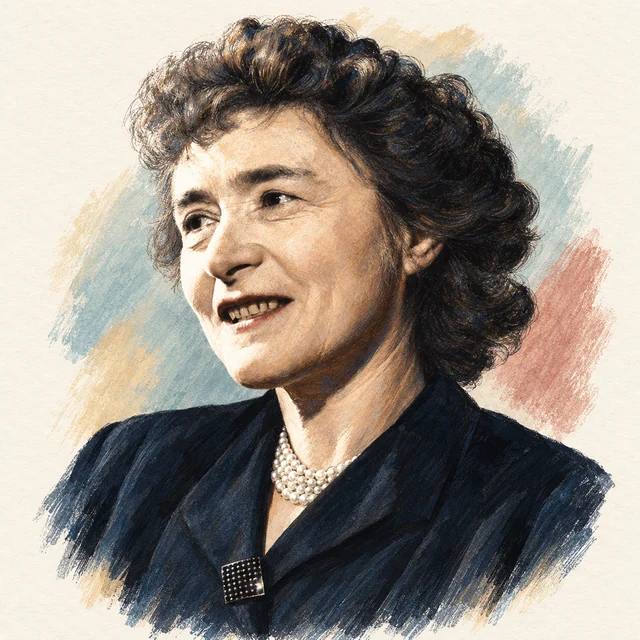
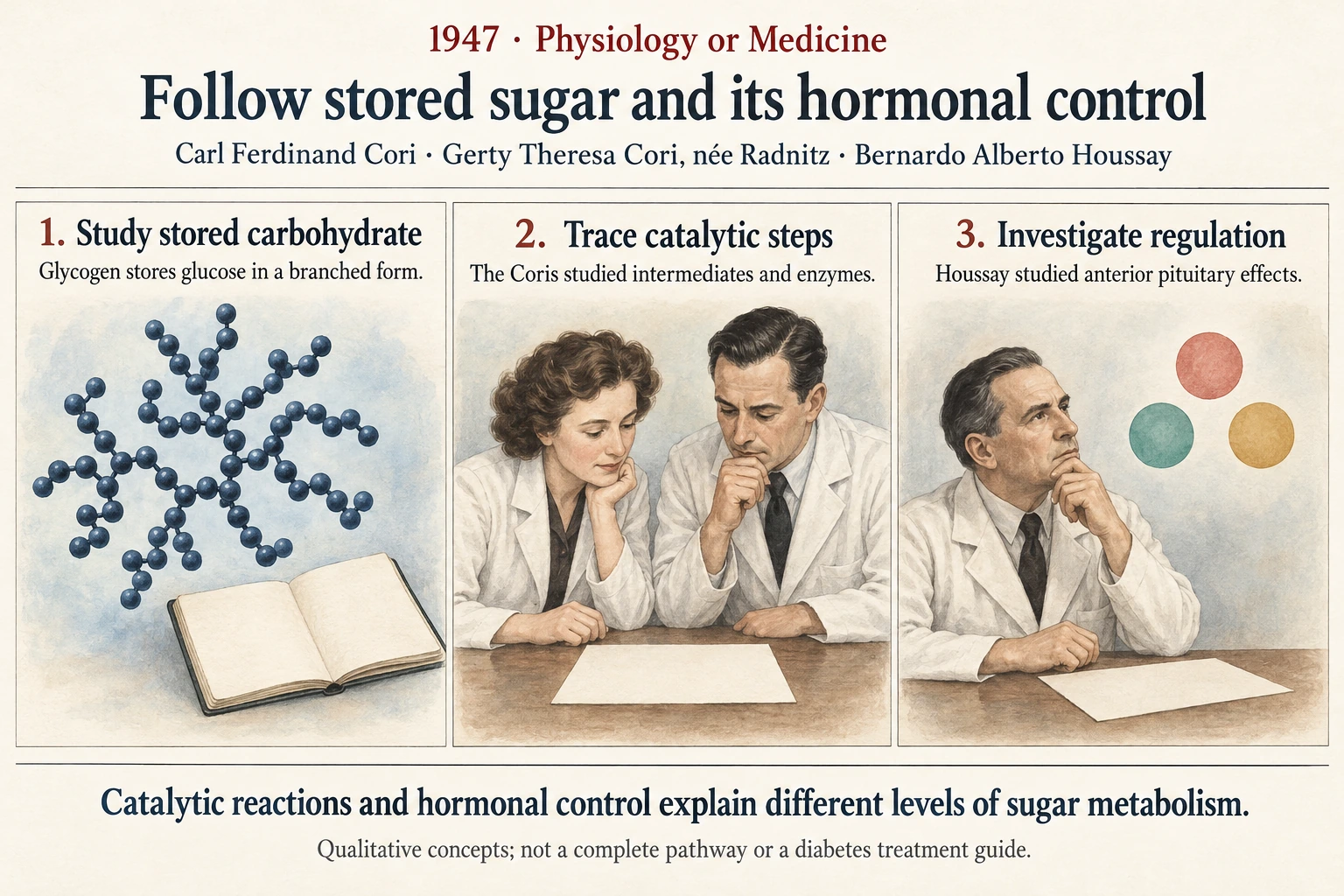
Glycogen is a branched storage form of glucose. How can the body mobilise and rebuild carbohydrate stores through controlled chemical reactions? Carl and Gerty Cori investigated the intermediates and enzymes involved in glycogen conversion. Their identification of glucose 1-phosphate in 1936, followed by enzyme studies, made key steps accessible to biochemical investigation.
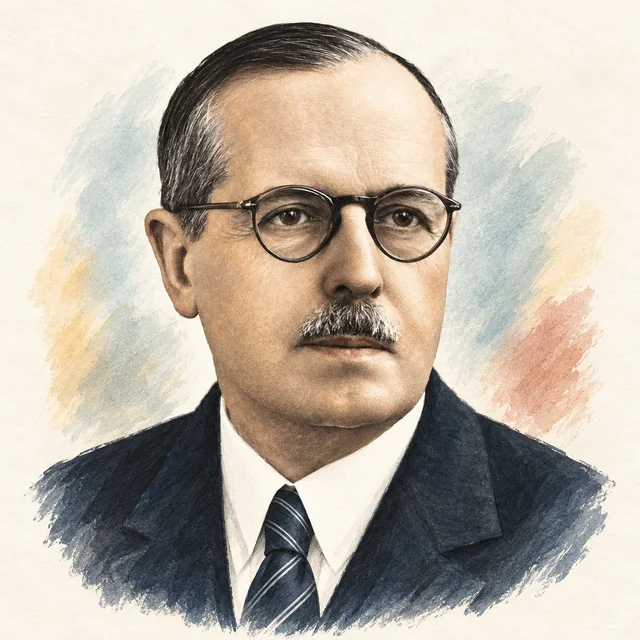
A related physiological question concerns regulation across the body. Houssay showed that the anterior pituitary has a role in sugar metabolism, including effects opposing those of insulin. The prize joined these two levels of explanation: catalytic reactions and hormonal control. It gave one quarter each to Carl and Gerty Cori and one half to Houssay, rather than equal thirds.
Why it matters
The work connected specific biochemical reactions with questions about whole-body metabolism. The Coris’ earlier study of exchange between muscle and liver provided context, while the 1947 citation concerned catalytic glycogen conversion. Gerty’s contribution was co-discovery, despite unequal academic appointments. Houssay’s research advanced experimental endocrinology and the understanding of metabolic regulation.