01 · The discovery
The idea, in everyday language
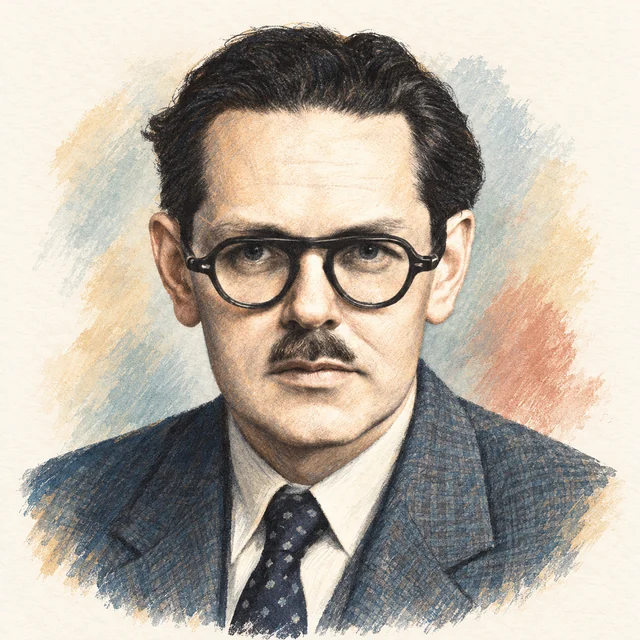
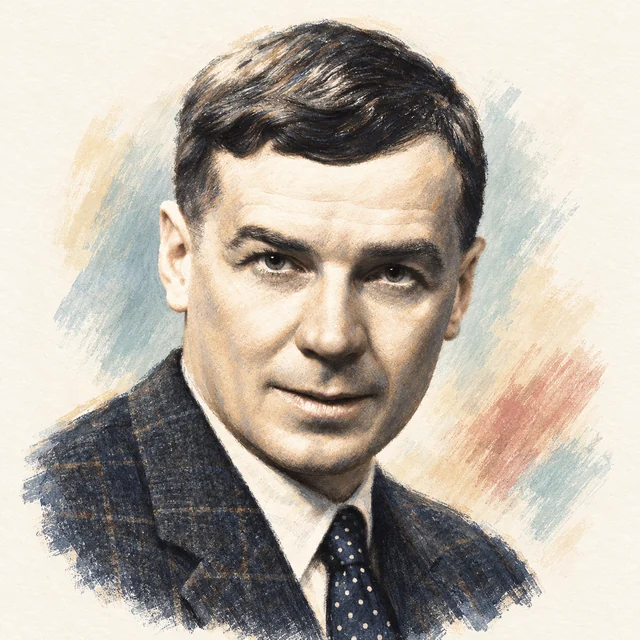
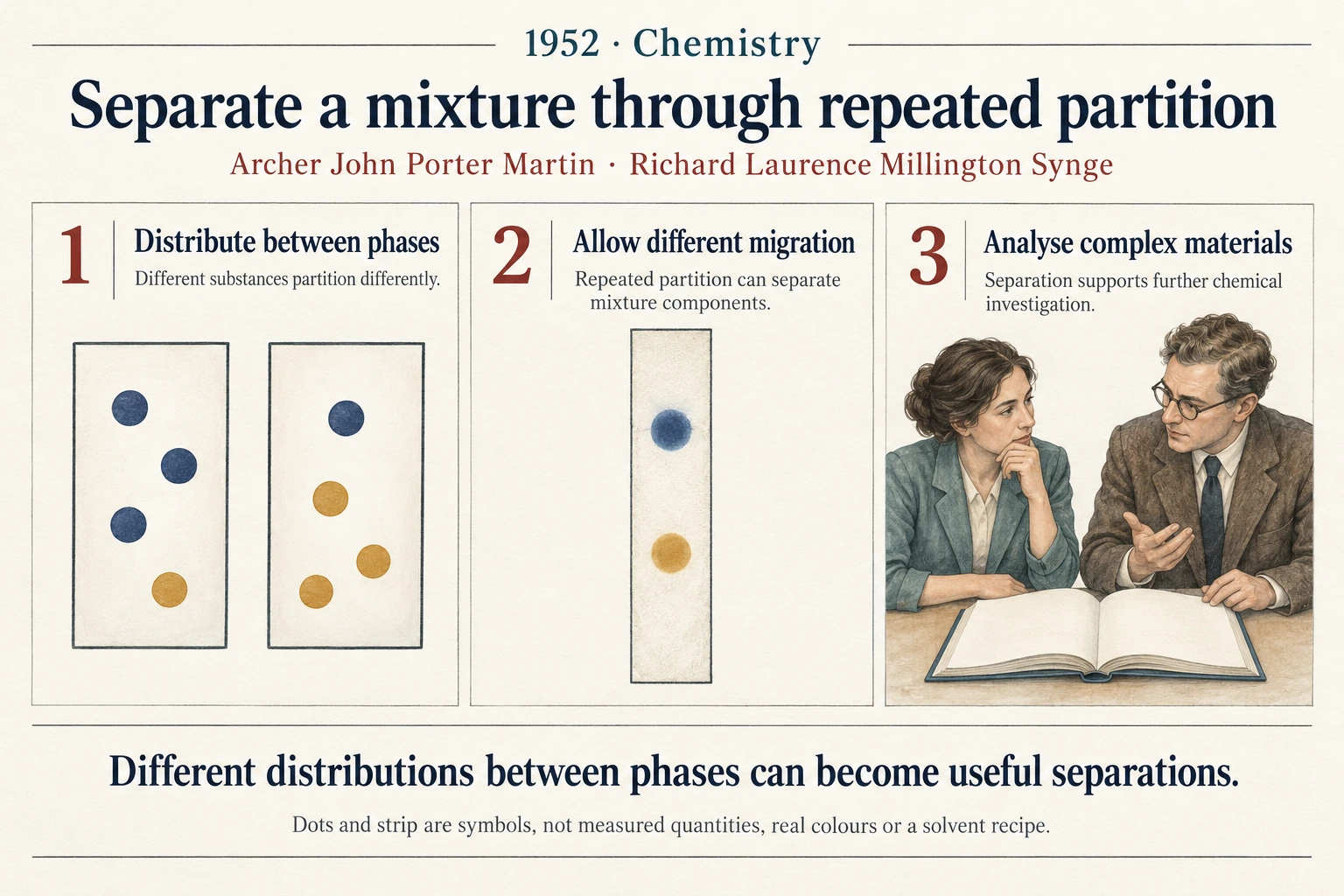
Studying a biological material often begins with separating closely related substances. Martin and Synge developed a method in which components distribute differently between two liquid phases. Repeated partition between a stationary phase and a moving phase can make components travel at different rates.
Their first paper appeared in 1941. In a paper-chromatography implementation, water held by the paper participates as a stationary liquid while another liquid phase moves. Other forms followed, including Martin and A. T. James’s gas-liquid work. The prize recognised the partition principle, rather than inventing all chromatography or merely substituting paper for a column.
Why it matters
The method helped scientists analyse amino acids, peptides and other complicated mixtures. Separating fragments supported investigations of larger molecules and metabolic pathways. A separated spot or band is evidence for analysis, not by itself a complete identification or a full protein sequence.