c.curionodeThe Nobel Archive

1952 · Physiology or Medicine

Find an antibiotic through systematic microbial research

Waksman’s soil-microbiology programme yielded streptomycin, an antibiotic effective against tuberculosis; the discovery was a collaborative achievement.

StreptomycinSoil microbiologyCollaborative discovery
1952Physiology or Medicine

Visual guide

The prize, pictured

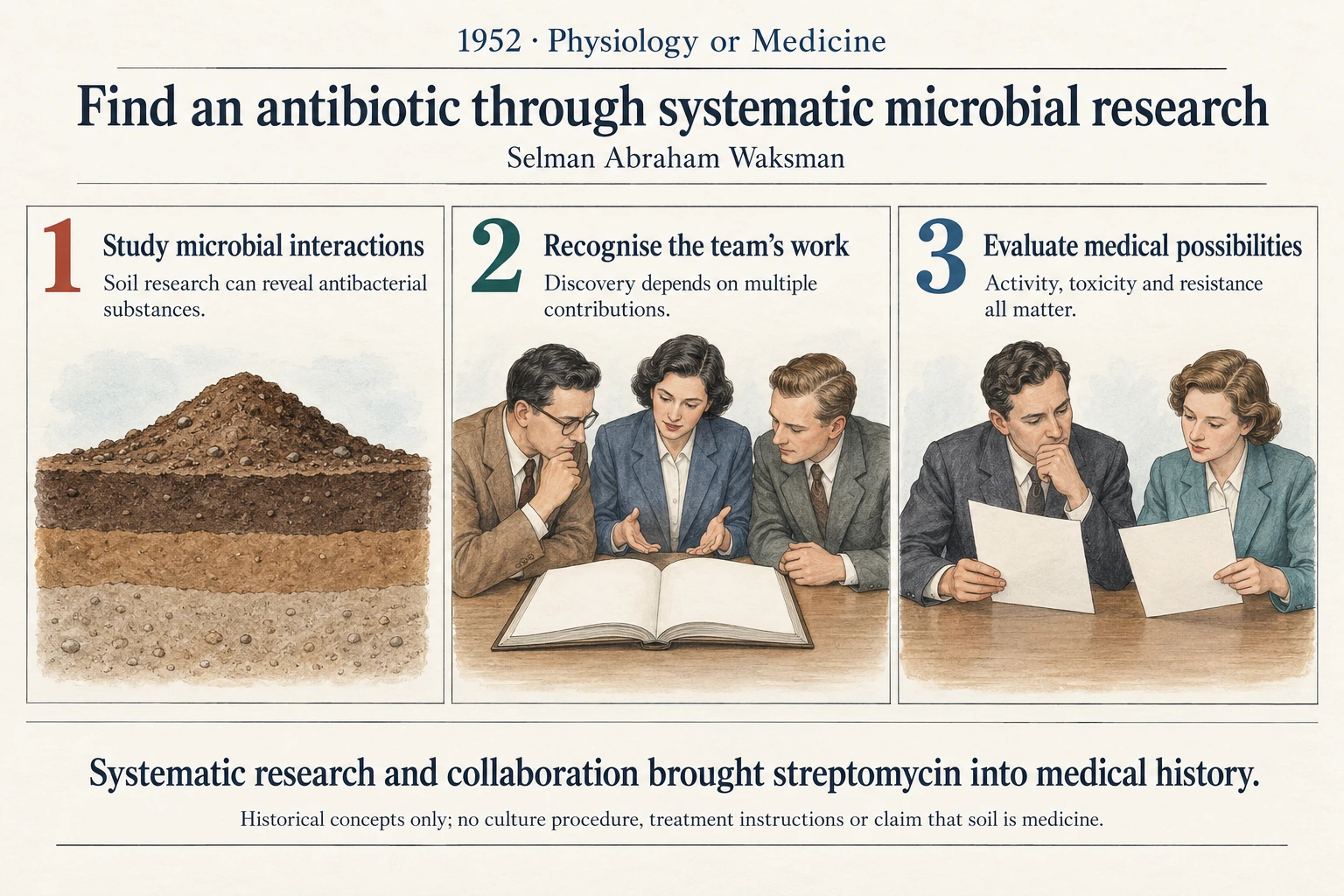
Infographic explaining Find an antibiotic through systematic microbial research
Original AI-generated infographic. A conceptual overview; the explanations and sources below provide context.
Read the poster text

Systematic research and collaboration brought streptomycin into medical history.

  1. Study microbial interactions

    Soil research can reveal antibacterial substances.

  2. Recognise the team’s work

    Discovery depends on multiple contributions.

  3. Evaluate medical possibilities

    Activity, toxicity and resistance all matter.

Historical concepts only; no culture procedure, treatment instructions or claim that soil is medicine.

01 · The discovery

The idea, in everyday language

Could substances made by microorganisms inhibit disease-causing bacteria? Waksman’s group turned this question into a systematic research programme. Earlier compounds showed that antibacterial activity alone was insufficient: toxicity could prevent a promising substance from becoming a useful medicine.

In 1943 Albert Schatz isolated streptomycin in Waksman’s laboratory. Schatz, Elizabeth Bugie and Waksman authored the 1944 report. Mayo Clinic investigators William Feldman and Corwin Hinshaw carried the work into further evaluation, while industrial collaborators helped make larger supplies possible. Waksman alone received the 1952 Nobel Prize; a 1950 settlement had recognised Schatz as co-discoverer.

Why it matters

Streptomycin made a major change in the historical treatment of tuberculosis and encouraged further searches for microbial products. The achievement joined microbiology, chemistry, clinical research and manufacturing. It was the first antibiotic recognised as effective against tuberculosis, rather than the first antibiotic of any kind.
02 · The people

Who brought the idea to life?

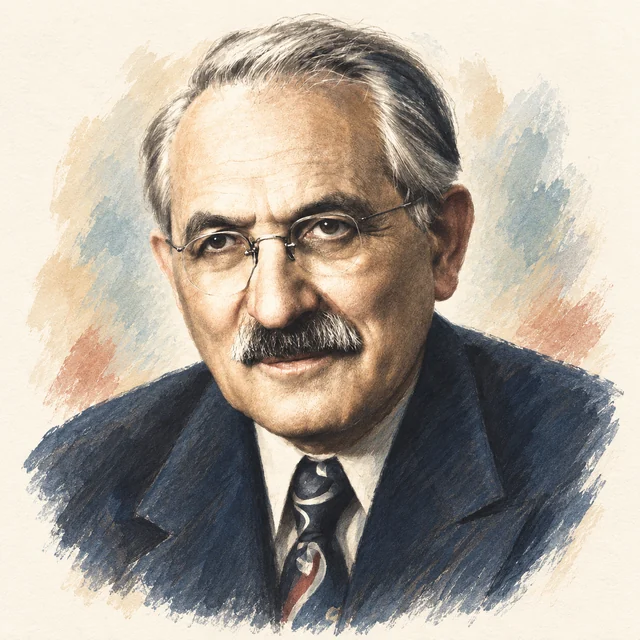
Illustrated portrait of Selman Abraham Waksman

Selman Abraham Waksman

Prize share · 1

Waksman led the systematic soil-microbiology research programme that yielded streptomycin. The Nobel Prize was awarded to him alone; the discovery also involved Schatz, Bugie and other collaborators.

Read the biography ↗

03 · Years in the making

The path here

  1. 1888

    Waksman is born in Priluka.

  2. 1915

    He graduates from Rutgers in agriculture.

  3. 1918

    He completes a biochemistry doctorate and returns to Rutgers.

  4. 1939

    His group begins a systematic antimicrobial search.

  5. 1943

    Schatz isolates streptomycin in the programme.

  6. 1944

    Schatz, Bugie and Waksman publish the report.

  7. 1950

    A settlement recognises Schatz as co-discoverer.

  8. 1952

    Waksman receives the full Medicine Prize.

04 · Read further

From the original sources

Original explanations by Curionode, based on the official records below. Biographical details and affiliations refer to the award year.

  1. Official award summary nobelprize.org
  2. Award ceremony speech nobelprize.org
  3. Rutgers: streptomycin and its research team sebs.rutgers.edu
  4. Rutgers archives: the discovery-credit dispute archives.libraries.rutgers.edu
  5. ACS: antibiotic research and the 1950 settlement acs.org
  6. Official biography: Selman Abraham Waksman nobelprize.org

More in Physiology or Medicine

Browse this subject ↗