c.curionodeThe Nobel Archive

1955 · Physiology or Medicine

Separate an enzyme’s parts, then restore its activity

Theorell investigated the components and action of oxidation enzymes, including separation and reconstitution of the yellow enzyme.

Oxidation enzymesReconstitutionBiochemistry
1955Physiology or Medicine

Visual guide

The prize, pictured

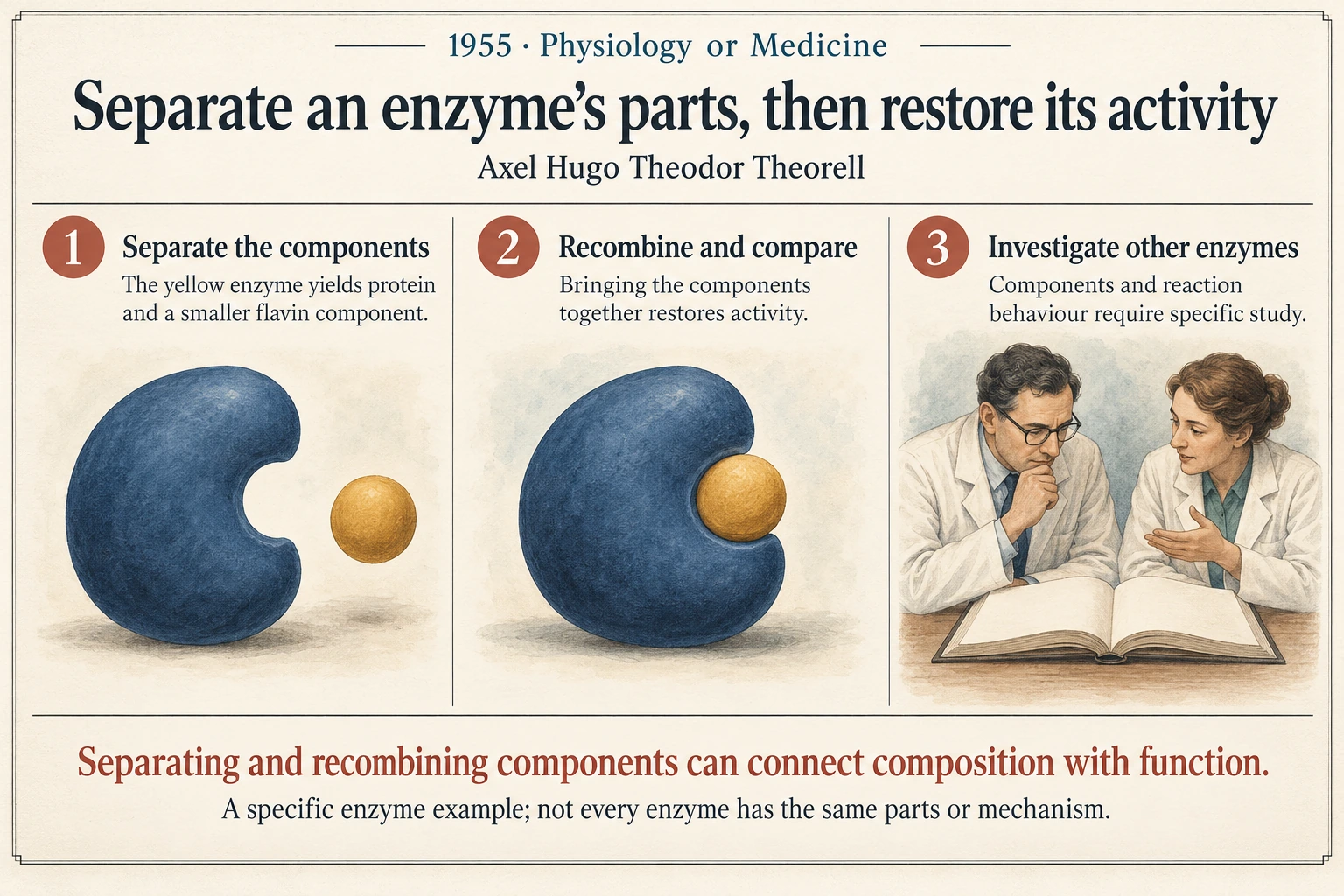
Infographic explaining Separate an enzyme’s parts, then restore its activity
Original AI-generated infographic. A conceptual overview; the explanations and sources below provide context.
Read the poster text

Separating and recombining components can connect composition with function.

  1. Separate the components

    The yellow enzyme yields protein and a smaller flavin component.

  2. Recombine and compare

    Bringing the components together restores activity.

  3. Investigate other enzymes

    Components and reaction behaviour require specific study.

A specific enzyme example; not every enzyme has the same parts or mechanism.

01 · The discovery

The idea, in everyday language

How do enzymes carry out biological oxidation, and which components are required? Theorell combined purification, separation and activity studies. During work with Otto Warburg in Berlin in 1933–1935, he separated the yellow enzyme into a protein component and a smaller flavin-mononucleotide component. Neither isolated component reproduced the complete enzyme’s activity; recombining them restored it.

The result connected chemical composition with function in a specific enzyme system. Further investigations included cytochromes, peroxidases, catalases, flavoproteins and alcohol dehydrogenases. Studying their components, interactions and reaction behaviour helped make oxidation enzymes subjects of chemical analysis rather than unexplained agents. Theorell received the full 1955 Medicine Prize for the nature and mode of action of oxidation enzymes.

Why it matters

The work helped explain how biological oxidation can be organised by particular molecular components. It supported biochemical investigation of reaction mechanisms and metabolism. An enzyme’s role and the conditions of a reaction require study; knowledge of a mechanism alone does not establish a treatment.
02 · The people

Who brought the idea to life?

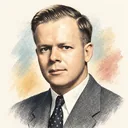
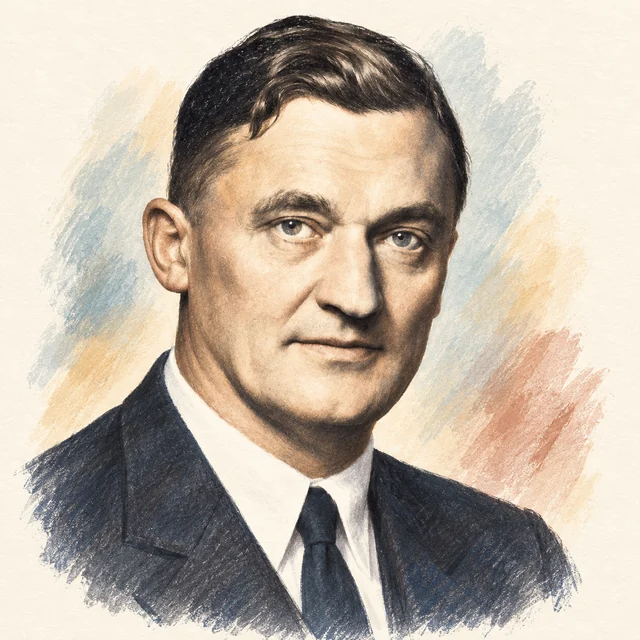
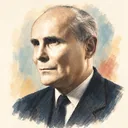
Illustrated portrait of Axel Hugo Theodor Theorell

Axel Hugo Theodor Theorell

Prize share · 1

Theorell clarified the components and action of oxidation enzymes, including reversible separation and reconstitution of the yellow enzyme. He received the full Medicine Prize.

Read the biography ↗

03 · Years in the making

The path here

  1. 1903

    Theorell is born in Linköping.

  2. 1930

    He completes his Karolinska medical doctorate.

  3. 1932

    He becomes associate professor at Uppsala.

  4. 1933–1935

    Work with Warburg investigates the yellow enzyme’s separable components.

  5. 1936

    He is appointed head of the Nobel Medical Institute’s biochemical department.

  6. 1937

    The department opens in Stockholm.

  7. 1955

    He receives the full Medicine Prize.

04 · Read further

From the original sources

Original explanations by Curionode, based on the official records below. Biographical details and affiliations refer to the award year.

  1. Official award summary nobelprize.org
  2. Award ceremony speech nobelprize.org
  3. Official biography: Axel Hugo Theodor Theorell nobelprize.org

More in Physiology or Medicine

Browse this subject ↗