c.curionodeThe Nobel Archive

1971 · Physics

Recording enough of a light wave to reconstruct an image

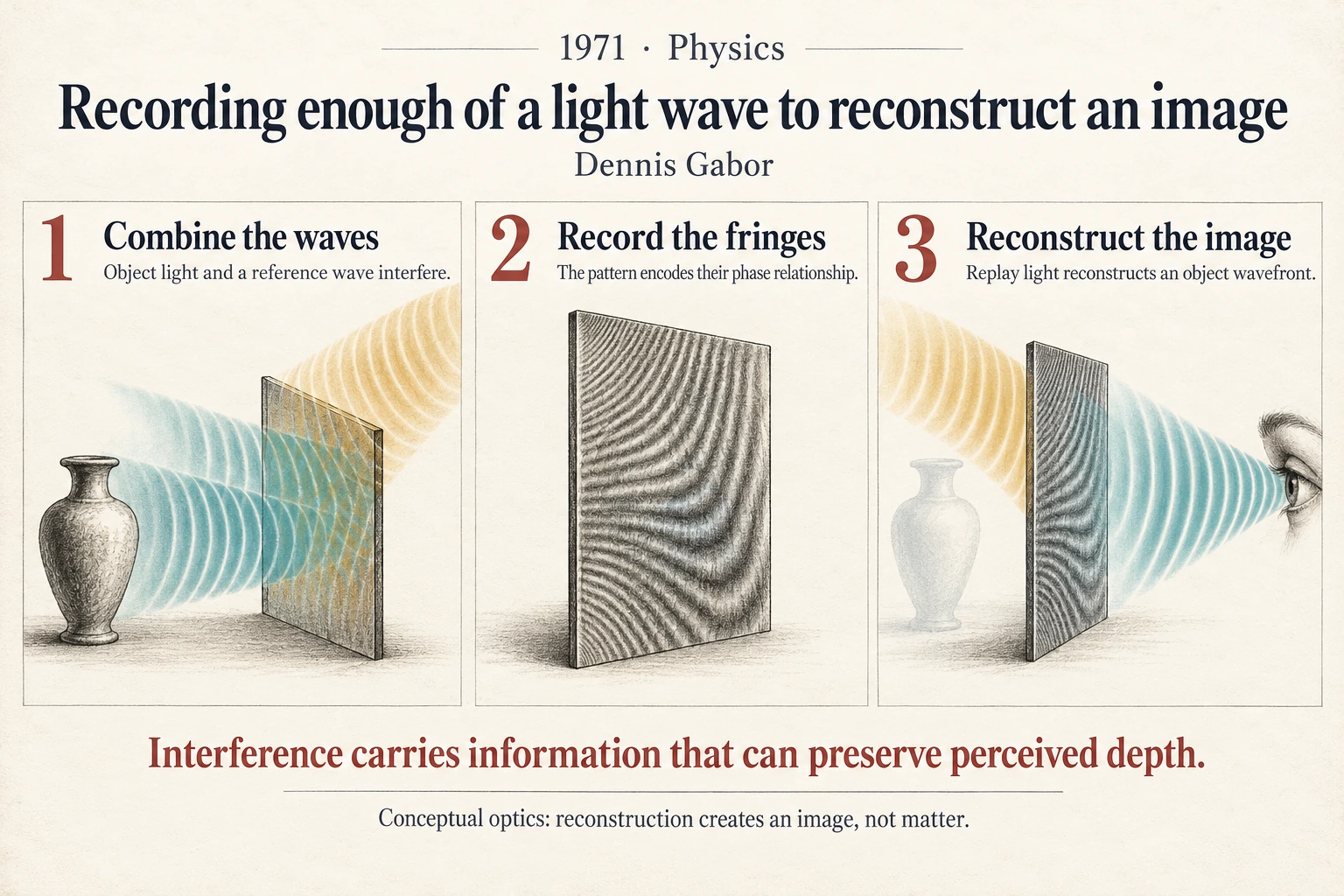
An ordinary photographic recording preserves light intensity. Gabor’s holographic method uses interference with a reference wave to preserve information that can later reconstruct the object wavefront.

HolographyInterferenceWavefronts
1971Physics

Visual guide

The prize, pictured

Infographic explaining Recording enough of a light wave to reconstruct an image
Original AI-generated infographic. A conceptual overview; the explanations and sources below provide context.
Read the poster text

Interference carries information that can preserve perceived depth.

  1. Combine the waves

    Object light and a reference wave interfere.

  2. Record the fringes

    The pattern encodes their phase relationship.

  3. Reconstruct the image

    Replay light reconstructs an object wavefront.

Conceptual optics: reconstruction creates an image, not matter.

01 · The discovery

The idea, in everyday language

Light reflected from an object carries both amplitude and phase information. Combining it with a coherent reference wave produces interference fringes on a recording plate. The phase relationship influences that recorded intensity pattern; it is not a tiny conventional picture of the object.

Illuminating the developed hologram appropriately diffracts light into a reconstructed wavefront. An observer can perceive depth because that wavefront carries spatial information. Gabor’s optical experiments and 1948–1951 papers established the method. Lasers from 1960 and later work by other researchers greatly expanded its practical use.

Why it matters

Holography opened new possibilities for imaging and interference-based measurement of shape or vibration. It connected the recording of light with reconstruction of a wavefront, extending the information available beyond a conventional intensity photograph.

02 · The people

Who brought the idea to life?

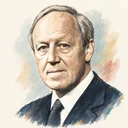
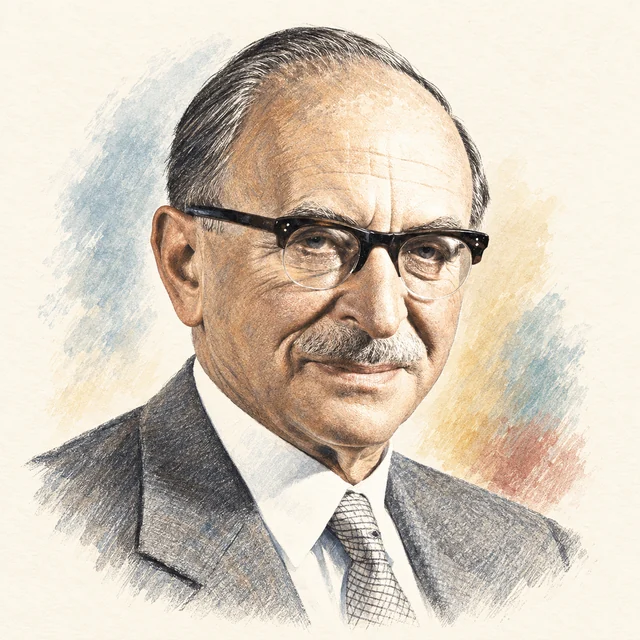
Illustrated portrait of Dennis Gabor

Dennis Gabor

Prize share · 1

Gabor invented and developed the holographic method, recording and reconstructing wavefront information. He received the entire Physics Prize.

Read the biography ↗

03 · Years in the making

The path here

  1. 1948

    Gabor carries out basic optical wavefront-reconstruction experiments.

  2. 1948–1951

    Papers develop the holographic method.

  3. 1949

    Gabor joins Imperial College.

  4. 1960

    Lasers make coherent-light work more practical.

  5. 1971

    Gabor receives the Physics Prize.

04 · Read further

From the original sources

Original explanations by Curionode, based on the official records below. Biographical details and affiliations refer to the award year.

  1. Official award summary nobelprize.org
  2. Award ceremony speech nobelprize.org
  3. Official biography: Dennis Gabor nobelprize.org