01 · The discovery
The idea, in everyday language
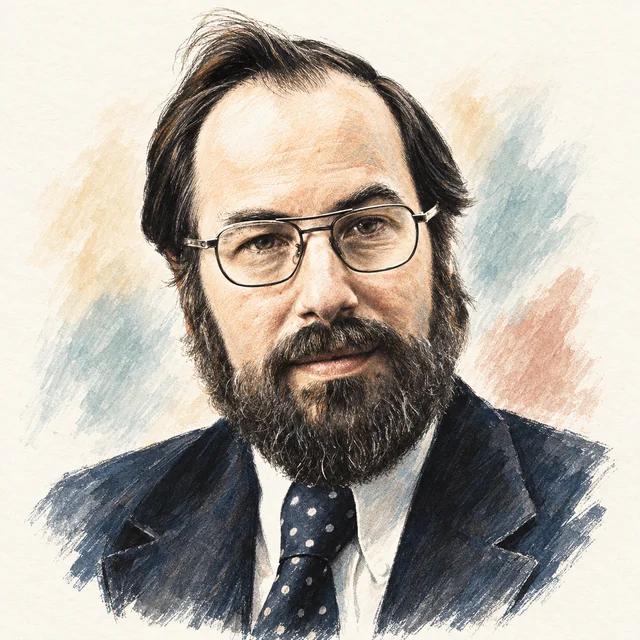
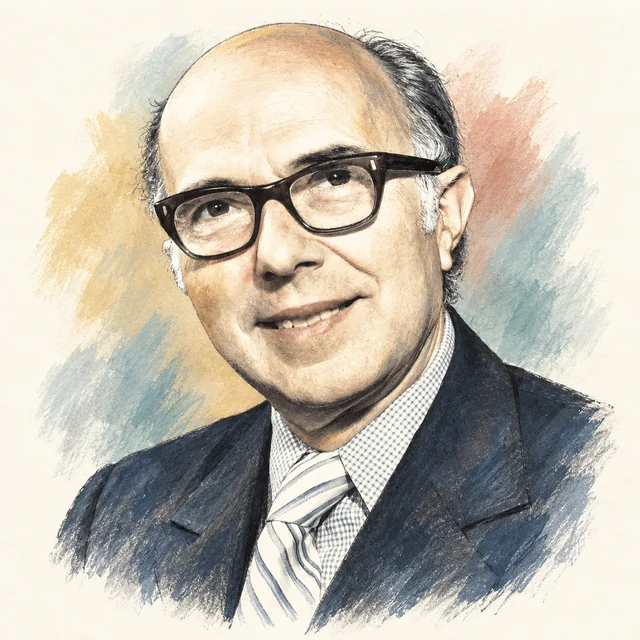
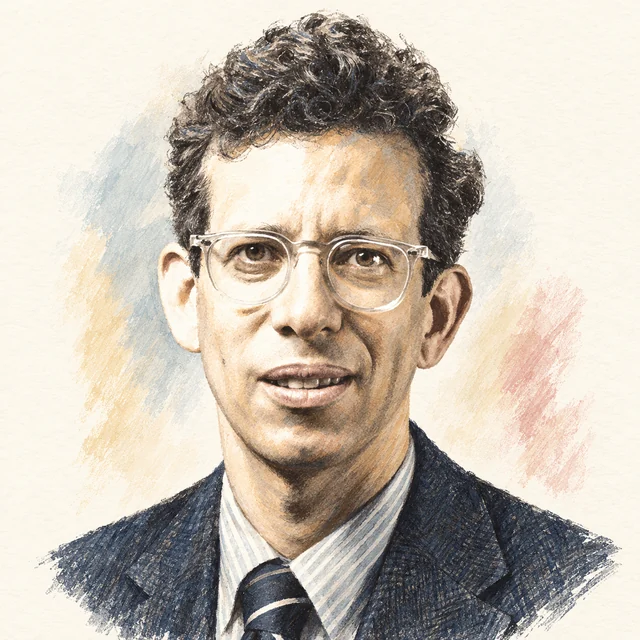
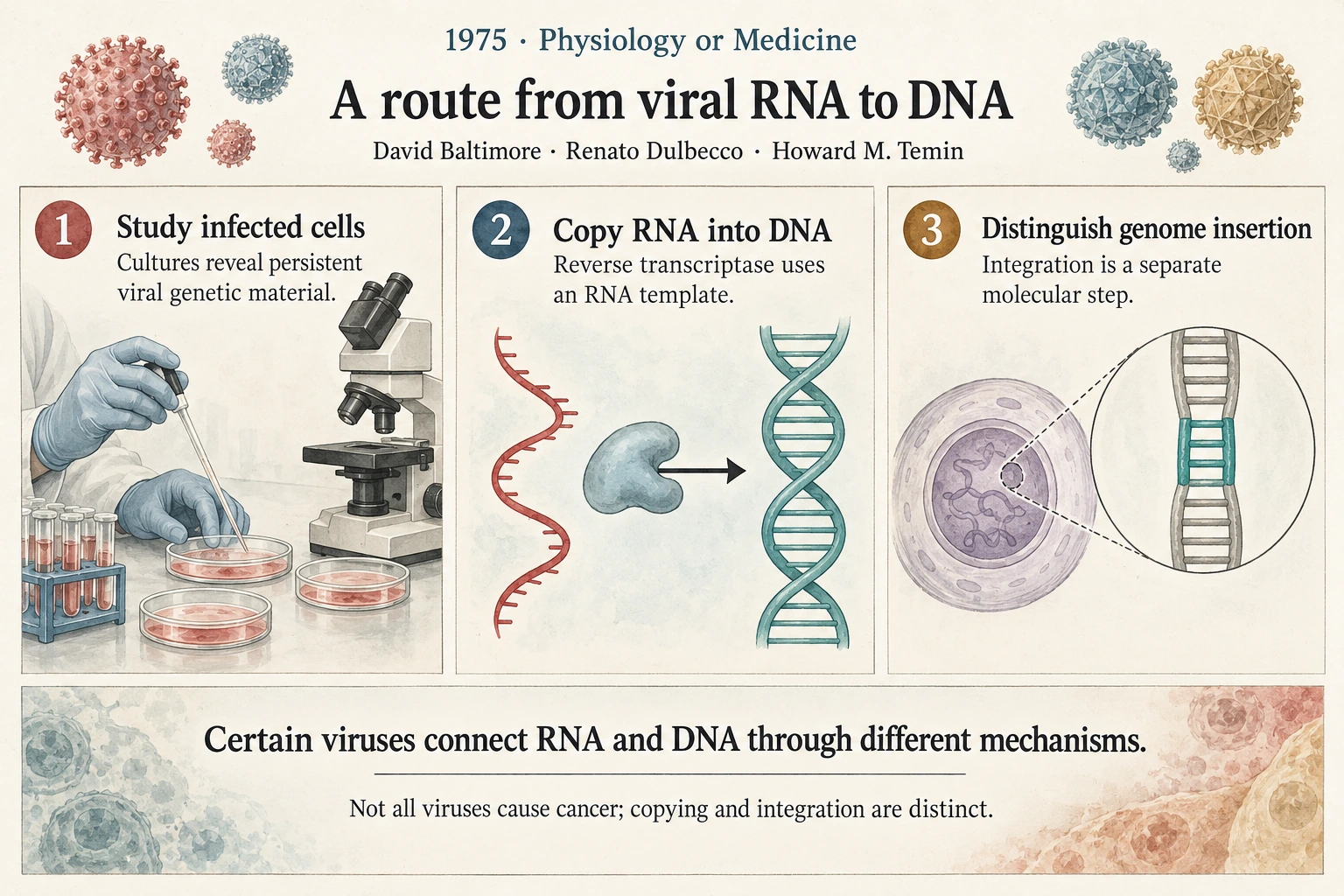
Dulbecco and collaborators used cell cultures to study animal viruses quantitatively and investigated DNA tumour viruses such as polyoma virus and SV40. Work on transformed cells showed that viral genetic material could remain associated with the host-cell genome. This helped explain how a temporary infection could have lasting effects on cell behaviour. The finding concerned particular experimental virus–cell systems, not a claim that every cancer has a viral cause.
Temin’s DNA-provirus hypothesis proposed a DNA intermediate for an RNA tumour virus. In 1970, Temin with Satoshi Mizutani and, independently, Baltimore identified reverse transcriptase: an enzyme that uses RNA as a template to synthesise DNA. Copying RNA into DNA and inserting viral DNA into a cell’s genome are distinct steps with different molecular machinery. The result expanded the familiar DNA-to-RNA-to-protein picture. It did not refute Crick’s original central dogma, which concerned sequence information leaving protein and had allowed the possibility of RNA-to-DNA transfer. The three laureates each received one third.
Why it matters
The discoveries gave researchers a molecular route linking certain RNA viruses with stable DNA forms and clarified interactions between viruses and cells. Reverse transcription later became a widely used research tool for studying RNA through DNA copies. The award concerned fundamental mechanisms, not a universal cancer cure.