c.curionodeThe Nobel Archive

1984 · Chemistry

Build a peptide on a solid support

Merrifield made repeated amino-acid coupling and washing a systematic route to chemical synthesis.

solid-phase synthesispeptidesresinprotecting groups
1984Chemistry

Visual guide

The prize, pictured

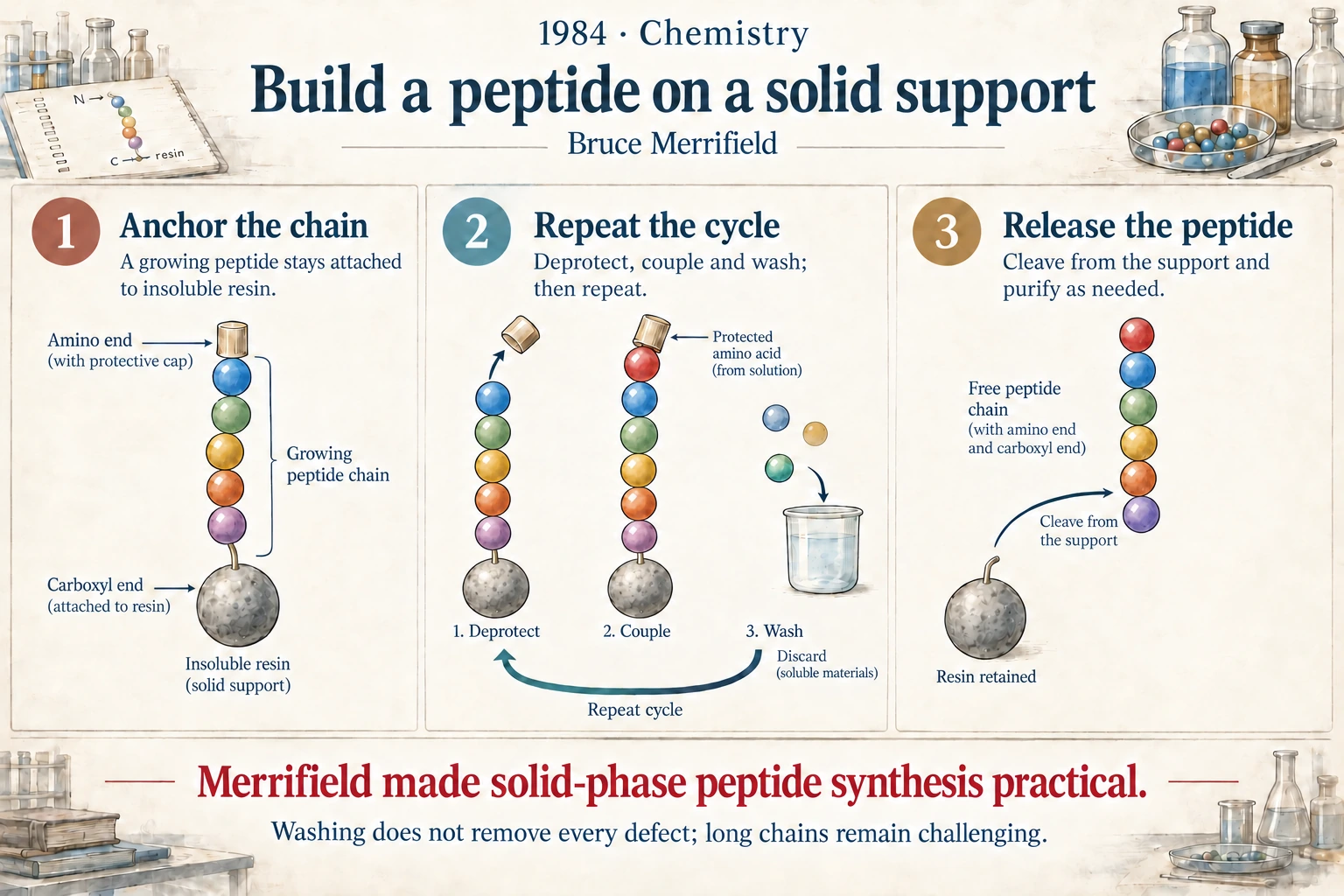
Infographic explaining Build a peptide on a solid support
Original AI-generated infographic. A conceptual overview; the explanations and sources below provide context.
Read the poster text

Merrifield made solid-phase peptide synthesis practical.

  1. Anchor the chain

    A growing peptide stays attached to insoluble resin.

  2. Repeat the cycle

    Deprotect, couple and wash; then repeat.

  3. Release the peptide

    Cleave from the support and purify as needed.

Washing does not remove every defect; long chains remain challenging.

01 · The discovery

The idea, in everyday language

Synthesising a peptide means joining amino acids in a chosen order. Traditional solution methods demanded repeated separation of the growing product from excess reagents. Merrifield anchored the first amino acid to insoluble resin, so the chain stayed in place while soluble material could be washed away.

Protecting groups control which reactive sites participate. The amino end is deprotected, a protected amino acid is coupled, and soluble excess reagents and byproducts are washed away. Repeating the cycle extends the chain from its anchored carboxyl end toward the amino end. Finally it is cleaved from the support and processed further. The method was published in 1963 and developed for automation.

Why it matters

Solid-phase synthesis made peptides more accessible for investigating how sequence relates to biological activity. It supported systematic variation and automation, and inspired related synthesis methods. Chemical synthesis remains distinct from protein production by living ribosomes.

02 · The people

Who brought the idea to life?

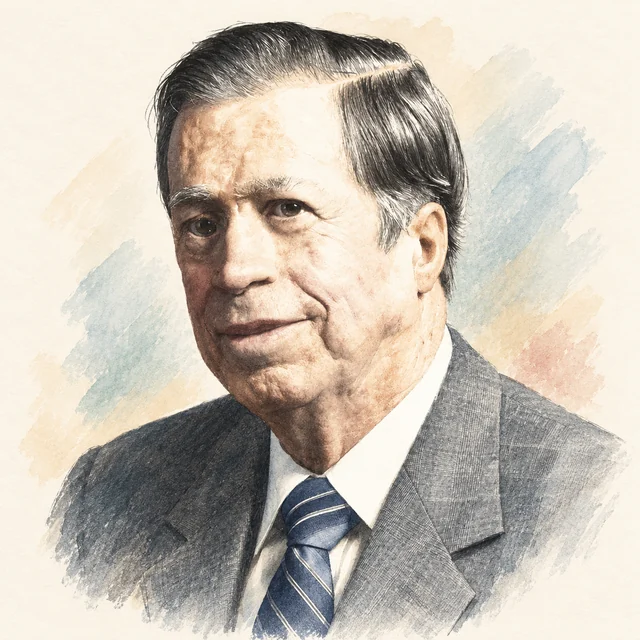
Illustrated portrait of Bruce Merrifield

Bruce Merrifield

Prize share · 1

Merrifield developed chemical synthesis on a solid matrix: a growing peptide remains attached to insoluble resin while protected amino acids are added and soluble reagents washed away. Repeated coupling and deprotection can be organised systematically, followed by cleavage and appropriate purification. The method transformed access to peptides; it does not guarantee every long protein will be pure or fold correctly. He received the full Chemistry Prize.

Read the biography ↗

03 · Years in the making

The path here

  1. 1959

    Merrifield conceives anchoring a growing peptide to an insoluble support.

  2. 1963

    His paper introduces solid-phase peptide synthesis.

  3. 1966

    He becomes a Rockefeller professor while refining the method.

  4. 1984

    He receives the full Chemistry Prize.

04 · Read further

From the original sources

Original explanations by Curionode, based on the official records below. Biographical details and affiliations refer to the award year.

  1. Official announcement nobelprize.org
  2. Rockefeller: the 1963 synthesis paper rockefeller.edu
  3. Rockefeller: Merrifield biography digitalcommons.rockefeller.edu

More in Chemistry

Browse this subject ↗