c.curionodeThe Nobel Archive

1996 · Physics

Helium-3 joins the superfluids

At temperatures only a few thousandths of a degree above absolute zero, a familiar element revealed a very different kind of liquid.

helium-3superfluiditypaired fermionsquantum liquids
1996Physics

Visual guide

The prize, pictured

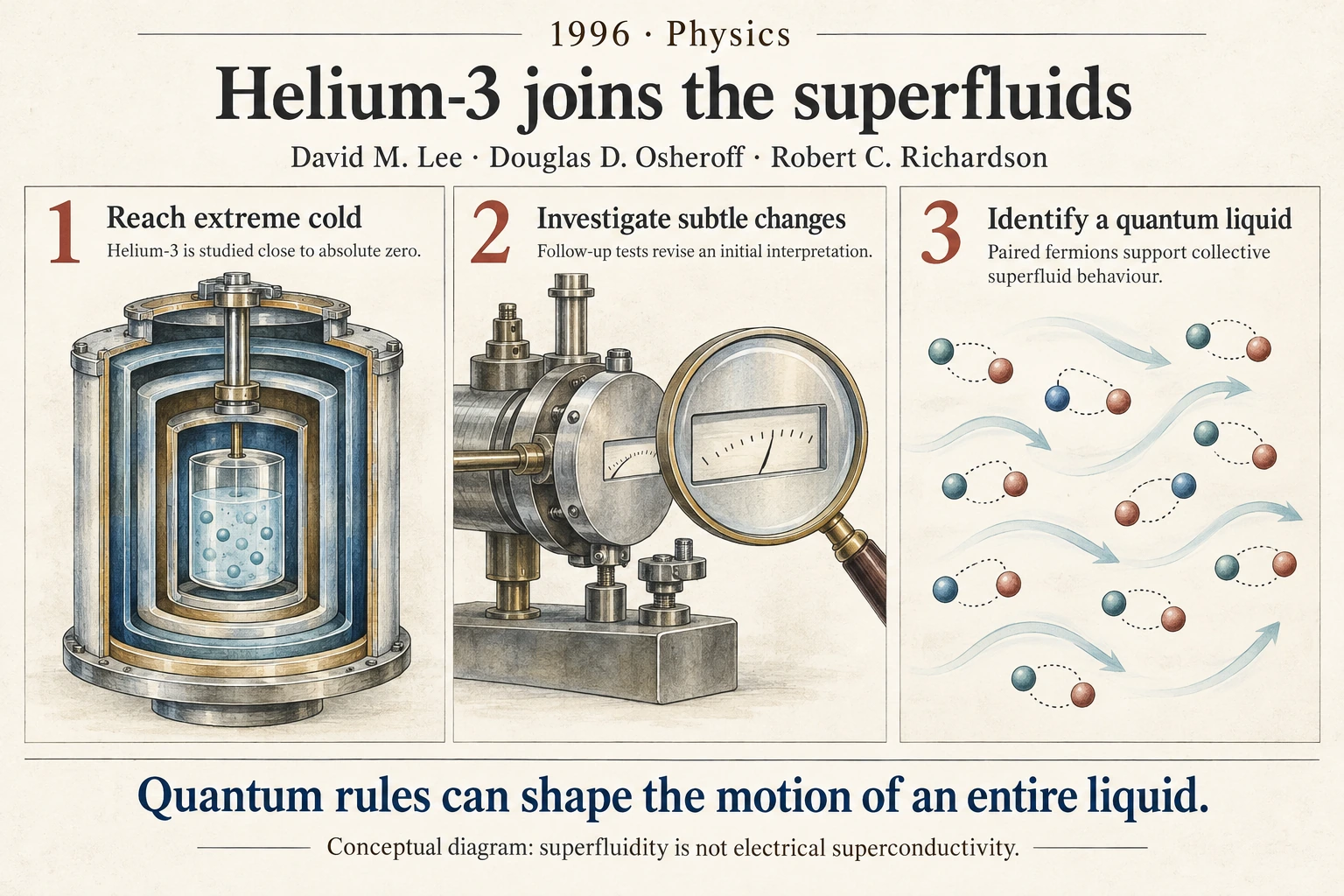
Infographic explaining Helium-3 joins the superfluids
Original AI-generated infographic. A conceptual overview; the explanations and sources below provide context.
Read the poster text

Quantum rules can shape the motion of an entire liquid.

  1. Reach extreme cold

    Helium-3 is studied close to absolute zero.

  2. Investigate subtle changes

    Follow-up tests revise an initial interpretation.

  3. Identify a quantum liquid

    Paired fermions support collective superfluid behaviour.

Conceptual diagram: superfluidity is not electrical superconductivity.

01 · The discovery

The idea, in everyday language

Helium-4 was already known to become superfluid, but helium-3 presented a harder problem. Its atoms are fermions, governed by different quantum statistics from helium-4. Theory suggested that pairing could allow a collective superfluid state, yet reaching and identifying that state required exceptionally low temperatures and sensitive measurements.

At Cornell, Lee, Richardson and graduate student Osheroff investigated helium-3 in a low-temperature apparatus. Subtle pressure changes first seemed to indicate ordering in the solid. Further measurements in 1972 showed that the transitions instead belonged to the liquid. Subsequent experiments established its superfluid properties. The discovery made macroscopic matter a direct setting for studying the collective behaviour of paired fermions.

Why it matters

Helium-3 became a rich laboratory for quantum matter, with several superfluid phases and unusual directional and vortex properties. It let researchers study how microscopic quantum rules shape a whole liquid. The recognised result was an experimental discovery, supported by later measurements and theory.
02 · The people

Who brought the idea to life?

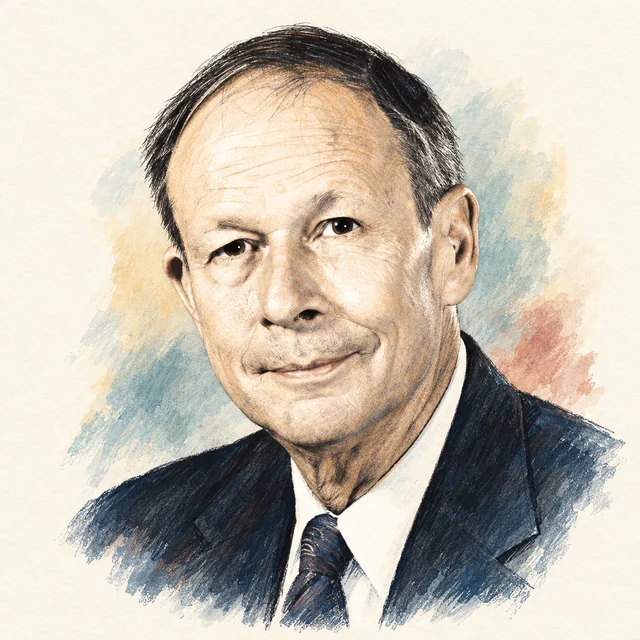
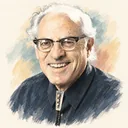
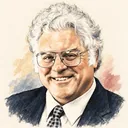
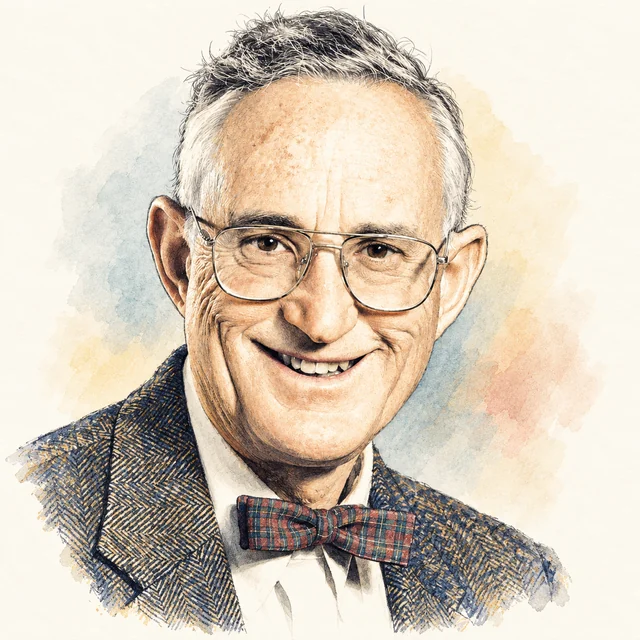
Illustrated portrait of David M. Lee

David M. Lee

Prize share · 1/3

Lee was a senior member of the Cornell team that discovered new phases of liquid helium-3 in 1972. With Richardson and graduate student Osheroff, he helped investigate subtle experimental changes and revise their initial interpretation. The work established a new quantum liquid whose superfluid behaviour depends on pairing between fermionic atoms, opening a richer field of study than the already known helium-4 superfluid.

Read the biography ↗
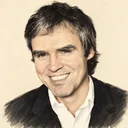
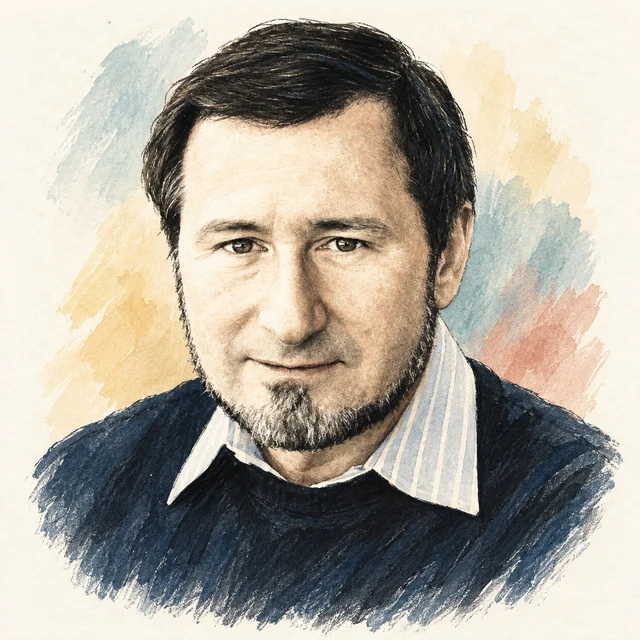
Illustrated portrait of Douglas D. Osheroff

Douglas D. Osheroff

Prize share · 1/3

As a Cornell graduate student, Osheroff noticed small changes in the pressure measurements of a helium-3 sample. The team initially associated them with ordering in the solid, but additional experiments showed transitions in the liquid. His contribution illustrates how careful observation, apparatus knowledge and testing an interpretation together can reveal a new state of matter. Lee, Osheroff and Richardson shared the prize equally.

Read the biography ↗
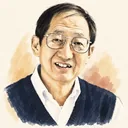
Illustrated portrait of Robert C. Richardson

Robert C. Richardson

Prize share · 1/3

Richardson helped lead the Cornell investigation that identified the 1972 phase transitions in liquid helium-3. The team followed up an unexpected measurement rather than dismissing it as an instrument effect, and corrected an initial solid-state interpretation. Their discovery made helium-3 a laboratory for studying paired fermions and different superfluid phases. It concerned a neutral liquid, not an electrical superconductor.

Read the biography ↗

03 · Years in the making

The path here

  1. 1972

    Anomalies in Cornell measurements are first reported with a solid-state interpretation.

  2. 1972

    Further experiments identify transitions in the liquid, opening the study of superfluid helium-3.

  3. 1996

    Lee, Osheroff and Richardson receive equal shares of the Physics Prize.

04 · Read further

From the original sources

Original explanations by Curionode, based on the official records below. Biographical details and affiliations refer to the award year.

  1. Official announcement nobelprize.org