01 · The discovery
The idea, in everyday language
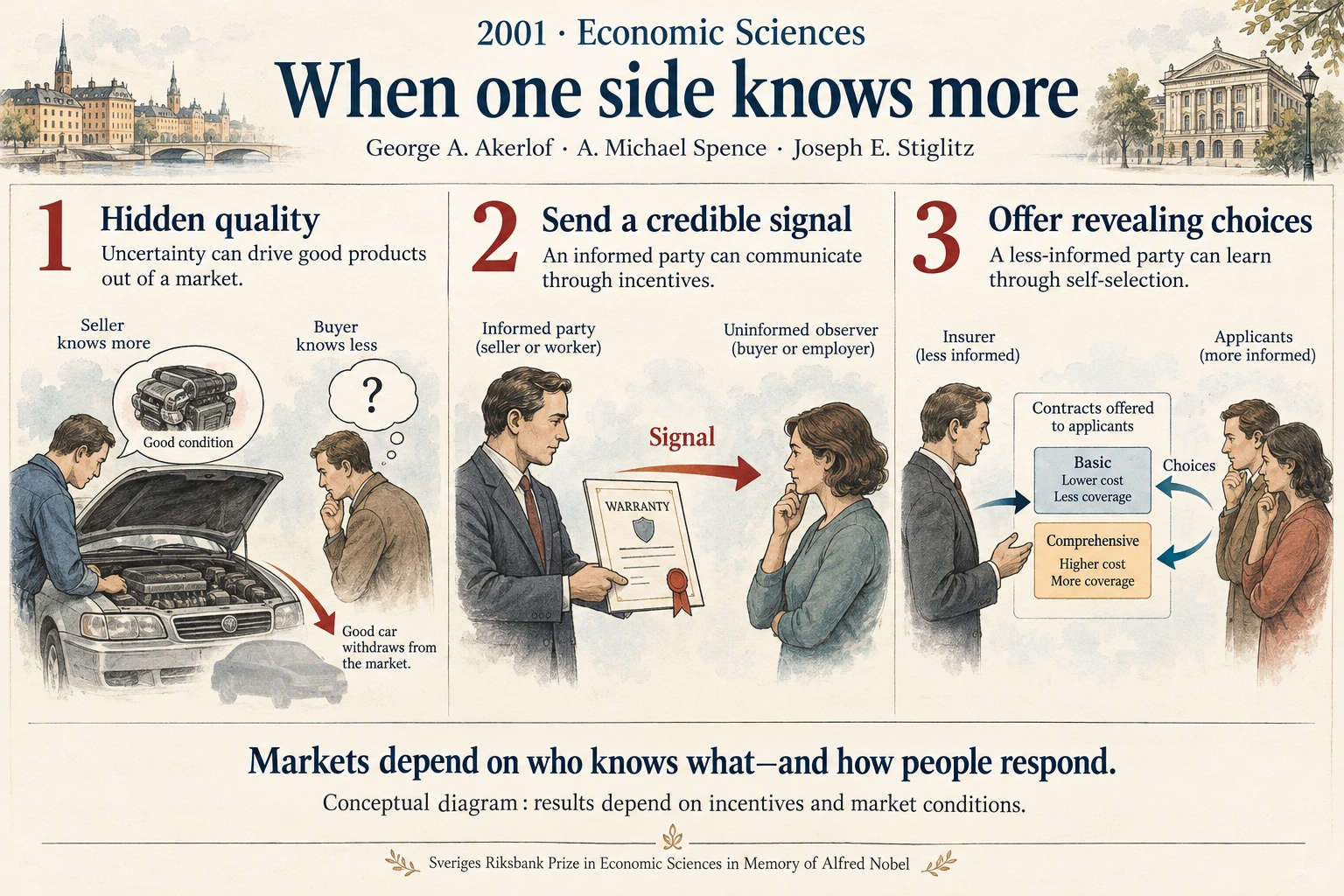
A seller may know more about a product’s quality than a buyer. Akerlof showed how this can discourage good-quality sellers and make trade less effective: the buyer’s uncertainty changes the price, which changes who is willing to sell. His used-car example revealed a general mechanism called adverse selection.
Spence studied signalling: a better-informed party takes an action that can credibly convey a hidden characteristic. Stiglitz and collaborators studied screening: the less-informed party offers choices designed to reveal information through self-selection. These approaches made information and incentives part of the explanation of how markets work, rather than assuming everyone already knows the relevant facts.
Why it matters
The theories changed the analysis of insurance, employment, credit and many other markets. They help explain institutions such as warranties, credentials and contract menus, as well as situations where trade is limited despite potential gains. They also show why policy analysis must consider who knows what and how a rule changes incentives.