c.curionodeThe Nobel Archive

2006 · Economic Sciences

Today’s choices change tomorrow’s options

Expectations and saving connect economic policy across time.

The Sveriges Riksbank Prize in Economic Sciences in Memory of Alfred Nobel.

expectationsinflationunemploymentsaving
2006Economic Sciences

Visual guide

The prize, pictured

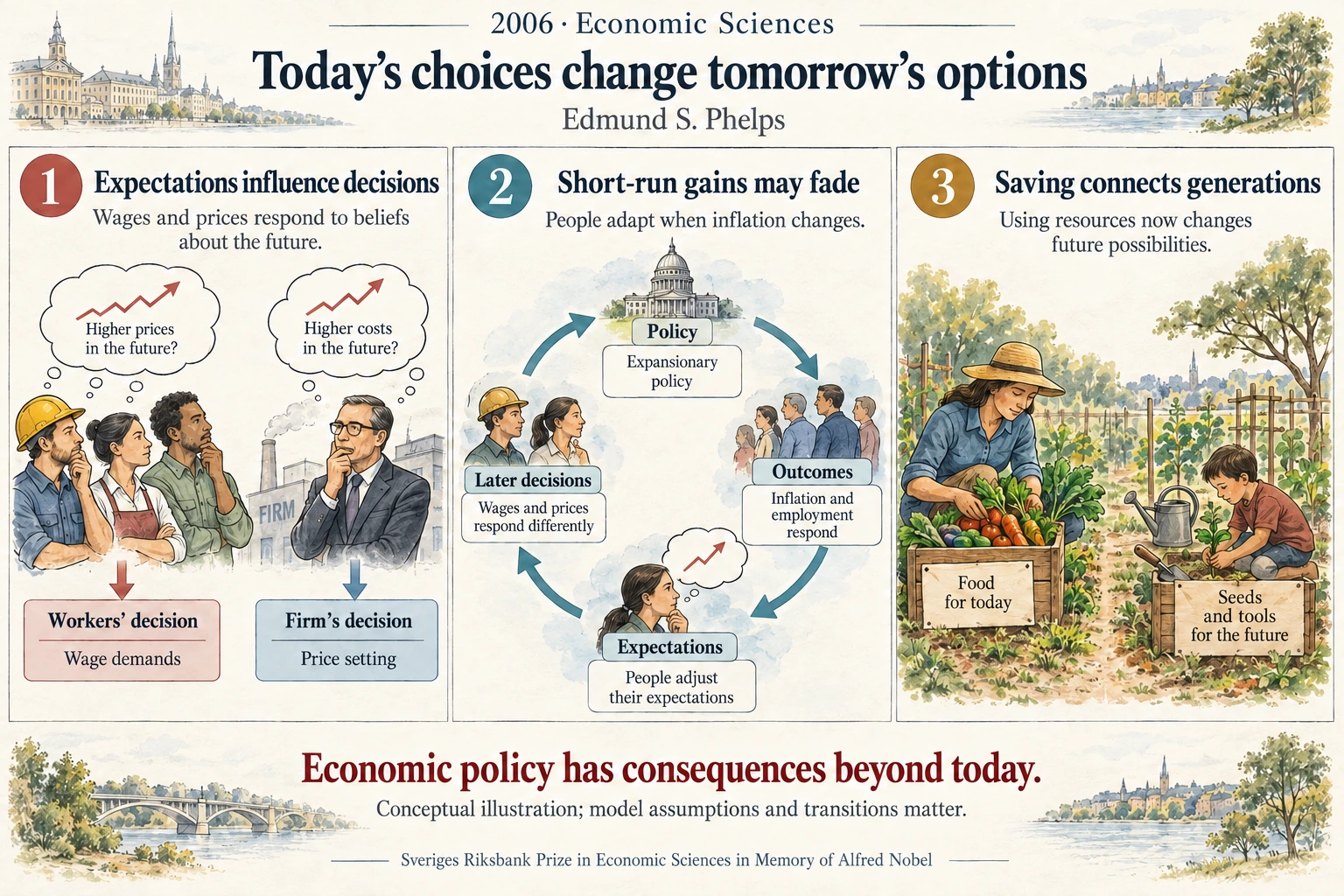
Infographic explaining Today’s choices change tomorrow’s options
Original AI-generated infographic. A conceptual overview; the explanations and sources below provide context.
Read the poster text

Economic policy has consequences beyond today.

  1. Expectations influence decisions

    Wages and prices respond to beliefs about the future.

  2. Short-run gains may fade

    People adapt when inflation changes.

  3. Saving connects generations

    Using resources now changes future possibilities.

Conceptual illustration; model assumptions and transitions matter.

01 · The discovery

The idea, in everyday language

A simple reading of the Phillips curve suggested a stable choice: accept more inflation and obtain less unemployment. Phelps showed why expectations upset that bargain. Workers and firms make wage and price decisions partly on what they expect prices to do. When expectations adjust, an apparent short-run gain need not persist. A permanently higher inflation rate does not reliably buy permanently lower unemployment.

Phelps also studied a second intertemporal choice: how much output to consume now and how much to save for future production. His golden-rule analysis asked which capital stock could support the highest sustainable consumption in the long run. Reaching that position may impose costs on the present generation, so comparing distant steady states is not the same as deciding a fair transition.

Why it matters

The work helped economists connect wage-setting and job matching with macroeconomic outcomes, and made expectations central to policy analysis. It also clarified that current decisions shape future constraints. The contribution was a framework for reasoning about tradeoffs over time, not a mechanical instruction to choose one inflation target or savings rate everywhere.

02 · The people

Who brought the idea to life?

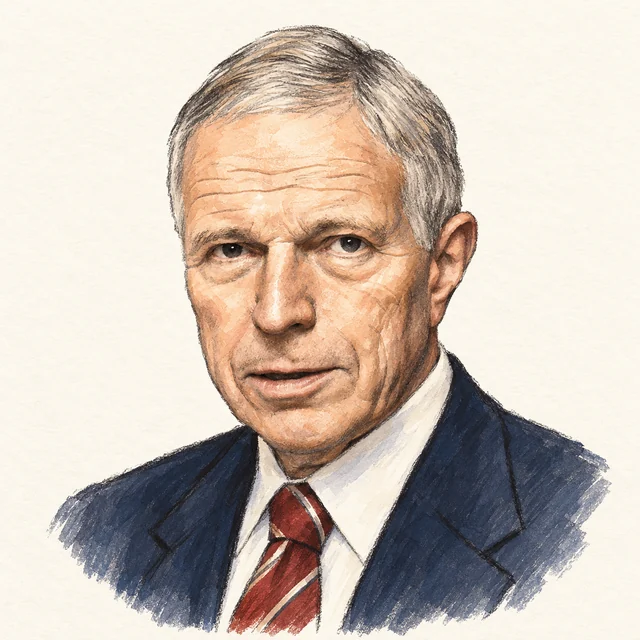
Illustrated portrait of Edmund S. Phelps

Edmund S. Phelps

Prize share · 1/1

Phelps showed why inflation expectations change the relationship between inflation and unemployment: a temporary employment gain does not imply a permanent bargain available to policymakers. He built models connecting this insight to wage-setting and labour-market behaviour. His work on saving and capital formation also examined how present consumption affects the possibilities available to future generations.

Read the biography ↗

03 · Years in the making

The path here

  1. 1961

    Phelps set out the golden rule of capital accumulation.

  2. 1960s

    He developed models connecting inflation expectations, wages and unemployment.

  3. 2006

    The memorial prize recognised his analysis of intertemporal tradeoffs in macroeconomic policy.

04 · Read further

From the original sources

Original explanations by Curionode, based on the official records below. Biographical details and affiliations refer to the award year.

  1. Official announcement nobelprize.org
  2. Popular science background nobelprize.org

More in Economic Sciences

Browse this subject ↗