c.curionodeThe Nobel Archive

2012 · Physiology or Medicine

A specialised cell can change its identity

Gurdon and Yamanaka showed that mature cell identity need not be an irreversible destination.

cell identityreprogrammingstem cells
2012Physiology or Medicine

Visual guide

The prize, pictured

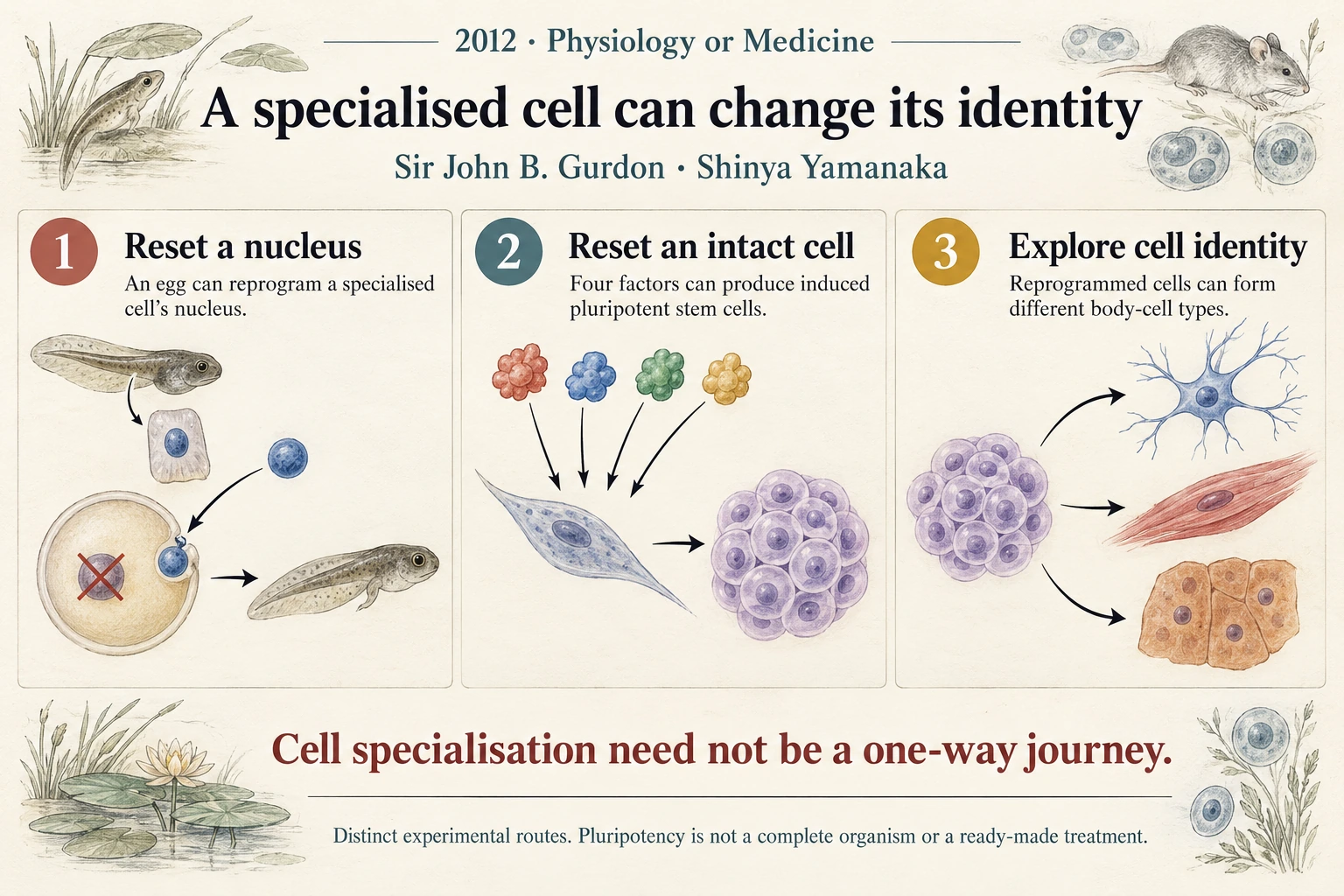
Infographic explaining A specialised cell can change its identity
Original AI-generated infographic. A conceptual overview; the explanations and sources below provide context.
Read the poster text

Cell specialisation need not be a one-way journey.

  1. Reset a nucleus

    An egg can reprogram a specialised cell’s nucleus.

  2. Reset an intact cell

    Four factors can produce induced pluripotent stem cells.

  3. Explore cell identity

    Reprogrammed cells can form different body-cell types.

Distinct experimental routes. Pluripotency is not a complete organism or a ready-made treatment.

01 · The discovery

The idea, in everyday language

A developing body produces many kinds of cells from the same starting material. For a long time, it was unclear whether specialisation permanently removed genetic possibilities. Gurdon transferred nuclei from differentiated tadpole intestinal cells into frog eggs whose own nuclear contribution had been inactivated. Some developed into normal tadpoles. The specialised nucleus had retained information needed for other cell types; the egg’s environment could change how that information was used.

Yamanaka asked whether an intact specialised cell could be reset without an egg. In 2006 he and Kazutoshi Takahashi introduced a combination of four factors into mouse fibroblasts and produced induced pluripotent stem cells, or iPS cells. These could give rise to different body-cell types. The two discoveries used different methods but overturned the same assumption: differentiation does not necessarily lock a cell into one identity forever.

Why it matters

Researchers can use reprogrammed cells to investigate development, model disease and test how cells respond to compounds. A patient’s cells can provide a route to studying otherwise inaccessible cell types in culture. The work also established a foundation for regenerative-medicine research, where the identity, maturity and safety of any replacement cells matter greatly.
02 · The people

Who brought the idea to life?

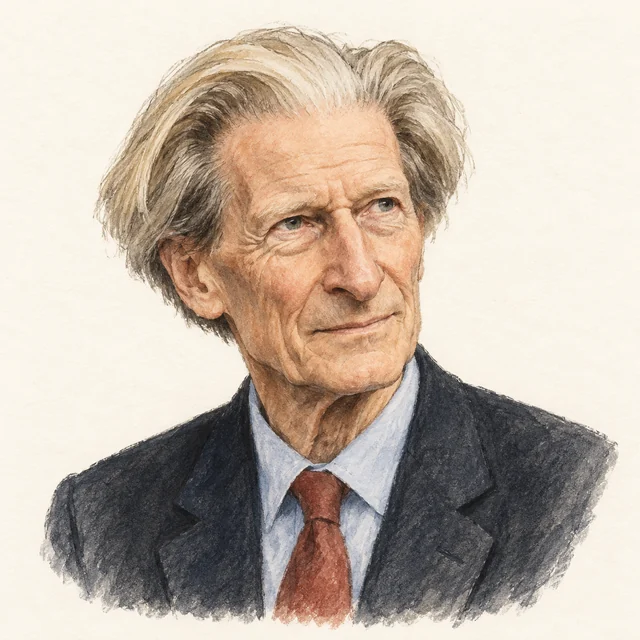
Illustrated portrait of Sir John B. Gurdon

Sir John B. Gurdon

Prize share · 1/2

Gurdon transferred nuclei from differentiated tadpole intestinal cells into frog eggs whose own nuclear contribution had been inactivated. Some reconstructed eggs developed into normal tadpoles. The work showed that specialisation need not involve losing the genetic instructions for other cell types: the environment of the egg could reset how a transferred nucleus was used.

Read the biography ↗
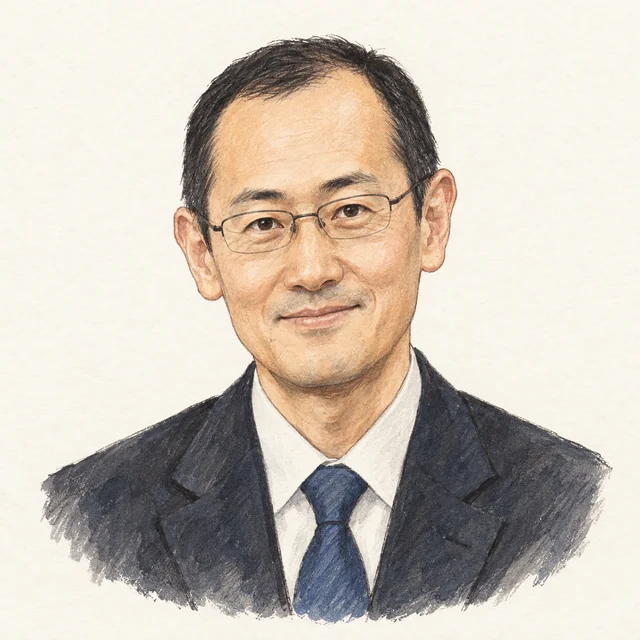
Illustrated portrait of Shinya Yamanaka

Shinya Yamanaka

Prize share · 1/2

In 2006 Yamanaka and Kazutoshi Takahashi showed that a combination of four factors could reprogram mouse fibroblasts into induced pluripotent stem cells. These cells could give rise to different cell types of the body. The discovery established a new route to studying cell identity and disease in culture, while leaving substantial questions about safety, reliability and medical application.

Read the biography ↗

03 · Years in the making

The path here

  1. 1962

    Gurdon reports nuclear-transfer evidence that specialised tadpole cells retain developmental information.

  2. 2006

    Takahashi and Yamanaka produce induced pluripotent stem cells from mouse fibroblasts.

  3. 2012

    The prize recognises the reprogramming of mature cells to pluripotency.

04 · Read further

From the original sources

Original explanations by Curionode, based on the official records below. Biographical details and affiliations refer to the award year.

  1. Official award announcement nobelprize.org
  2. Scientific background nobelprize.org

More in Physiology or Medicine

Browse this subject ↗