01 · The discovery
The idea, in everyday language
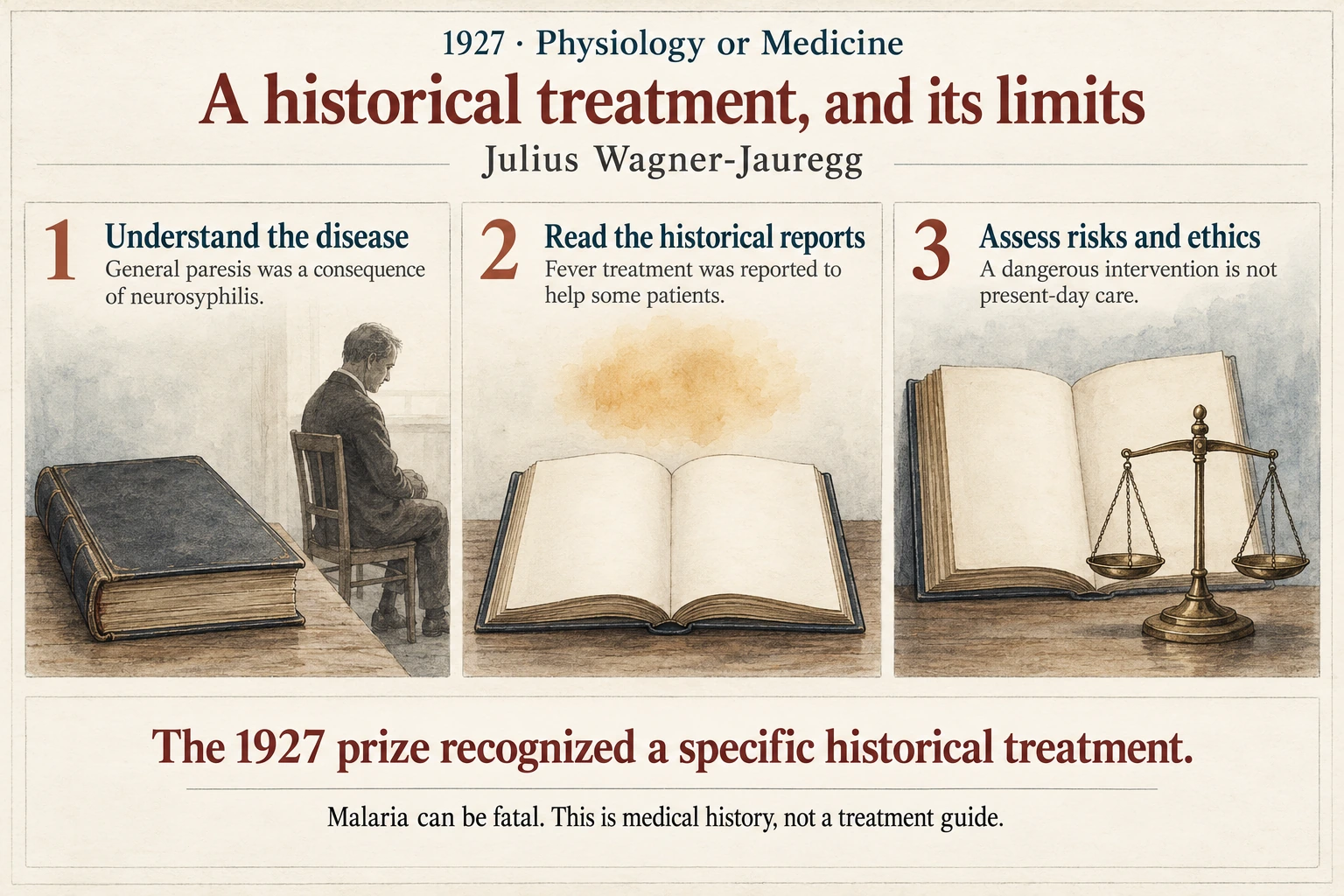
General paresis was a devastating consequence of syphilis affecting the nervous system. It could alter cognition and behaviour and progress to severe disability. Wagner-Jauregg’s work concerned this specific infectious disease context, rather than every condition described as mental illness or dementia.
Observations of changes in symptoms during fever led to years of investigation and, in 1917, to malariotherapy. Historical reports described lasting improvement in some patients who previously had few effective options. The 1927 award recognized that therapeutic contribution. Those reports did not establish that the intervention was harmless, universally effective or ethically acceptable by present standards.
Why it matters
The work changed historical expectations for a condition then regarded as largely untreatable and influenced interest in physical approaches to psychiatric symptoms. Its significance must be assessed alongside hazards, patient rights and later developments. Modern neurosyphilis care uses antibiotics, including penicillin, rather than this historical intervention.