c.curionodeThe Nobel Archive

1928 · Physiology or Medicine

Finding the hidden link in epidemic typhus

Nicolle’s observations and experiments identified body lice as a vector of epidemic typhus. Understanding the transmission chain changed the possibilities for prevention.

Epidemic typhusBody liceTransmissionRickettsia prowazekii
1928Physiology or Medicine

Visual guide

The prize, pictured

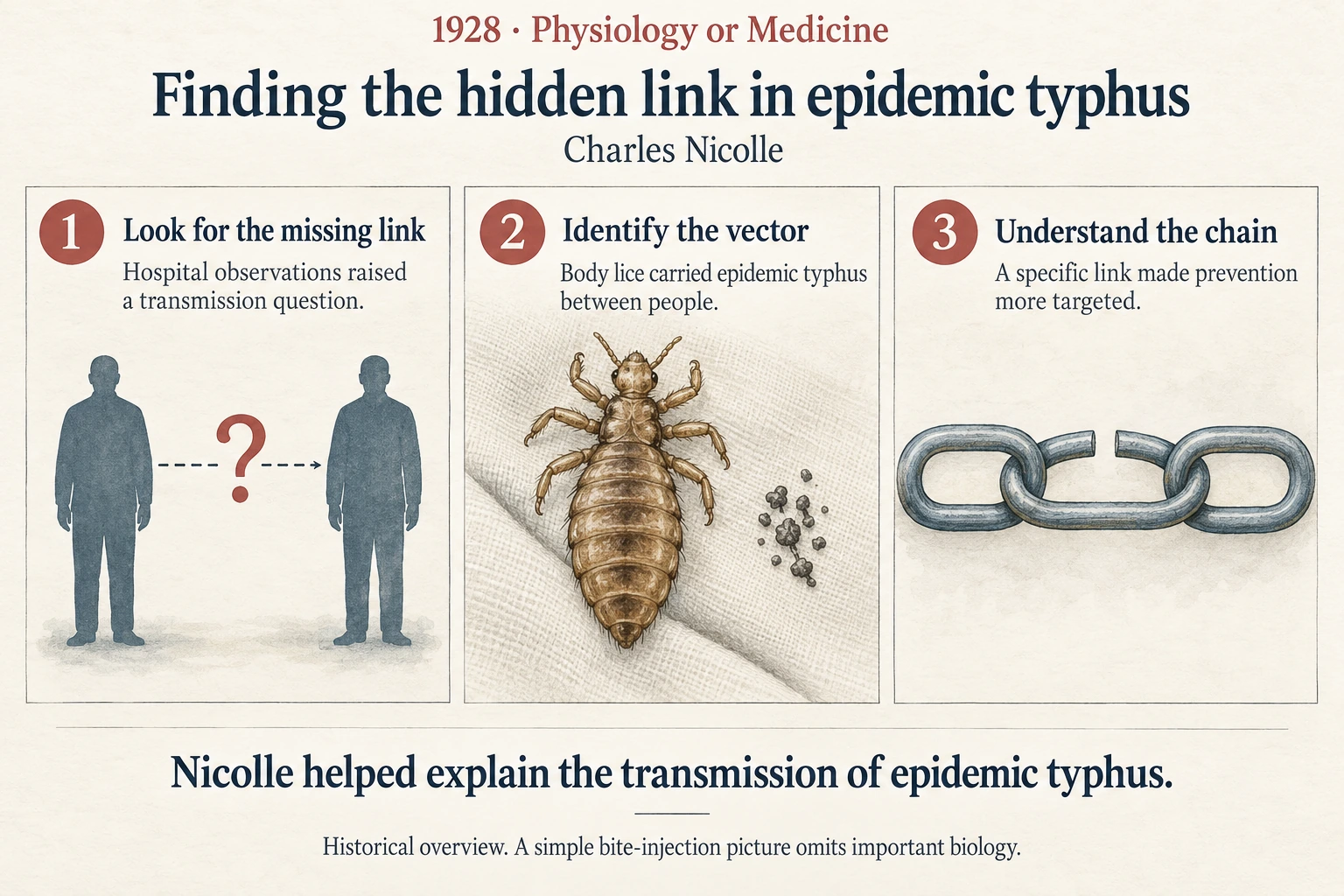
Infographic explaining Finding the hidden link in epidemic typhus
Original AI-generated infographic. A conceptual overview; the explanations and sources below provide context.
Read the poster text

Nicolle helped explain the transmission of epidemic typhus.

  1. Look for the missing link

    Hospital observations raised a transmission question.

  2. Identify the vector

    Body lice carried epidemic typhus between people.

  3. Understand the chain

    A specific link made prevention more targeted.

Historical overview. A simple bite-injection picture omits important biology.

01 · The discovery

The idea, in everyday language

Hospital observations suggested that the spread of infection was connected with something removed when patients changed clothing and were washed. Nicolle investigated body lice rather than assuming that ordinary proximity alone explained every transmission. In 1909, research with Charles Comte and Ernest Conseil established the vector’s role.

The disease in this story is classical louse-borne epidemic typhus, associated with the bacterium Rickettsia prowazekii. Modern accounts describe infection involving contaminated louse feces or crushed lice reaching injured skin. A diagram of a louse merely injecting infection by a bite would leave out this important part of the mechanism. Other typhus fevers can have different vectors.

Why it matters

Recognizing the body louse’s role gave public-health work a more specific target and helped explain epidemics associated with war, displacement and overcrowding. The contribution concerned transmission and prevention; it did not mean that all typhus had been eradicated or that Nicolle alone created every later control measure.
02 · The people

Who brought the idea to life?

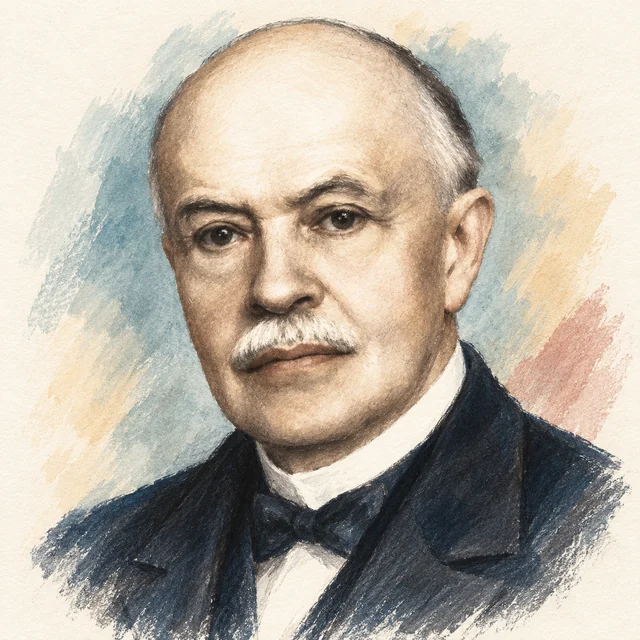
Illustrated portrait of Charles Nicolle

Charles Nicolle

Prize share · 1

Nicolle received the full Medicine Prize for work on typhus. Identifying the body louse as a vector of epidemic typhus made the transmission chain open to explanation and prevention.

Read the biography ↗

03 · Years in the making

The path here

  1. 1893

    Nicolle completes his medical doctorate.

  2. 1903

    He becomes director of the Pasteur Institute in Tunis.

  3. 1909

    Work with colleagues establishes the body louse’s role in epidemic typhus.

  4. 1928

    He receives the full Medicine Prize for work on typhus.

04 · Read further

From the original sources

Original explanations by Curionode, based on the official records below. Biographical details and affiliations refer to the award year.

  1. Official award summary nobelprize.org
  2. Award ceremony speech nobelprize.org
  3. CDC: epidemic typhus cdc.gov
  4. CDC: clinical overview of typhus fevers cdc.gov
  5. Institut Pasteur: Nicolle’s personal account pasteur.fr
  6. 1909 typhus report: catalogue record persee.fr

More in Physiology or Medicine

Browse this subject ↗