01 · The discovery
The idea, in everyday language
The positron had confirmed that antiparticles could exist, but an antiproton required a much more energetic experiment. Producing a candidate was only part of the problem: many other negatively charged particles could imitate one aspect of its behaviour.
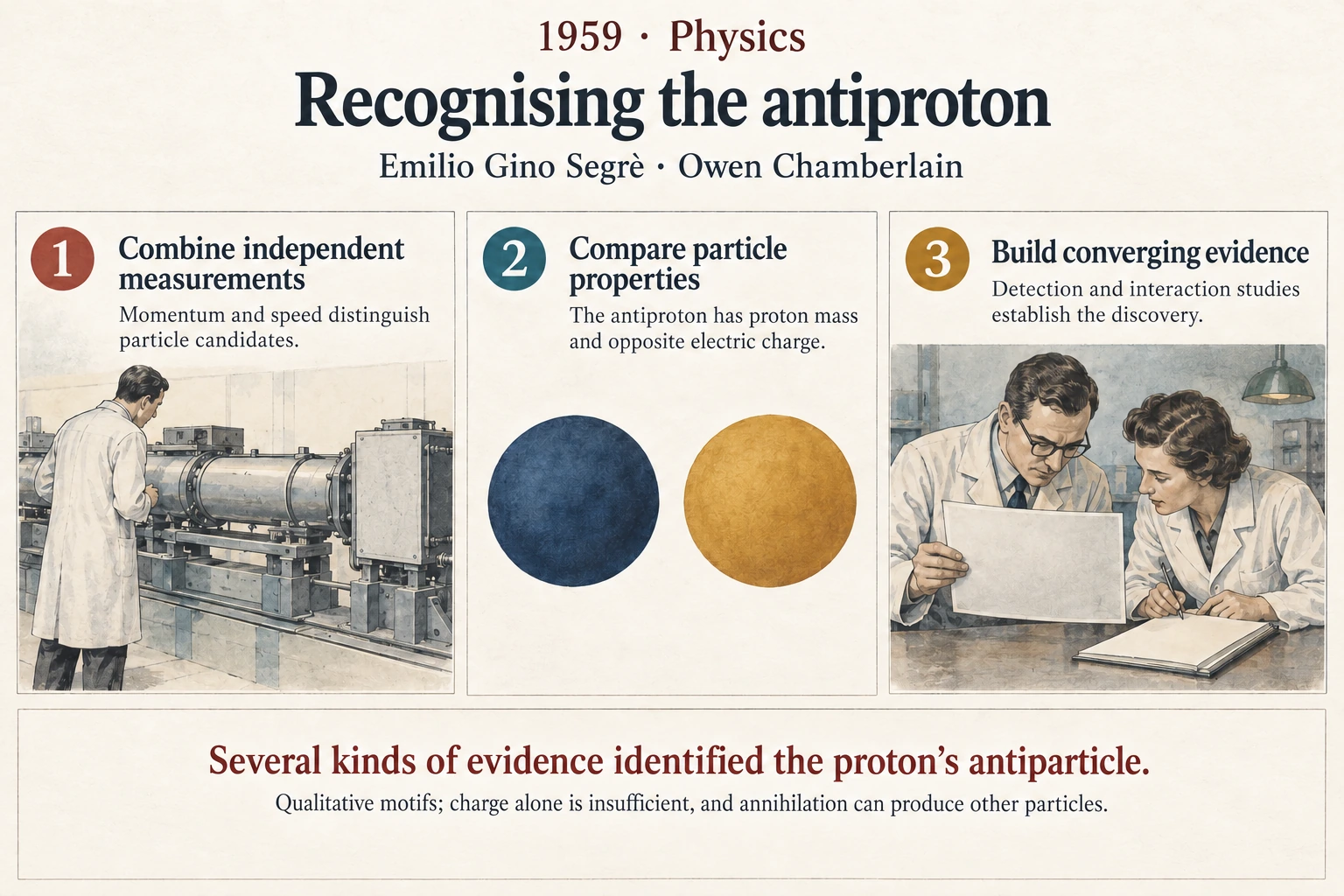
At Berkeley in 1955, Chamberlain, Segrè, Wiegand and Ypsilantis combined momentum selection with speed measurements. Scintillation and Cherenkov detectors helped distinguish heavy antiprotons from lighter negative pions. Related photographic-emulsion studies supplied evidence of annihilation. The antiproton matched proton mass while carrying opposite electric charge.
Why it matters
The discovery extended experimental knowledge of antimatter to the proton and opened further studies of antinucleon interactions. Each laureate received half of the prize; the apparatus, detection and confirmation depended on many collaborators and the Radiation Laboratory’s resources.