01 · The discovery
The idea, in everyday language
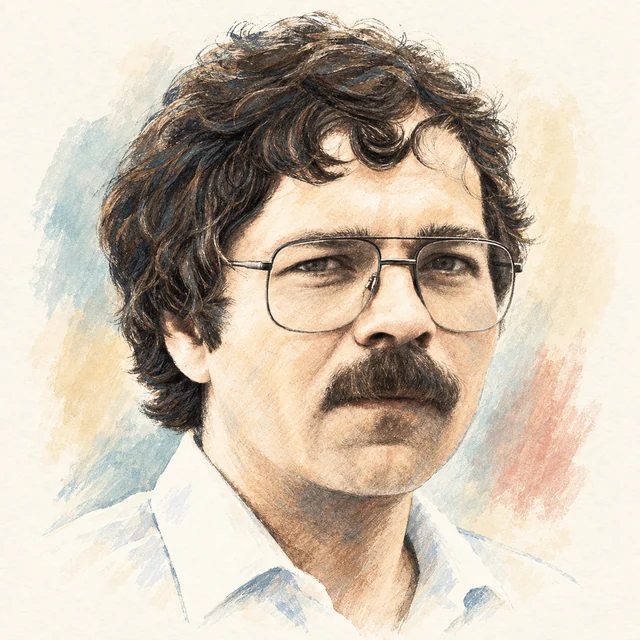
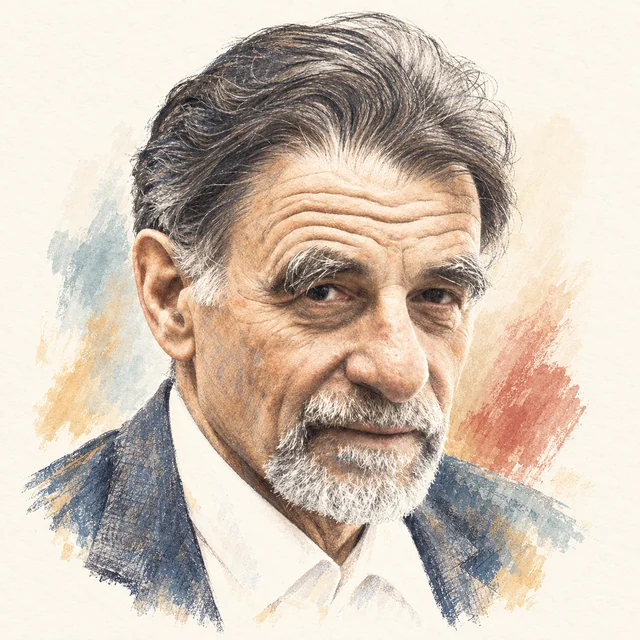
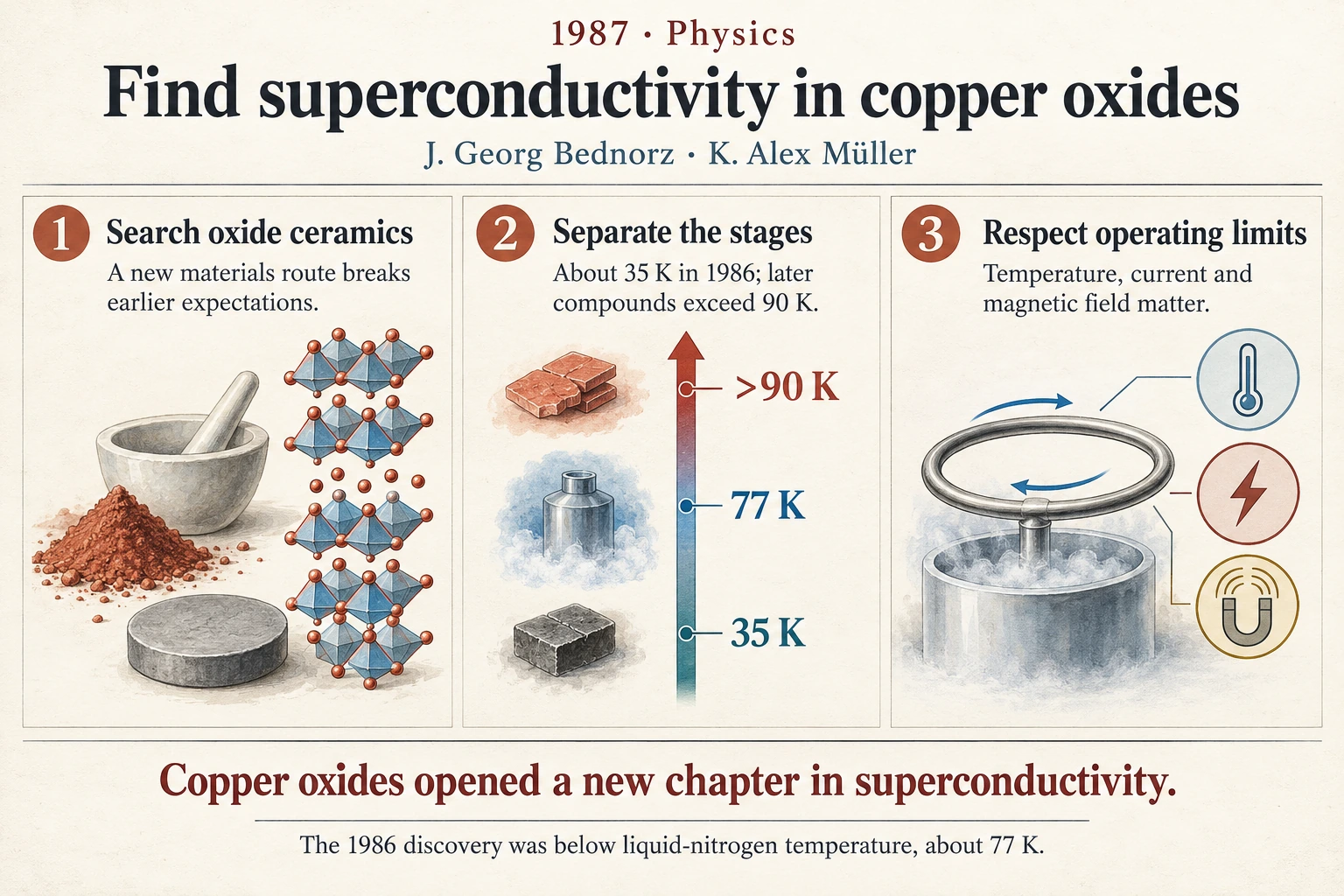
Superconductors can carry current without electrical resistance below suitable limits. Before 1986, the highest transition temperatures were around 23 K. Bednorz and Müller searched oxide ceramics instead of assuming that established metallic materials were the only promising route.
Their Ba–La–Cu–O samples showed a sharp resistance decrease with an onset in the 30 K range; the discovery is commonly described as roughly 35 K. Later experiments confirmed superconductivity, and other groups found different copper oxides above 90 K in 1987. Those later materials could use liquid-nitrogen cooling, whose boiling point is about 77 K at normal pressure.
Why it matters
The discovery launched intensive work on cuprate materials and their unusual physics. The prospect of simpler cooling broadened research on magnets, electronics and conductors. Useful devices also require control of current, magnetic field, fabrication and other material properties. Bednorz and Müller shared the Physics Prize equally.