01 · The discovery
The idea, in everyday language
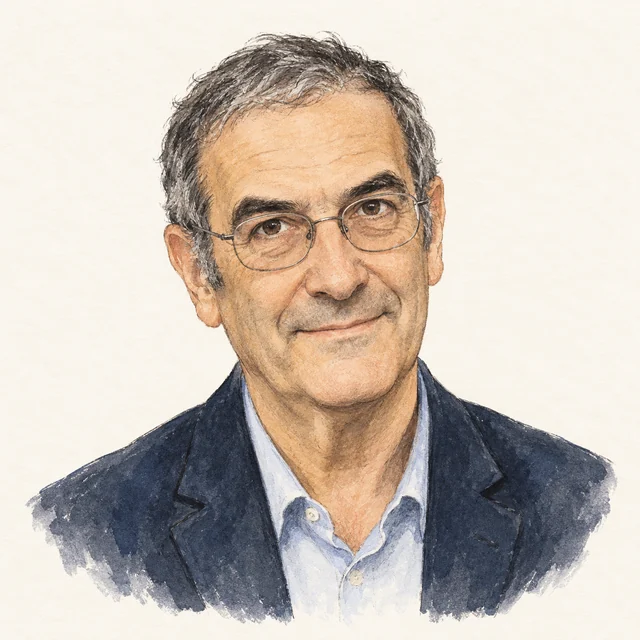
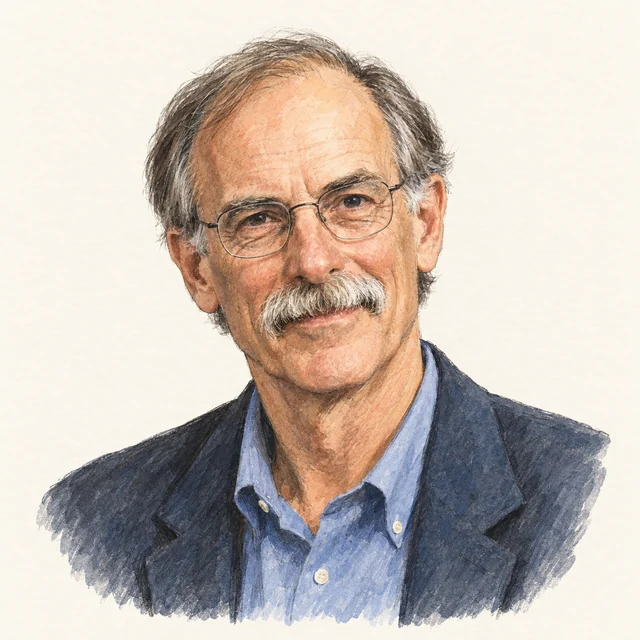
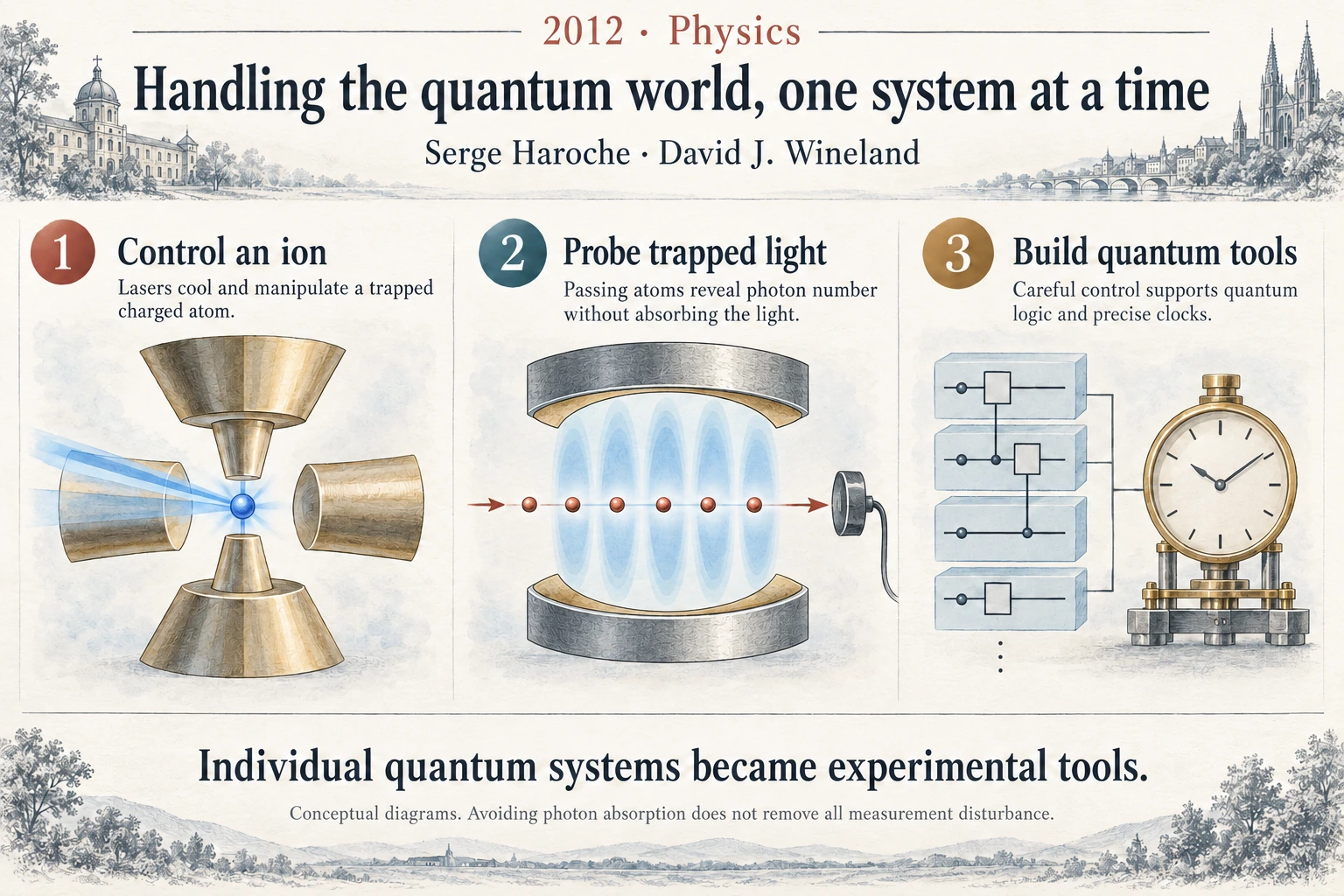
Quantum theory describes states that can interfere and become entangled, but delicate states are easily disrupted by their surroundings. To study them, researchers need more than a sensitive detector: they must isolate a system, prepare it and choose how to question it. Wineland’s team held charged atoms in electromagnetic traps. Laser light cooled their motion and controlled their internal states, allowing experiments that treated a single ion as a carefully managed quantum system.
Haroche’s team approached the problem from the other direction: they stored microwave light between exceptionally reflective mirrors and sent prepared atoms through it. The field changed a measurable property of the atoms, allowing the researchers to infer photon number without absorbing the photons at each observation. Repeated measurements could follow changes in the cavity field. These complementary methods made quantum behaviour experimentally accessible rather than merely a thought experiment.
Why it matters
The methods opened paths to quantum information processing, exceptionally precise atomic clocks and direct studies of the boundary between quantum and everyday behaviour. For example, Wineland’s group demonstrated a quantum logic gate using two types of state within one ion. Such experiments established building blocks; assembling a large, reliable quantum computer requires much more.