01 · The discovery
The idea, in everyday language
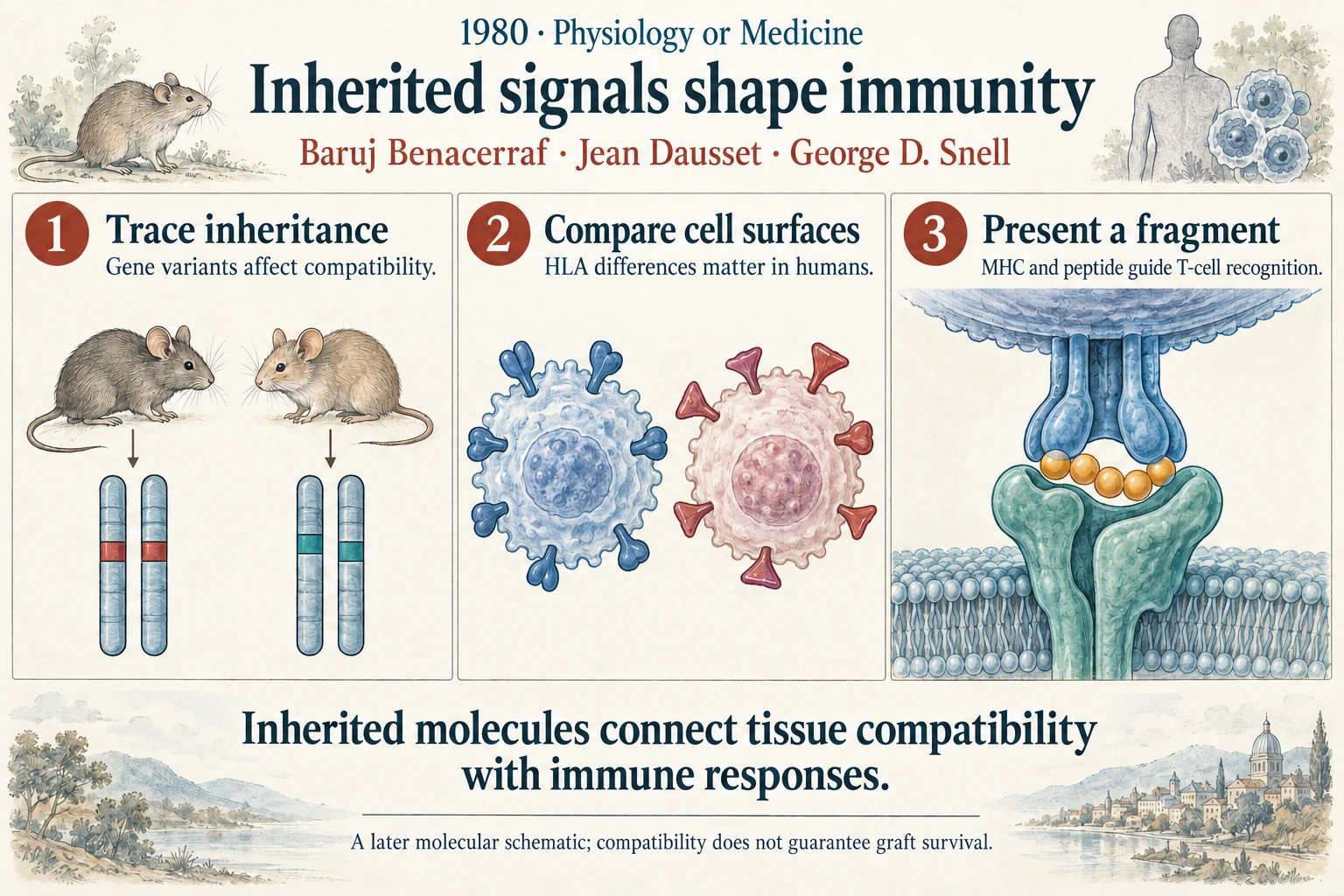
Snell used carefully bred mouse strains and transplantation experiments to identify histocompatibility genes, particularly the H-2 complex. Dausset investigated differences on human white blood cells and helped establish the HLA system. These were related discoveries in different experimental settings, linking inherited cell-surface structures with tissue compatibility.
Benacerraf showed that responses to particular simple antigens could also be inherited, and helped connect immune-response genes with the same genetic region. A later molecular account explains much of this connection: MHC proteins display short peptide fragments for recognition by T cells. Which peptides can be displayed, and how their complexes are recognized, depend partly on inherited molecular variants.
Why it matters
The work helped explain transplantation rejection and the genetic organization of immune responses. It supported tissue typing and opened research into immune recognition and disease associations. Benacerraf, Dausset and Snell received equal thirds. Their discoveries built on donors, laboratory staff, animal breeding and many collaborations; later peptide-presentation research supplied additional molecular detail.